Guide
Your Guide to Private Label Rights PLR for Digital Products

Ever heard of Private Label Rights, or PLR? Think of it like buying a fantastic, pre-made cake from a master baker. With PLR, you get the right to add your own frosting, decorations, and brand name, then sell that cake as your own unique creation. It's a powerful shortcut that can save you countless hours and resources on content creation.
What Are Private Label Rights and How Do They Work

At its heart, PLR is a business model built for speed and efficiency. Instead of spending weeks or months researching, writing, and designing a digital product like an ebook or online course from scratch, you simply acquire a ready-made asset. This lets you skip the most grueling parts of product development and jump right into marketing and sales.
Imagine you're a business coach who wants to offer a guide on productivity. Building one yourself would mean hours of research, writing, editing, and graphic design. With PLR, you could buy a professionally written productivity guide, slap your logo on it, sprinkle in your own case studies, and have a product ready to sell in a fraction of the time.
The Key Differences in Content Licensing
To really get why PLR is so valuable, it helps to see how it stacks up against other common content licenses. Each one gives you a different level of freedom and control, and knowing the difference is crucial for anyone building a digital product business. You can explore these differences more in our complete guide on what is private label rights.
The biggest advantage of private label rights PLR is its sheer flexibility. Other licenses often stop you from making changes or claiming you wrote it, but PLR gives you the most creative freedom to make the content truly yours.
The secret to standing out in the PLR game is giving people what they need. It's about providing a solution that saves them time and effort, packaged under a brand they trust—yours.
This table breaks down how the most common licenses compare, so you know exactly what you're buying.
Understanding Different Content Rights
A clear comparison of Private Label Rights (PLR) with other common content licenses to help you understand what you can and cannot do.
License Type | You Can Rebrand and Sell | You Can Edit Content | You Can Claim Authorship | Typical Use Case |
|---|---|---|---|---|
Private Label Rights (PLR) | Yes | Yes | Yes | Creating unique branded products like ebooks, courses, and lead magnets to sell or give away. |
Master Resale Rights (MRR) | Yes | No | No | Selling a product "as-is" and also selling the rights for others to resell it. |
Resale Rights (RR) | Yes | No | No | Selling a product "as-is" directly to end customers without passing on resale rights. |
Personal Use Only | No | No | No | Learning from the content for personal knowledge and development, with no commercial use. |
As you can see, PLR is the only license that gives you the trifecta: the ability to modify, rebrand, and claim authorship. This makes it the perfect foundation for building a scalable digital product empire without having to start from zero every single time.
Understanding the Legal Landscape of PLR Licenses
Jumping into the world of private label rights PLR feels a lot like finding a treasure chest overflowing with ready-made content. But here’s the catch: not all treasure is the same, and the "rights" you buy are governed by very specific legal terms. If you misunderstand these licenses, you're on a fast track to legal trouble, and you could end up sinking the very business you’re trying to build.
Think of PLR licenses like different keys to a car. One key might let you drive it around town. Another might let you repaint it a custom color. A third, more powerful key might even let you make copies and sell them to other people. Each license grants a specific level of control, and it's critical you know which key you're holding before you turn the ignition.
Decoding the Different Tiers of Content Rights
While PLR offers the most freedom, it’s just one member of a larger family of content rights. Knowing where it fits in the hierarchy helps you appreciate its real value and keeps you from accidentally breaking the rules of a more restrictive license you might run into.
Here’s a quick breakdown of the most common license types you'll see out there:
Resell Rights (RR): You can sell the product as-is to your customers, but only for their personal use. That's it. You can't edit the content or give them the right to sell it, too.
Master Resell Rights (MRR): This is a nice step up. You can sell the product as-is, and you can pass the resell rights along to your customers. Now they can sell it, too.
Private Label Rights (PLR): This is the most flexible option and what we're focused on. You can edit the content, slap your brand on it, claim authorship, and sell it. You can often pass on RR or MRR rights, but very rarely the full PLR rights.
Unrestricted Rights: This is the holy grail—rare and incredibly powerful. It usually means you can do almost anything with the content. Give it away for free, bundle it with other offers, or even transfer the PLR rights themselves to someone else.
Always remember the golden rule of PLR: the license agreement is your ultimate guide. If a specific action isn't explicitly permitted in the license, assume you cannot do it. This simple precaution can save you from major legal headaches down the line.
Your Pre-Purchase License Checklist
Before you spend a single dollar on a PLR package, you need to put on your detective hat and investigate the license. A few minutes of due diligence now can protect your business and make sure your investment is solid. Rushing this step is one of the most common—and costly—mistakes I see new entrepreneurs make.
Use this checklist to vet any PLR license before you click "buy":
Modification Rules: Can you actually edit, rewrite, and add your own content? To what extent? Some licenses have weird limits.
Authorship Claims: Does the license legally allow you to put your name or brand on the content as the author?
Distribution Limits: Are you free to sell the product on any platform, or are there restrictions? For example, some licenses forbid selling on auction sites.
Giveaway Restrictions: Can you use the content as a freebie to build your email list, or is it strictly for paid products?
Transferable Rights: What rights (if any) can you pass on to your customers? Personal Use only? RR? MRR?
Pricing Floors: Does the license force you to sell the product above a certain minimum price? This is more common than you'd think.
Sourcing your private label rights PLR from reputable vendors is non-negotiable. Established sellers like Entrepedia provide crystal-clear license terms for every single product. This takes the guesswork and legal risk out of the equation, letting you build your digital product empire on a solid, legally sound foundation.
The Financial Advantage of Using PLR Products
Every entrepreneur is on the hunt for smarter, faster ways to get valuable products into the hands of their customers. For a growing number of them, the answer is simple: Private Label Rights (PLR). This isn't just a shortcut; it's a powerful business strategy with a serious financial upside.
At its heart, the economic power of PLR comes from skipping the most expensive and time-consuming part of launching a product. When you build a digital product from the ground up, you're pouring money into research, writing, design, and editing—costs that can easily hit thousands of dollars before you've made a single sale.
PLR completely flips that model on its head. Instead of a massive upfront investment of time and cash, you make a small, one-time purchase for a foundational asset. This massively lowers the barrier to entry and cuts your financial risk right from the start.
Cost-Benefit Analysis: The PLR Edge
Let's run the numbers. Imagine you want to launch a comprehensive ebook on personal finance, a niche that's always in demand.
Creating from Scratch:
Research & Writing: Hiring a good writer for a 15,000-word ebook could set you back $1,500 - $3,000.
Professional Editing: A sharp editor might charge another $500 - $800.
Graphic Design: A custom cover and interior layout can easily add $300 - $600.
Total Initial Cost: You're looking at a bare minimum of $2,300 before you’ve even thought about a sales page.
Using a PLR Ebook:
PLR License: A high-quality, comprehensive PLR ebook in the same niche might cost you $47 - $97.
Customization: You can invest your own time or hire a freelancer for minor edits and branding, which might run another $100 - $200.
Total Initial Cost: Your total outlay is somewhere around $147 - $297.
The difference is staggering. With PLR, you save over 90% of the initial creation costs. That's capital you can now pump into what actually drives growth: marketing and getting customers.
Unlocking High Margins and Unlimited Sales
The financial perks of private label rights PLR go way beyond just the initial savings. Because digital products don't have physical inventory, you completely sidestep the costs of manufacturing, shipping, and storage. The result? Exceptionally high profit margins.
In fact, PLR digital products are one of the fastest-growing segments of the digital economy for this very reason. Once you buy the license, you can sell your customized product an infinite number of times. It’s common to see profit margins between 80% to 95%, since your only ongoing costs are typically for payment processing and marketing. You can learn more about the profit potential of top PLR digital products on resellready.co.
This creates a powerful formula for a massive return on investment (ROI). A single PLR purchase can become a cornerstone asset that generates revenue for years to come.
The real financial power of PLR is its scalability. You buy the asset once and sell it forever. Each sale after you've recouped your small initial investment is almost pure profit, a model that's nearly impossible to achieve with physical goods.
This economic model is especially effective in evergreen niches where customer demand never dries up. Markets like health and wellness, personal finance, self-improvement, and business coaching are always hungry for fresh content. By using PLR in these areas, you tap into a sustained stream of potential customers, ensuring your digital products stay relevant and profitable for the long haul.
Transforming Generic PLR Into a Premium Branded Asset
Think of buying a private label rights (PLR) product like getting the keys to a brand-new, unfurnished house. It has great bones, but it’s not your home yet. The real magic—and where you create all the value—happens when you start decorating. Slapping a new cover on a PLR ebook and calling it a day is the biggest mistake I see entrepreneurs make. It leads to a generic product that gets lost in the noise.
The pros treat PLR as a powerful head start, not a finished product. This is your chance to inject your unique brand voice, your hard-won expertise, and genuine value into the content. You’re not just changing a few words; you're elevating a standard template into a signature solution that truly serves your audience and stands out.
This simple flowchart breaks down how you turn a basic PLR purchase into a profitable asset.
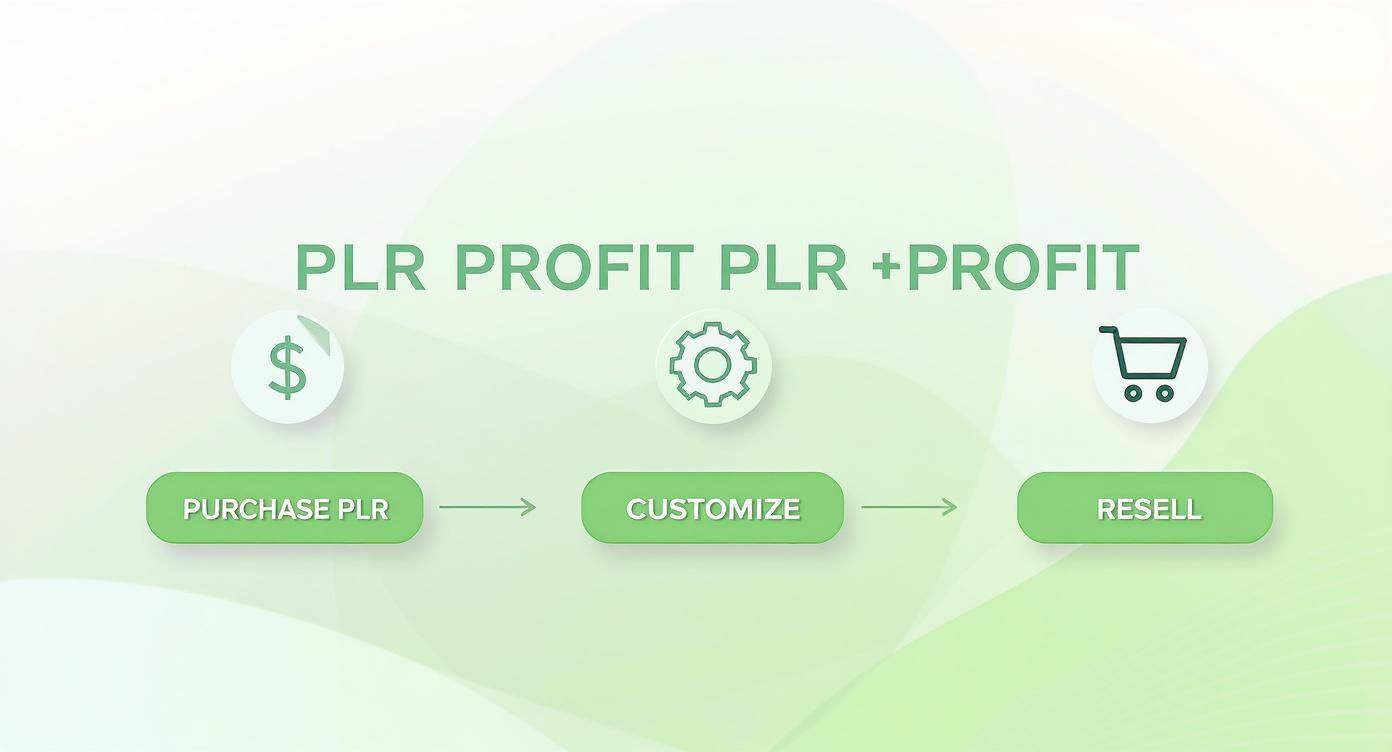
As you can see, the "Customize" step is the critical bridge between buying content and making money. It’s where all the value gets created.
Make It Sound Like You
Your first move is to make the PLR sound like your brand. Are you the straight-talking, data-driven expert, or the friendly, conversational guide? Weave that personality into the introduction, conclusion, and chapter summaries to build an instant connection with your reader.
Next, it’s time to add your own original content to build real authority. This is where you separate yourself from everyone else who bought the same PLR.
Share Personal Stories: Got a case study about how you or a client used these exact principles? Add it in. Real-world examples are absolute gold for building trust.
Add Your Unique Take: Don't be afraid to add your own perspective, even if it’s a bit controversial. It shows you’re a genuine expert, not just a reseller.
Update the Facts: PLR content can get stale fast. Swap out old statistics and data for the latest numbers to make your product relevant and credible.
A Step-by-Step Customization Framework
Transforming PLR doesn’t need to feel overwhelming. Just follow a structured process to make sure you hit all the key points for creating something truly high-value.
Give It a New Title: The original title has been used to death. Brainstorm something fresh and compelling that speaks directly to your audience’s problems.
Design New Branding: Fire up a tool like Canva and create a completely new cover, chapter graphics, and worksheets. Everything should scream your brand, using your colors and style.
Rewrite and Restructure: Go way beyond just changing a few words. Rephrase entire sentences, move paragraphs around for better flow, and cut out any fluff that doesn't fit your message. Your goal is to make it unrecognizable from the original.
Add Your "Secret Sauce": What can you include that no one else can? Think about adding a custom intro video, a bonus checklist, an exclusive resource library, or a workbook that complements the main guide.
To guide you through this process, here's a checklist to help you turn that generic PLR into a unique asset that reflects your brand's quality and expertise.
PLR Customization Checklist
Customization Task | Impact Level (Low/Medium/High) | Estimated Time | Tools Needed |
|---|---|---|---|
Rewrite Title & Subtitle | High | 30-60 mins | Brainstorming, Keyword Tool |
Design a New Cover | High | 1-2 hours | Canva, Photoshop, etc. |
Rewrite Intro & Conclusion | High | 1-2 hours | Word Processor |
Add Personal Stories/Examples | High | 2-4 hours | Your own experience |
Update Statistics & Data | Medium | 1 hour | Google, Industry Reports |
Reformat & Redesign Layout | Medium | 2-3 hours | Canva, InDesign, Word |
Add a Bonus Checklist/Workbook | High | 3-5 hours | Canva, Word Processor |
Create Promotional Graphics | Medium | 1-2 hours | Canva, Mockup Generators |
Following this checklist ensures you’re not just editing, but actively enhancing the product from top to bottom.
From Basic Edits to a Premium Offer
By following this framework, you're doing more than just avoiding the low-quality PLR trap; you're building a genuinely premium asset. Each customization adds another layer of value, turning a generic document into something your audience will be thrilled to buy. For more practical tips on this, check out some of the great branding strategies on the Branditok blog.
Meaningful customization isn't just a suggestion—it's the key to long-term success with private label rights PLR. It protects your brand, justifies a higher price, and ultimately leads to a much more profitable business.
To go even deeper, read our guide on 7 ways to instantly boost the perceived value of your PLR digital products.
Strategic Ways to Monetize Your Customized PLR Content
Once you’ve put in the work to transform a generic PLR product into something that truly reflects your brand, the real fun begins. A lot of entrepreneurs stop at selling their customized ebook or template as a standalone item, but that’s barely scratching the surface of what’s possible.
The smartest creators don't just see a single product. They see a versatile content engine.
This shift in thinking is everything. Instead of asking, "How can I sell this ebook?" start asking, "How many different ways can this one piece of content fuel my business?" This approach opens up multiple income streams and marketing opportunities from a single investment, making your customized PLR a cornerstone of your growth.
Use PLR as a Powerful Lead Magnet
One of the quickest ways to get a return on your private label rights PLR is by not selling it at all—at least, not for cash. A high-value ebook, checklist, or mini-course makes for an irresistible lead magnet to grow your email list.
An engaged email list is one of the most valuable assets you can own in an online business. When you offer a piece of your customized PLR for free in exchange for an email, you’re building a direct line to potential customers. From there, you can build trust, nurture the relationship, and introduce your core paid offers.
Example in Action: A business coach takes a PLR guide called "The Ultimate Productivity Planner" and customizes it. Instead of selling it for $27, she offers it as a free download on her website. That one lead magnet adds 500 new, highly-targeted subscribers to her list in a single month, which directly leads to several new high-ticket coaching clients.
Bundle Multiple PLR Products into a High-Ticket Offer
A single customized PLR product might only sell for a modest price. But what happens when you combine several related products into a complete, comprehensive bundle? You create a high-value offer that can command a much higher price.
This strategy works incredibly well for creating signature courses, resource libraries, or "toolkits." Think of it like selling individual ingredients versus a complete meal kit—customers will almost always pay a premium for an all-in-one solution that solves a bigger problem for them.
You can build powerful bundles by mixing and matching different formats:
An ebook as the core learning material.
A video course for visual learners.
Worksheets and templates for taking action.
A checklist for quick reference and implementation.
This multi-format approach dramatically boosts the perceived value, letting you position your bundle as a premium product.
The secret to a killer bundle is synergy. Each piece of PLR content should logically connect to the others, creating a cohesive system that guides your customer from A to Z. This is how you turn a simple collection of products into an indispensable resource.
Repurpose a Single PLR Product into Multiple Content Streams
Why sell a PLR ebook just once when you can slice it up into a dozen different pieces of content? Repurposing is a brilliant strategy that squeezes every last drop of value out of your initial purchase. One solid PLR ebook can become the foundation of your content marketing for weeks, or even months.
This approach doesn't just save you time; it helps you connect with different parts of your audience who prefer different content formats. The possibilities are practically endless. We dive deeper into this in our guide on 4 smart ways to turn PLR products into profit in 2025.
Here are just a few ideas for repurposing one PLR ebook:
Create a Blog Post Series: Turn each chapter into its own in-depth blog post.
Develop an Email Mini-Course: Drip out each section as a daily lesson to your email list.
Produce Social Media Content: Pull out key quotes, stats, and tips to create dozens of graphics and short posts.
Record a Podcast Series: Use the chapter topics as talking points for a multi-episode podcast.
The global PLR market is projected to hit around $1.6 trillion by 2034, which just goes to show the immense demand for ready-made digital assets that can be repurposed like this. This growth proves how much entrepreneurs rely on tools that let them create quality content at scale. You can read more about the growth of the PLR market on whop.com.
Your Next Steps for Success with PLR
As this guide has shown, private label rights PLR isn't just a shortcut—it’s a serious accelerator for launching digital products. But lasting success isn’t about finding a magic button. It all comes down to smart, strategic execution.
Lasting businesses are built on the value you add, the problems you solve, and the unique brand you create. Think of PLR as the raw material. Your effort is what transforms it into a valuable asset that customers will happily pay for.
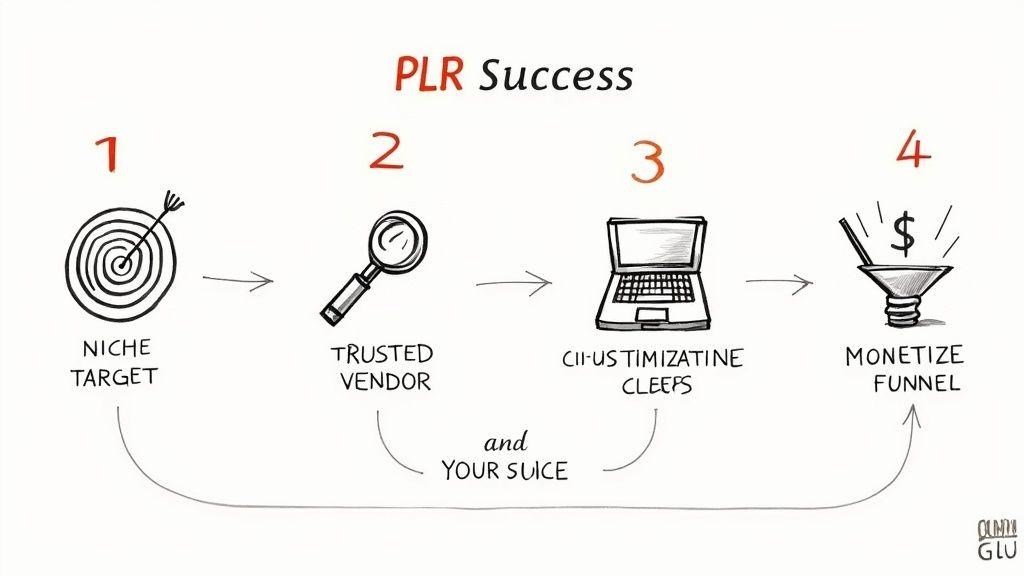
Your Four-Step Launch Plan
To go from learning to doing, you just need to focus on these four essential steps. This simple roadmap will get you on the right path and help you sidestep the common traps that snag new entrepreneurs.
Pinpoint a Profitable Niche: Don’t try to be everything to everyone. Pick a niche you genuinely understand or are passionate about. That expertise will shine through when you customize the content and help you build a real connection with your audience.
Source High-Quality PLR: Your final product is only as good as its foundation. Partner with a trusted vendor like Entrepedia, which guarantees well-researched, professionally designed content. This step alone saves you from the headaches of shoddy quality and confusing licenses.
Commit to Meaningful Customization: This is the most critical step of all. Go way beyond just swapping out a logo. Rewrite key sections, inject your brand’s voice, add your own case studies, and redesign the visuals. You need to create something that is truly yours.
The real secret to PLR success is treating it as a starting point, not a finished product. Your customization efforts are what make your offer different and justify its price in the market.
Select a Smart Monetization Strategy: Think beyond just making a single sale. Will this PLR product become a lead magnet to grow your email list? Will it be a core part of a bigger, high-ticket bundle? Or maybe you'll break it down into a blog series? Make sure your strategy fits your long-term business goals to get the best return on your investment.
Following this framework ensures you're not just another reseller. You'll be a value-driven creator using private label rights PLR to build a sustainable and profitable digital business.
Your Top PLR Questions, Answered
Jumping into the world of private label rights PLR can feel a bit like learning a new language. You see the potential, but you’ve probably got a dozen practical questions buzzing around. It's totally normal to wonder about the specific rules and best practices before you dive in.
Let's clear the air. This section tackles the most common questions we hear from entrepreneurs just like you. My goal is to iron out any confusion so you can move forward with confidence and a solid plan.
Can I Use PLR for My Website Blog Posts?
You bet. In fact, using PLR as a starting point for blog posts is one of the smartest ways to keep your content calendar full without hitting creative burnout. It’s a fantastic way to brainstorm ideas and get a solid first draft on the page in minutes.
But here’s the golden rule, especially for SEO: never, ever publish PLR content as-is. Search engines like Google are designed to spot duplicate content, and posting something that’s already online will sink your rankings. Think of a PLR article as a well-researched outline. Your job is to completely rewrite it in your brand’s voice, inject your own stories or case studies, and sprinkle in some fresh statistics. That’s how you turn a generic template into a unique, valuable asset that both readers and search engines will love.
Is It Legal to Sell PLR Products on Marketplaces?
Yes, you can absolutely sell customized PLR products on platforms like Etsy or Gumroad, but there are two big "ifs" to consider. First, you have to follow the rules of your specific PLR license to the letter. Second, you must play by the marketplace's rules, which almost always require products to be unique, not just generic templates anyone can resell.
This means significant customization isn't just a suggestion—it's a requirement. To do it right, you need to:
Come up with a completely new, attention-grabbing product title.
Design a unique cover and product graphics from the ground up.
Rewrite a good portion of the content so it sounds like you.
Add something original, like a bonus checklist, a personal introduction video, or a workbook.
Just uploading the PLR file as you bought it is a fast track to getting your listing pulled down. Always take a few minutes to read the marketplace’s terms of service on resell rights before you hit publish.
The bottom line is that marketplaces want to see unique value, not a sea of carbon copies. The effort you put into customization is what makes your product legitimate—and profitable—on these platforms.
How Do I Find Reputable PLR Sellers?
Finding a trustworthy source for private label rights PLR is probably the single most important step you'll take. A great vendor can give you a massive business advantage, while a bad one can sell you a poorly written headache. Look for established PLR stores with a track record of positive reviews and crystal-clear license terms for every single product.
Be very wary of sites that offer thousands of products for one suspiciously low price. That’s usually a giant red flag for outdated, low-quality, or over-saturated content that everyone else already has. A seller who cares about quality focuses on it over sheer quantity. They often specialize in certain niches and offer curated libraries of content that is well-written, relevant, and ready for you to make your own.