Guide
A Modern Playbook for Marketing for Coaches

Effective marketing for coaches isn't about random acts of posting; it's a system. A predictable, repeatable system built on four core pillars.
It all starts with a rock-solid foundation (think niche, offer, and client avatar). From there, you move to attraction (organic content and killer lead magnets). Then, you focus on conversion (email funnels and enrollment calls that actually work). Finally, you hit scaling (ads and referrals). This is how you turn your expertise into a client-generating machine that doesn't rely on luck.
The New Landscape of Coaching
Let's be real: the coaching industry has absolutely exploded. It's no longer a small, quiet field but a massive part of the digital economy, and that means there's incredible opportunity. But it also creates the biggest challenge every single coach faces: how do you cut through the noise and attract a steady stream of your ideal clients?
I see so many brilliant coaches struggle, not because their coaching is bad, but because their marketing is a mess. They post when they feel like it, their offer is confusing, and they have no real clue who they're trying to reach. Sound familiar?
This playbook is designed to fix that. We're moving past the generic "post more" advice and giving you a step-by-step system. The goal is to build a robust client acquisition engine by creating strategic assets that establish your authority from day one.
A Proven Four-Pillar Framework
The path from being an unknown expert to a fully booked coach isn't magic. It's a clear, four-stage process. Following this approach ensures you're working on the right things at the right time, which is the key to avoiding overwhelm and actually seeing results.
This visual breaks down the entire marketing flow into those four manageable pillars.
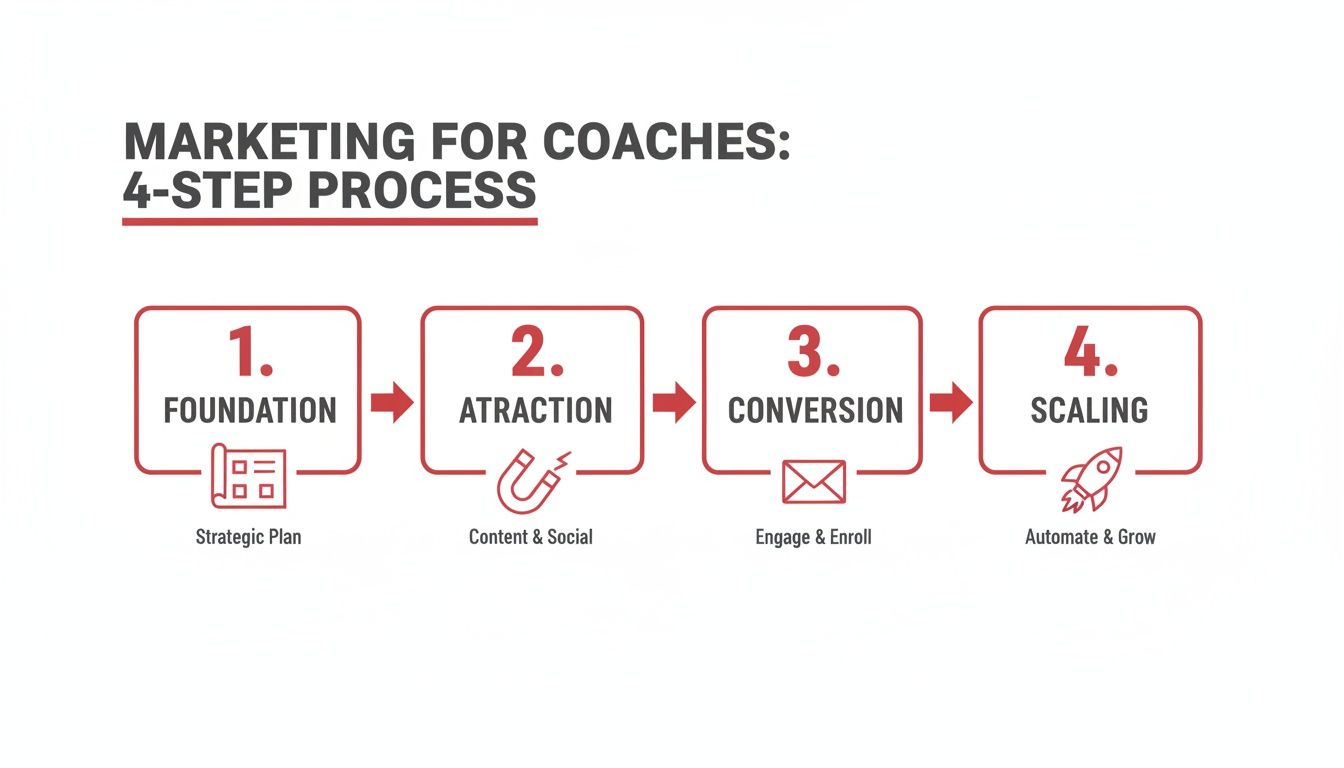
See how each stage logically builds on the last? This is how you create real momentum that turns casual followers into high-value, committed clients.
To give you a clearer picture of how these pieces fit together, here’s a quick overview of the entire blueprint.
The Modern Coach's Marketing Blueprint At a Glance
Marketing Pillar | Core Objective | Key Activities |
|---|---|---|
Foundation | Define your unique value & target audience | Niche selection, client avatar creation, crafting an irresistible offer, and market positioning. |
Attraction | Build authority & generate qualified leads | Creating valuable organic content, developing lead magnets, and building an email list. |
Conversion | Nurture leads & enroll ideal clients | Designing email funnels, mastering enrollment calls, and implementing a clear sales process. |
Scaling | Accelerate growth & create leverage | Running targeted paid ads, building referral systems, and optimizing client retention strategies. |
This table maps out the journey from foundational strategy to scalable growth, showing you exactly what to focus on at each step.
Understanding the Massive Opportunity
Having a solid marketing strategy isn't just a "nice-to-have"—it's essential when you see the scale of the market. The global coaching industry has ballooned into a $5.34 billion market as of 2025. That's a mind-blowing 62% growth since 2019.
This data, pulled from the latest ICF Global Coaching Study, confirms one thing: the demand for skilled coaches is massive. The key is learning how to effectively connect with the right audience. You can find more details about these industry trends and their impact on coaches online.
The #1 mistake I see coaches make is focusing on tactics before strategy. They obsess over what to post on Instagram before they’ve clearly defined who they help and how. This playbook reverses that. We make sure your foundation is solid before you even think about building on top of it.
By following a structured system, you position yourself to grab a piece of this growing market. It’s not about being the loudest voice online—it’s about being the clearest and most valuable one for the specific people you're meant to serve.
Laying the Foundation for Your High-Ticket Coaching Business
Before you even think about writing a single social media post or email, we need to talk about what really matters. Look, effective marketing isn't about slick funnels or clever ad copy—it's about having a rock-solid foundation. Without it, you're just another coach shouting into a crowded room.
This foundation is built on three things that absolutely must work together: your niche, your offer, and your ideal client. Get these right, and everything else falls into place.
So many coaches get stuck with vague titles like "business coach" or "life coach." That’s a recipe for blending in. The goal here is to move from being a generalist to a sought-after specialist. It's the difference between being a family doctor and a pediatric heart surgeon—one is easily replaced, the other is in high demand.
For example, don't just be a "career coach." Dig deeper. Become the "career transition coach for first-time managers in the tech industry." See how that specificity instantly tells people exactly who you help and what you solve? That's what makes your marketing work.
Crafting an Offer They Can't Say No To
Once you've nailed down your niche, you can build an offer that justifies a premium price tag. This means you have to stop selling one-off sessions. High-ticket coaching is all about the Signature Program—a complete, results-focused journey that takes a client from their biggest frustration to their ultimate goal.
This program isn't just a collection of calls; it's the heart of your business. It’s a structured system with a clear start, middle, and end.
A powerful Signature Program usually includes these key pieces:
A Defined Framework: This is your unique methodology, the step-by-step process you guide clients through to get results.
Core Learning Modules: Think pre-recorded videos or guides that teach the fundamental concepts, freeing up your call time for deeper coaching.
Direct Coaching Access: This is the high-touch support they’re paying for, whether it's 1:1 calls or small group sessions.
Community Support: A private, dedicated space for clients to connect, ask questions, and support each other is incredibly valuable.
Tools and Templates: Give them practical resources like worksheets, scripts, and checklists that help them get wins faster.
When you structure your coaching this way, you're no longer just selling your time. You're selling a proven roadmap to a specific outcome. That's what makes a premium investment feel like a no-brainer. As you map this out, you can even use PLR resources to quickly create some of the assets for building your coaching business.
Getting to Know Your Ideal Client Avatar
This last piece is the most important one. You need to know exactly who you're talking to. This goes way beyond surface-level demographics. We're talking about creating a detailed Ideal Client Avatar (ICA), which is essentially a profile of your perfect client.
Think of your ICA as the compass for every single piece of marketing you create. Every email you write, every post you publish, every sales page you design should feel like a direct conversation with this one person.
A well-defined ICA tells you more than just who your client is; it tells you what they secretly worry about at 3 AM, what they desire more than anything, and the exact language they use to describe their problems. This is marketing gold.
To really build out your ICA, you need to get into their head:
Pains & Frustrations: What's keeping them stuck? What have they already tried that failed? What's the real cost of not solving this problem in their life or business?
Goals & Aspirations: What's the ultimate outcome they're dreaming of? If their problem vanished, what would their life look like? What deep emotional need is driving this desire?
Watering Holes: Where do they spend their time, both online and off? Which podcasts are they subscribed to? Who do they follow on social media? What books are on their nightstand?
Objections & Beliefs: What are their doubts about coaching? What limiting beliefs or internal stories are stopping them from investing in a solution like yours?
Having this level of insight is what makes your message connect on a deep, emotional level. It's also the first step in qualifying sales leads effectively, because you're automatically filtering out people who aren't the right fit.
With these three pillars—your niche, your offer, and your ICA—firmly in place, you’re finally ready to build a marketing machine that attracts, rather than chases, your dream clients.
Building Your Organic Client Attraction System
With your coaching foundation locked in, it’s time to actually start attracting the right people. This is where we build your organic marketing engine—a system designed to pull your ideal clients toward you so you're never left chasing them.
Forget trying to be everywhere at once. That’s a one-way ticket to burnout.
The heart of great organic marketing is simple: show up where your clients already hang out and consistently give them value. This isn't about random posts; it’s about strategic content that builds trust and makes you the obvious authority. The whole world has moved online, and this has supercharged this approach. The global online coaching market is projected to smash $4.5 billion by 2028, which tells you one thing: clients are actively looking for coaches online.
This huge shift means you absolutely need a strong digital presence, but it doesn't mean you need to master every single platform. In fact, it's quite the opposite.
Pick One Platform and Go All-In
One of the biggest mistakes I see coaches make is spreading themselves too thin across Instagram, Facebook, LinkedIn, TikTok, and whatever else is trending. You end up creating mediocre content for all of them instead of becoming a master of one.
Your first job is to choose your primary "watering hole." Where does your Ideal Client Avatar spend their time online?
LinkedIn: The undisputed king for B2B coaches, executive coaches, and anyone serving corporate leaders and serious professionals.
Instagram: A visual powerhouse that works wonders for wellness, health, and life coaches whose transformations can be shown through inspiring visuals, Reels, and Stories.
Facebook Groups: Still an incredible tool for tapping into niche communities. If your clients gather in groups around specific hobbies, life stages, or business problems, you need to be there.
Reddit: An overlooked goldmine. If you're a coach in a very specific niche, from relationship advice to unique career paths, you can find incredibly engaged communities here.
Once you’ve picked your platform, commit to it. Really learn its quirks, understand what the algorithm loves, and pour all your creative energy into it. This focus is what builds real momentum.
Content That Positions You as the Authority
Your content has one primary job: to prove you understand your ideal client's problems better than they do, and that you have the path to the solution. Stop posting generic motivational quotes. Start creating content that educates, empowers, and builds a real connection.
Here are a few post formats that just plain work for coaches:
Client Wins & Case Studies: Share anonymized stories of client transformations. Talk about where they were before they worked with you and the specific, tangible results they achieved after. This is social proof on steroids.
Myth Busting: What are the common misconceptions or terrible pieces of advice floating around your niche? Create posts that call them out and present a smarter way forward. This immediately positions you as a sharp, contrarian expert.
Actionable How-To Guides: Give your audience a quick win with practical, step-by-step advice. A fitness coach could share a "5-Minute Desk Stretch Routine," while a business coach might offer "3 Ways to Nail the First Minute of Your Sales Call."
The goal of your organic content isn't to sell your high-ticket coaching on the spot. It's to sell the next step—getting your audience to raise their hand and move from a public social media feed to your private email list.
This is where your attraction system really starts working for you, turning casual followers into genuine leads.
Create a Lead Magnet That Actually Converts
A lead magnet is a free, valuable resource you give away in exchange for an email address. It’s the critical bridge between your social media presence and your email list—which is the single most important asset you will ever build as a coach.
You own your email list. You only rent your social media following.
An effective lead magnet solves one specific, urgent problem for your ideal client. It needs to deliver a tangible result or a moment of clarity, and it needs to do it fast.
Popular lead magnet formats for coaches that work time and time again include:
Checklists: "The Ultimate Launch Checklist for New Course Creators"
Mini-Courses: A 3-day email or video series on "Mindful Mornings for Busy Moms"
Templates: "My Top 5 High-Converting Email Templates for Booking Calls"
Quizzes: "What's Your Leadership Style?" quiz for aspiring managers
Creating a compelling freebie doesn't have to take weeks. Just focus on solving one small but significant problem. For a deeper look, check out our guide on how lead magnets work from concept to conversion. Building this one asset is the key to creating a predictable flow of qualified leads for your coaching business, week in and week out.
Turning Leads into Clients Through Automation
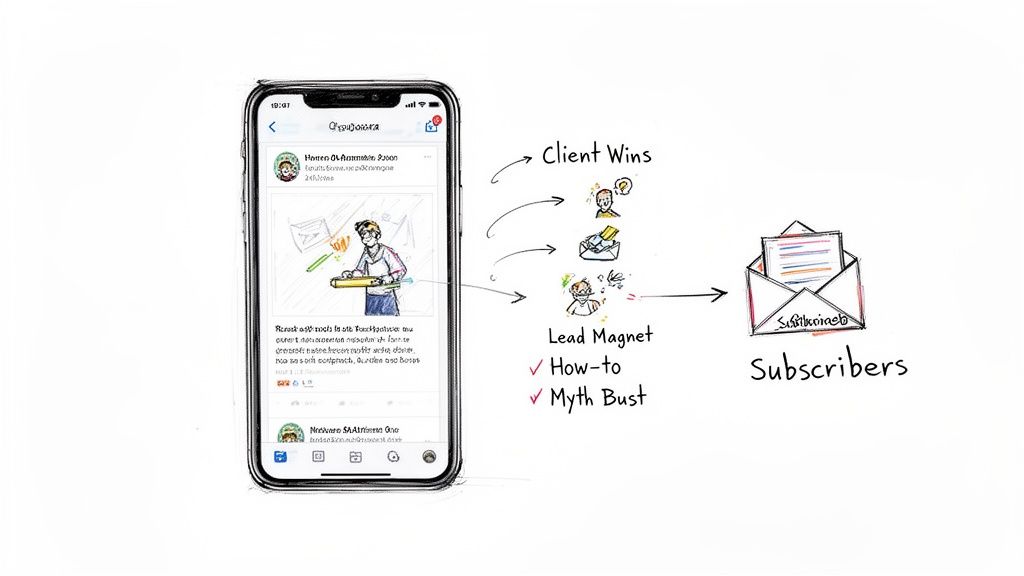
Getting leads is just the first half of the game. A growing email list is great, but it doesn't automatically mean you have a full roster of paying clients. The real transformation—for both your business and your clients—happens when you master the art of conversion.
This is where a lot of coaches get tripped up. Many find themselves either manually chasing down every single person who shows interest or, just as often, never actually asking for the sale. The way out of this frustrating cycle is to combine smart automation with genuine, human conversation.
We're going to break down how to do this with two key tools: an automated email funnel that does the heavy lifting for you, and a collaborative sales conversation that feels good for everyone involved. This system builds trust on autopilot and sets you up as the obvious choice long before you ever hop on a call.
The 5-Day Email Nurture Sequence
The moment someone downloads your lead magnet is when their interest in your work is at its absolute peak. This is your golden window of opportunity to build a real connection and show them what's possible. An automated 5-day email sequence is the single most effective way to capitalize on this moment.
This isn't about bombarding new subscribers with sales pitches. It’s about delivering incredible value, building rapport, and proving you genuinely understand their struggles. Each email in the sequence has a specific job, guiding them on a natural journey from a curious new subscriber to someone who’s excited to book a call with you.
To really get into the weeds of setting up these automated systems, you might find it helpful to explore resources on marketing automation for entrepreneurs.
Here's a proven blueprint I've seen work time and time again. Think of it as a starting point you can tweak to fit your unique voice and coaching style.
5-Day Email Nurture Sequence Blueprint
This simple yet powerful sequence is designed to automatically warm up new leads, build trust, and guide them toward booking a discovery call with you.
Day | Email Theme | Goal |
|---|---|---|
1 | Deliver & Delight | Get the lead magnet into their hands instantly and throw in a quick, unexpected bonus tip. The aim here is to over-deliver from the very first email. |
2 | The Empathy Bridge | Share a short story—either your own or a client's—that mirrors their exact struggles. This shows you get it on a deep level and builds immediate rapport. |
3 | Bust a Myth | Tackle a common misconception or limiting belief that's keeping your ideal client stuck. This positions you as an expert with a fresh, insightful perspective. |
4 | Paint the Future | Describe the transformation they're looking for. Detail what life looks and feels like once they've solved the problem your coaching helps with. |
5 | The Gentle Nudge | Connect the dots between their problem and your program, then invite them to book a free, no-pressure discovery call to explore if it’s a good fit. |
This sequence just works. It methodically moves a person from being aware of their problem to being aware of your solution, making the invitation to chat feel like the logical next step.
Mastering the Enrollment Conversation
If your email sequence is doing its job, you'll see those discovery calls start popping up on your calendar. This is the moment that makes a lot of coaches sweat, worried they have to morph into a pushy, high-pressure salesperson. But the truth is, a great "sales call" isn't about selling at all—it's about enrolling.
Think of it as a collaborative, diagnostic conversation. Your only goal is to figure out if you can truly help the person on the other end of the line. When you shift your mindset to this, all the pressure just melts away.
Your goal on an enrollment call is not to convince. It is to diagnose. A masterful coach listens more than they talk, asking powerful questions that lead the prospect to their own conclusions.
This approach immediately builds trust and respect, making the prospect feel seen, heard, and understood.
A Framework for Authentic Enrollment
Instead of memorizing a rigid script, I recommend using a flexible framework. This structure ensures you cover all the important bases while still leaving plenty of room for a real, human connection to form.
Set the Frame: Kick off the call by laying out the agenda. Let them know you'll ask some questions to understand their situation, and if it feels like a mutual fit, you can talk about what working together might look like. Simple.
Diagnose the Gap: This is where the magic happens. Your job is to use powerful, open-ended questions to get crystal clear on two things: their current situation (Point A) and where they want to be (Point B). What are their biggest frustrations? What have they already tried? What happens if nothing changes a year from now?
Position Your Offer as the Bridge: Once you have a clear picture of that gap between A and B, you can introduce your coaching program as the most direct path to get them across. Don't just list features; explain how your process solves their specific problems and helps them achieve their specific goals.
Handle Objections & Enroll: Address any questions or concerns they might have with empathy and honesty. If you truly believe it's a great fit, confidently state your price and invite them to join you.
This entire process empowers the prospect to make an informed, confident decision. The "close" becomes a natural, collaborative agreement to move forward—and it’s how you can enroll high-ticket clients without ever feeling like you're selling.
Time to Scale: Pouring Fuel on the Fire
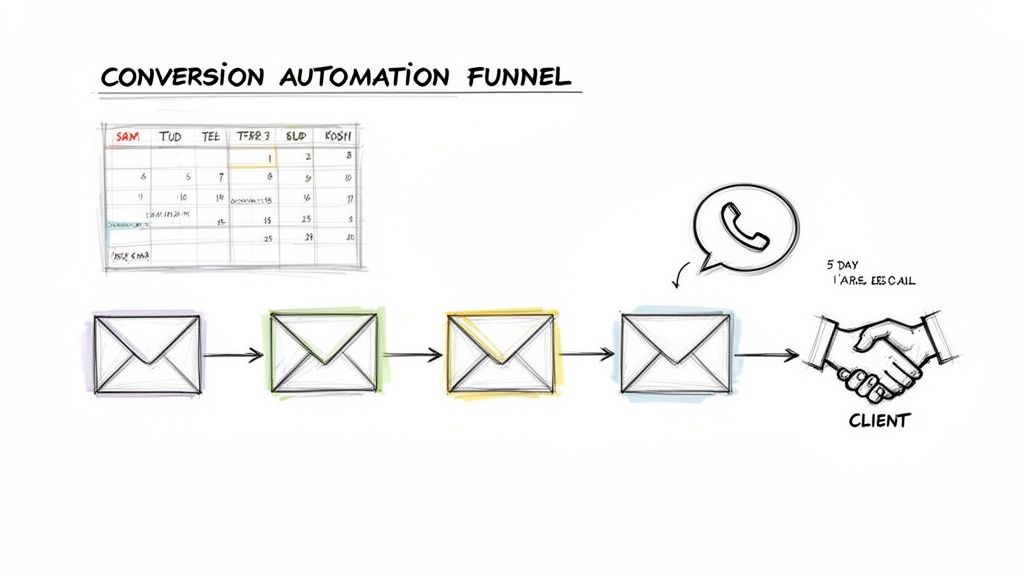
So, you’ve done the hard work. Your organic marketing is humming along, bringing in clients consistently. You’ve officially moved past the "is this thing going to work?" phase and built a real, reliable business.
Now, it’s time to pour some fuel on that fire. This is where we shift from hustling for every client to building systems that bring them to you.
Scaling isn’t about working more hours. It’s about working smarter by putting systems in place that amplify your reach without multiplying your effort. We're going to focus on two of the most powerful growth levers for any coach with a proven offer: smart paid advertising and a rock-solid referral system.
These two strategies are a potent combination. One brings in a steady stream of new leads, while the other leverages the trust you've already built, creating a resilient and profitable coaching practice.
A No-Sweat Introduction to Paid Ads
The mere mention of "paid advertising" can make some coaches break out in a cold sweat, but it doesn't have to be a nightmare. The secret is to start small and be strategic. Ads aren't a magic wand; they're an amplifier for what you already know works.
The goal is simple: put your proven lead magnet in front of a much larger, highly targeted audience on a platform like Facebook or Instagram. You’ve already confirmed that people want this thing organically. Now you're just paying to get it into more of the right hands, much faster. This is a core part of effective marketing for coaches who are ready for the next level.
Here’s a low-risk way to dip your toes in the water:
Start with a Tiny Budget: I'm serious. Kick things off with a budget you wouldn't miss, like $10-$20 a day. Your first goal isn't profit; it's collecting data.
Target a "Lookalike" Audience: This is a game-changer. You can upload your email list or a list of past clients, and the platform’s algorithm will go find new people who share similar traits. It's like cloning your best clients.
Obsess Over One Metric: Forget all the confusing ad metrics for now. Just track your Cost Per Lead (CPL). This number tells you exactly how much it costs to get one new person onto your email list.
Once you have a predictable CPL and you know your email funnel converts those leads into booked calls, you can confidently start dialing up your ad spend. You've just built a machine where you can put $1 in and know you'll get $3, $5, or even $10 back in client revenue.
Paid advertising is the ultimate accelerator once you have proof of concept. It takes the guesswork out of lead generation and allows you to create a predictable, scalable client acquisition machine.
Building Your Referral Engine
While ads are out there finding new people, your referral system is working behind the scenes to scale the trust you’ve already earned. Let's be clear: a happy client is your single greatest marketing asset. Period.
Turning those happy clients into a consistent source of new business is one of the most cost-effective growth moves you can make. It all starts with delivering an incredible client experience. When you get people amazing results and make them feel supported, they want to tell everyone they know about you.
But hope isn't a strategy. You can't just cross your fingers and wait for referrals to roll in. You need a simple process to encourage and capture them.
Knowing the Right Time and Way to Ask
Timing is everything. You don't want to ask for a referral when a client is in the middle of a struggle. The absolute best time is right after they've had a big win or when you're wrapping up a successful program together. Their excitement and gratitude are at an all-time high.
Here's a simple flow:
Celebrate Their Win: First and foremost, acknowledge their hard work and celebrate their success with genuine enthusiasm.
Make a Simple, Direct Ask: Say something natural like, "I'm so thrilled with the progress you've made. I love working with people just like you. Do you happen to know anyone else who might be struggling with [the same problem we solved]?"
Offer a Small Thank You (Optional): You can sweeten the deal by offering a small gift card or a discount on future services for a successful referral. It’s a nice gesture that shows your appreciation.
As you begin to scale, you’ll find that you can't do it all yourself. To truly grow, you need to understand which tasks to delegate. It might be time to look into hiring a virtual assistant specifically for coaches to help manage the growing administrative and marketing workload. By investing in both paid ads and a referral system, you create a powerful, self-sustaining growth loop that will take your coaching business to new heights.
Your Top Coaching Marketing Questions Answered
Putting a marketing playbook into action is where the real questions pop up. It's one thing to have a strategy on paper, but when you start executing, you're bound to hit a few roadblocks. Let's tackle some of the most common questions we hear from coaches so you can move forward with total clarity.
How Much Should I Spend on Marketing When I'm Just Starting Out?
When you're new, your most powerful asset isn't your wallet—it's your time. Seriously.
You should be pouring nearly all of your effort, think 90%, into the organic strategies we've covered. That means getting ruthlessly consistent with valuable content on your chosen platform, building real relationships, and showing up to serve your audience.
Your financial spend should be tiny at this stage. A simple website and a budget-friendly email marketing tool are really all you need to get the engine started.
Do not spend a single dollar on paid ads until you have a proven offer and a predictable stream of organic clients. It’s the fastest way to burn through your cash with absolutely nothing to show for it.
Once you have consistent income, a solid rule of thumb is to reinvest 10-15% of your coaching revenue right back into marketing. This is how you scale things sustainably without taking on scary risks.
What Are the Most Important Marketing Metrics for a Coach to Track?
It is incredibly easy to get distracted by vanity metrics. Follower counts and post likes feel good, but they don't pay the bills. You have to get laser-focused on the numbers that actually drive your business forward.
For a new coach, these three Key Performance Indicators (KPIs) are your new best friends:
Number of Discovery Calls Booked: Track this weekly and monthly. This is the ultimate health check for your marketing efforts. It tells you if your content is actually compelling people to take the next step.
Call-to-Client Conversion Rate: Of all the discovery calls you hold, how many turn into paying clients? This number shines a spotlight on your enrollment process, showing you exactly where you're strong and where you need to improve.
Client Lifetime Value (LTV): On average, how much revenue does one client bring into your business over their entire journey with you? Knowing this number is critical for making smart decisions about how much you can eventually spend to acquire a new client.
Forget everything else for now. Tracking just these three metrics will give you a brutally honest picture of your business's health and potential for growth.
I Hate Selling. How Can I Get Clients Without Being Pushy?
This is probably the #1 fear we hear from new coaches, and it all comes from a deep misunderstanding of what a "sales call" should be. So, first things first: completely reframe "selling" as "enrolling."
Your job on a discovery call isn't to convince or persuade anyone. Your true role is to be a world-class diagnostician. You are there to listen intently, understand their problem on a deep level, and then determine—with total integrity—if your program is the right prescription to get them where they want to go.
The framework in this guide is built on that exact idea. By focusing on asking powerful, insightful questions and listening way more than you talk, you create a conversation, not a pitch. The "close" just becomes the logical next step when you’ve clearly established the gap between where they are and where they want to be, positioning your coaching as the most obvious bridge to get there.
Authenticity and a genuine desire to help will always outperform aggressive sales tactics. Every time.
How Can I Use PLR Content Without Sounding Generic?
The secret to using PLR (Private Label Rights) content well is to treat it as a high-quality head start, not a finished product. It's a strategic shortcut meant to save you 80% of the creation time, leaving you to add the final 20% that makes it completely yours.
First, always rebrand the materials with your logo, brand colors, and fonts. That's non-negotiable. Then, dive into the actual content. Weave in your personal stories, client case studies, and the specific phrases and language you use every day with your clients. Add a personal introduction and a summary conclusion in your own voice.
For an ebook, you could add an entirely new chapter on your signature framework. For a course, maybe you record a short, personal welcome video for each module. This approach lets you produce a final asset that is 100% authentic to you and your brand, but in a fraction of the time.