Explained
Affiliate Marketing Newsletters: Grow Subscribers and Revenue

An affiliate marketing newsletter is more than just a promotional email—it's your direct line to an audience that has explicitly asked to hear from you. Unlike generic ad blasts, the best newsletters blend genuine value and authentic recommendations, turning a simple email list into a consistent, reliable revenue stream.
The concept is simple: you promote products or services you trust, and in return, you earn a commission on any resulting sales. It works because you're delivering curated offers straight to the inboxes of engaged subscribers.
Your Blueprint for a High-Converting Affiliate Newsletter
This guide isn't about theory. It’s a practical playbook showing you exactly how successful creators and entrepreneurs build trust and promote products without sounding like a pushy salesperson. We're going to walk through the entire process, from initial planning and content creation to launching your newsletter and optimizing it for long-term growth.
The opportunity here is massive. The affiliate marketing space was recently valued at over $17 billion, but it's projected to explode to $27.78 billion by 2027. Newsletters are a huge piece of this puzzle, with email marketing serving as a primary traffic channel for 22.8% of all affiliates. For creators, this means a newsletter packed with value is one of the most effective ways to turn subscribers into a high-converting affiliate audience.
To give you a clear roadmap for this journey, let's break it down into four distinct phases.
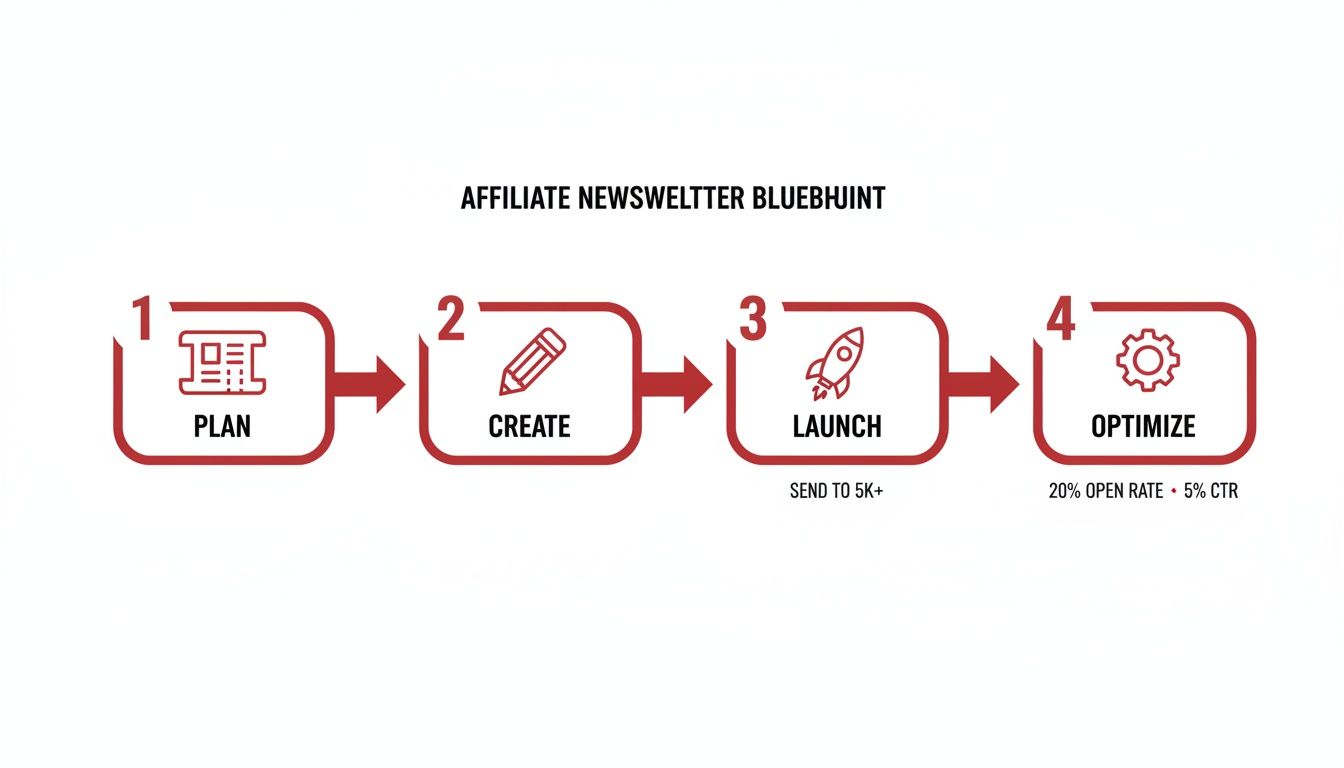
This visual blueprint breaks the entire process into four actionable stages: planning your strategy, creating content people actually want to read, launching to an engaged audience, and finally, optimizing for better performance.
To help you visualize how these stages connect, here’s a quick overview of what each one entails.
The Four Phases of a Successful Affiliate Newsletter
Phase | Key Objective | Core Activities |
|---|---|---|
1. Plan | Build a strong foundation for your newsletter. | Define your niche, identify your target audience, select affiliate partners, and choose an email service provider (ESP). |
2. Create | Develop high-value content that builds trust. | Craft compelling welcome sequences, design email templates, write engaging copy, and strategically place affiliate links. |
3. Launch | Grow your list to your first 5,000+ subscribers. | Implement list-growth tactics, create lead magnets, set up automated sequences, and run initial promotional campaigns. |
4. Optimize | Improve performance to hit key benchmarks. | Analyze metrics (20% open rates, 5% CTR), A/B test subject lines, segment your audience, and refine your monetization strategy. |
Each phase builds on the last, creating a sustainable system for growth.
Of course, this entire process relies on having the right software to manage your campaigns and subscribers. Choosing the right platform from the get-go saves you countless hours and prevents major technical headaches down the road. Our guide on the https://www.entrepedia.co/resources/tools/best-email-marketing-tools-for-selling-digital-products can help you compare features and find the perfect fit.
The most successful newsletters don't just sell; they serve. They solve problems, offer unique insights, and build a genuine connection. Affiliate links become a natural extension of that value, not a jarring interruption.
Ultimately, your newsletter is a direct channel to your audience—an asset you completely own. Unlike social media platforms where algorithms you can't control dictate your reach, email gives you the power to nurture relationships and drive predictable revenue. For a deeper look at the strategy behind email, check out a comprehensive guide to marketing with newsletters.
Now, let's dive into the first phase and lay the groundwork for your success.
Getting the Foundation Right: Your Affiliate Newsletter Blueprint
Before you even think about writing a single subject line, we need to talk about the foundation. Getting this part right is the single most important thing you can do, and honestly, it’s what separates the newsletters that make real money from the ones that just fizzle out.
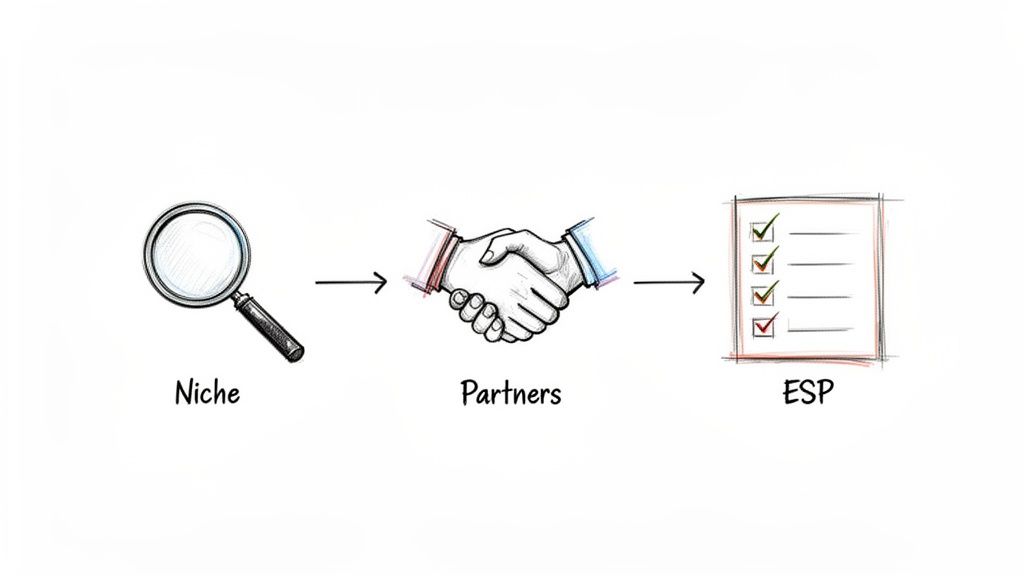
Think of it like building a house. You wouldn’t just start throwing up walls without a solid blueprint, right? Your niche, your partners, and your tech stack—these are your blueprints. Skipping this step is a recipe for a wobbly business that collapses under its own weight. To get started, you'll need a solid understanding of email marketing basics.
Define Your Niche and Audience
Your first big decision is picking a niche. I see so many people go way too broad. A newsletter about "everything tech" is a tough sell, but one focused on "AI-powered productivity tools for solo freelancers"? Now you’re talking. That’s specific, targeted, and a heck of a lot easier to monetize.
The goal here is to become the go-to person for a very specific group. Ask yourself these questions:
Who am I really helping? Don't just say "marketers." Get granular. Think "in-house B2B marketers at early-stage SaaS startups." See the difference?
What problem am I solving for them? Your affiliate products need to be the direct solution to their biggest headaches.
Why me? This is your unique angle. Is it your personal experience? Your deep-dive research? Your unfiltered opinions?
A tight focus helps you build a loyal tribe that actually trusts your recommendations. And in affiliate marketing, trust is everything.
Find High-Quality Affiliate Programs to Partner With
Let's be clear: not all affiliate programs are created equal. Partnering with a sketchy company or a subpar product is the fastest way to destroy your credibility. Your reputation is your most valuable asset, so guard it fiercely.
When you're vetting potential partners, here's my checklist:
Is the product actually great? Have you used it? Would you recommend it to a friend even if you weren't getting paid? If the answer is no, walk away.
Are the commissions fair? Do some research. For SaaS, recurring commissions of 20-30% are pretty standard. For one-off digital products, you might see 50% or more.
Do they support their partners? A good program gives you marketing assets, a responsive affiliate manager, and most importantly, on-time payouts.
What's the cookie duration? A longer window (30, 60, or even 90 days) gives your readers time to make a decision while still ensuring you get credit for the sale.
Being picky upfront saves you a world of headaches down the road and ensures you're only promoting stuff you can genuinely stand behind.
Nail Down Your Unique Value Proposition
Thousands of newsletters are fighting for inbox space. You need a crystal-clear answer to one simple question: Why should someone subscribe to your newsletter?
This is your Unique Value Proposition (UVP). It’s the promise you make to every single person who signs up. Instead of something vague like "A newsletter about marketing tools," try something punchy: "The 5-minute weekly roundup of underrated marketing tools that save you 10+ hours a week."
A strong UVP turns your newsletter from "just another email" into a "must-read." It’s the difference between a subscriber who immediately archives your email and one who eagerly waits for it to land in their inbox.
Choose an Affiliate-Friendly Email Service Provider
Finally, you need the right engine to power all this. Your Email Service Provider (ESP) is your command center, but be careful—some ESPs have really strict rules about affiliate links and can shut you down without warning.
When you’re comparing platforms, look for these key features:
Clear Affiliate Link Policies: Make sure the platform explicitly says they’re cool with affiliate marketing. Beehiiv and ConvertKit are popular for this very reason.
Solid Automation Tools: You’ll need this to build welcome sequences and other automated campaigns that run in the background.
Segmentation and Tagging: The ability to group subscribers (like by interest or what they've clicked on) lets you send super-targeted promos that convert way better.
Good Analytics: You have to know your numbers. Look for clear reporting on open rates, click-through rates, and subscriber growth to see what's working.
Putting in this work now ensures that when you're finally ready to hit "send," you're launching on a foundation built for growth, not headaches.
Crafting Content That Converts Without Being Salesy
Alright, this is where all that planning pays off. Creating killer content for an affiliate newsletter isn't about the hard sell—it’s about mastering the soft sell through genuine value and good storytelling.
Your real goal? Make subscribers feel like they're getting a hot tip from a trusted friend, not a pitch from a salesperson.
The most successful affiliate emails I’ve seen always frame products as solutions. They don’t just rattle off features. Instead, they connect what a product does to a reader's specific problem or goal. This approach builds a ton of trust and makes clicking your affiliate link feel like the natural next step, not some jarring ad.
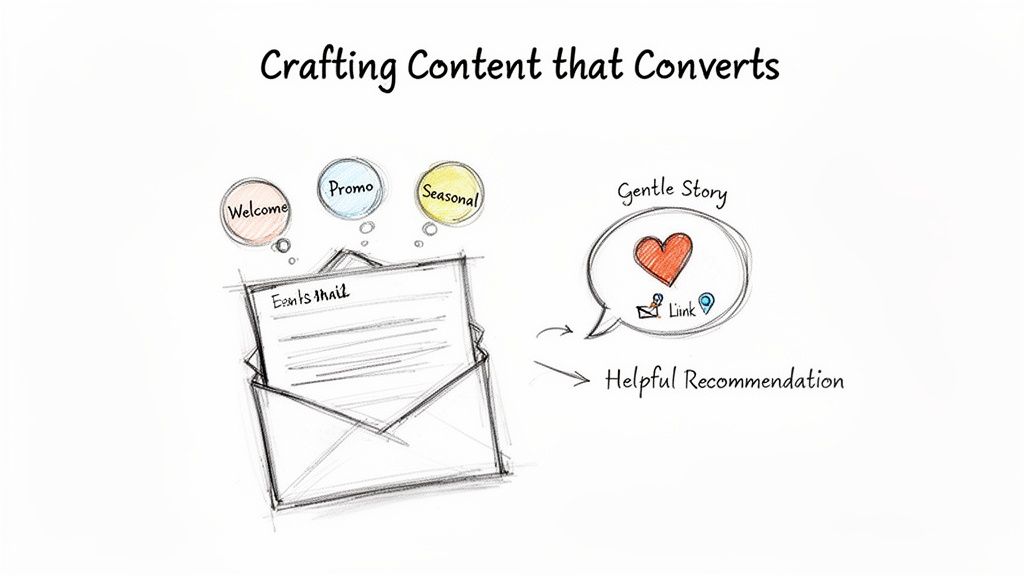
To make this super practical, let's break down the essential automated email sequences every affiliate marketer needs. Think of these as your behind-the-scenes sales force, working 24/7 to nurture subscribers and drive commissions.
Core Affiliate Email Sequence Templates
Here’s a quick look at the foundational automated sequences that do the heavy lifting for your affiliate promotions. Each one serves a distinct purpose, guiding your subscribers from curiosity to conversion.
Sequence Type | Primary Goal | Example Email Flow (3-5 Steps) |
|---|---|---|
Welcome Sequence | Build trust, deliver value, and subtly introduce your affiliate philosophy. | 1. Welcome & Quick Win: Deliver lead magnet + share a personal story. |
Promotional Campaign | Build excitement and urgency around a single, targeted affiliate offer. | 1. Agitate the Problem: Focus on a pain point without mentioning the product. |
Seasonal/Event-Based | Tie promotions to timely events for natural relevance and urgency. | 1. Pre-Event Warm-Up: Help them plan for the event (e.g., Black Friday). |
By setting these up, you create a system that works for you, ensuring every subscriber gets a cohesive and persuasive experience.
The Foundational Welcome Sequence
Your welcome sequence is your one and only chance to make a great first impression. It sets the tone for everything that follows. The mission here is to welcome new subscribers, give them something valuable right away, and gently introduce the kinds of products you’ll be recommending down the line.
A simple but effective 3-day welcome sequence could look like this:
Email 1 (Day 1): Welcome & Quick Win. First, confirm their subscription and give them the lead magnet you promised. But don't stop there. Tell them why you started the newsletter and include one simple, actionable tip they can use right now.
Email 2 (Day 2): Your "Struggle to Success" Story. Get personal. Share a short story about a problem you struggled with—one that your audience can relate to. Casually mention a tool or resource (your affiliate product) that was a total game-changer for you. This isn't a pitch; it's just part of your journey.
Email 3 (Day 3): The Resource Roundup. Wrap things up with a curated list of your top 3-5 "can't-live-without" tools. Frame it as a starter kit, with your affiliate links included. This positions you as a helpful guide, not just a seller.
The Targeted Promotional Campaign
When you’re ready to shine a spotlight on a specific affiliate product, a dedicated promotional campaign is your best bet. Forget sending a single "buy now" email. This is a short, focused series that builds interest and urgency over a few days.
Let’s say you’re promoting a project management tool called “TaskMaster.”
Email 1: The Problem-Agitator. Kick things off by tapping into a common frustration. Something like, "Feeling buried by your to-do list?" Share a relatable story without even naming the product, and end with a hook: "What if there was a simpler way to manage it all?"
Email 2: The Solution-Introduce. Now you bring in TaskMaster. But don't list every feature. Focus on one or two key benefits that solve the exact problem you raised in the first email. Use a mini-case study: "Here’s how I used TaskMaster to cut my weekly planning time in half." Then, drop your affiliate link.
Email 3: The Social Proof & FAQ. Time to tackle any skepticism. Share a killer testimonial or a surprising stat about the product's results. Answer 2-3 common questions you know people will have. This builds confidence and makes the decision easier.
Email 4: The Final Reminder (Urgency). If there's a special discount or bonus expiring, this is where you mention it. Be direct and clear, emphasizing the benefit of acting now.
The secret to a killer promo campaign is escalating the value. Each email should add something new—a new perspective, another piece of social proof, or an answer to a lingering question. You're guiding them, not pushing them.
The Timely Seasonal Or Event-Based Sequence
This is one of my favorite tactics because it feels so natural. Tying your promotions to seasonal moments or big events—like Black Friday, New Year's, or even an industry conference—creates instant relevance.
For instance, a "New Year Productivity" campaign is the perfect time to promote goal-setting apps or organization software.
Before the Event: Send an email helping subscribers map out their goals.
During the Event: Curate a list of the best "New Year" deals on your favorite productivity tools (with affiliate links, of course).
After the Event: Follow up with a guide on how to actually use one of the tools to stick with their resolutions.
This strategy aligns your offers with what’s already on your reader’s mind, making your emails feel perfectly timed and incredibly helpful. Master these three sequences, and you’ll have a powerful system that drives conversions without ever feeling sleazy.
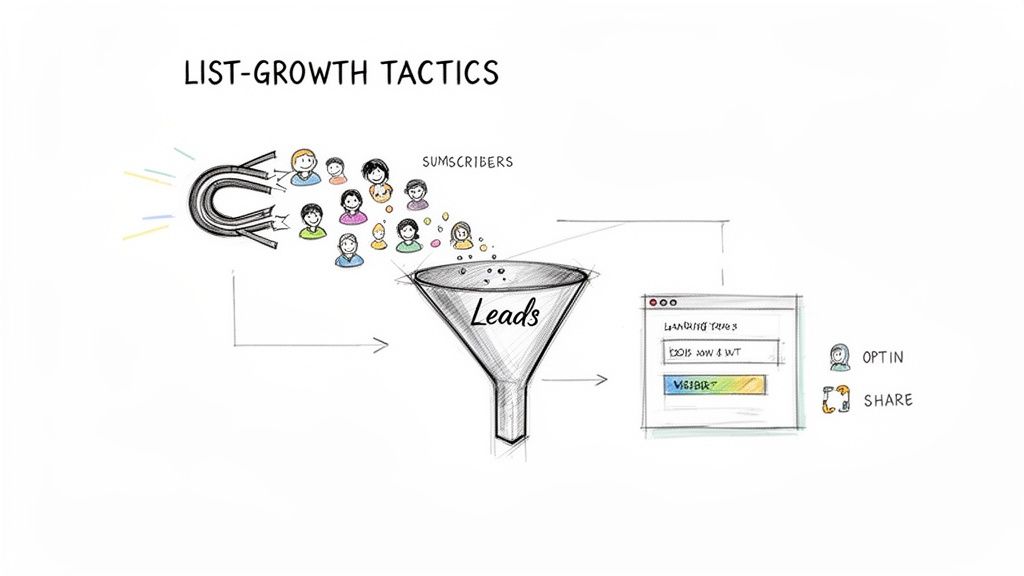
Proven Tactics to Grow Your Subscriber Base
An incredible newsletter is useless without an audience. Seriously. You can craft the most helpful, compelling emails in the world, but if nobody’s reading them, what's the point? Getting your content right is half the battle; the other is building a list of engaged subscribers who actually want to hear from you.
This isn't about chasing vanity metrics. It’s about attracting the right people—the ones who will genuinely benefit from your recommendations and, in turn, help your business grow. Let's skip the generic advice and get into practical strategies that work specifically for affiliate-focused newsletters.
Create a High-Converting Lead Magnet
The foundation of fast list growth is an irresistible lead magnet. This is the freebie you offer in exchange for an email address. For affiliate marketers, the best lead magnets are the ones that perfectly set the stage for your future product recommendations.
Instead of some generic checklist, build something that solves a very specific problem for your ideal reader. This move instantly establishes your authority and pre-qualifies subscribers as people interested in the solutions you’ll eventually promote.
Here are a few lead magnet ideas that pack a punch:
A "Toolkit" PDF: Put together a simple guide to your top 5-10 essential tools for a specific task (e.g., "My Go-To Podcasting Starter Kit"). This makes it completely natural to talk about these tools—and use affiliate links—down the road.
A Mini-Email Course: Set up a 3-5 day automated email sequence that teaches a specific skill. For instance, a "Launch Your First Shopify Store in 3 Days" course could logically recommend e-commerce themes, apps, and marketing tools.
Exclusive Video Training: Record a quick, 15-minute video showing exactly how you use a specific product to get a result. This builds massive trust and shows the real-world value of your affiliate partners.
Optimize Your Opt-In Forms and Landing Pages
Once you have a great lead magnet, you need to make it dead simple for people to sign up. This means placing clean, clear, and persuasive opt-in forms in all the right places.
Don't just stick a form in your website footer and call it a day. A multi-pronged approach is always better.
I highly recommend creating a dedicated landing page that has one job: selling the benefits of your lead magnet and newsletter with zero distractions. Platforms like Beehiiv and ConvertKit have simple builders that let you whip these up in no time.
Your landing page exists for one reason: to turn a visitor into a subscriber. Keep it simple. Use a powerful headline, a few bullet points explaining what they’ll get, and a big, obvious call-to-action button.
Beyond that, you should also embed sign-up forms directly within relevant blog posts and on your homepage. You want to catch people's attention the moment they’re most engaged with what you have to say.
Leverage Cross-Promotion and Collaboration
You don't have to build your audience in a vacuum. Tapping into existing communities is one of the fastest ways to grow a targeted subscriber list. The key is building real relationships with other creators in your niche.
Start looking for win-win opportunities to collaborate.
Newsletter Swaps: Find another creator with a similar-sized audience and agree to recommend each other's newsletters. This is a free and incredibly effective way to get in front of a warm, qualified audience.
Guest Posting: Write a high-value article for a more established blog in your niche. At the end of the post, include a call-to-action that points readers directly to your lead magnet.
Podcast Interviews: Appearing as a guest on relevant podcasts introduces your expertise to a whole new set of ears. Make sure to mention your lead magnet and newsletter URL during the show.
Ultimately, building a subscriber base is an ongoing process, not a one-and-done task. For a deeper look, our guide on how to build an email list offers even more actionable strategies. The combination of a killer lead magnet and smart, consistent promotion is what truly creates a sustainable growth engine for your newsletter.
Optimizing for Long-Term Profitability
Launching your affiliate newsletter is a huge milestone, but it's the starting line, not the finish. The real secret to turning a good newsletter into a great business is continuous, data-driven improvement. Lasting success comes from understanding your results and making smarter decisions, week after week.
It all starts by looking past the vanity metrics. Sure, open rates are nice, but they don't pay the bills. The numbers that really matter tell you what your subscribers do after they open your email. Focusing on these deeper metrics is what separates amateur affiliate marketers from the pros.
Key Metrics That Actually Drive Revenue
To get a real handle on performance, you need to track a few core metrics for every single campaign you send. These numbers will become your North Star for making strategic adjustments.
Click-Through Rate (CTR): This is the percentage of subscribers who clicked on at least one link. A high CTR tells you the copy and call-to-action were compelling enough to spark genuine interest.
Conversion Rate: This tracks the percentage of clickers who actually completed the desired action, like making a purchase. This is the ultimate measure of your email's effectiveness.
Earnings Per Click (EPC): Calculated by dividing your total affiliate commissions by the number of clicks on your affiliate links. EPC tells you the average value of each click you generate. A high EPC means you're promoting the right products to the right audience.
Subscriber Lifetime Value (LTV): This is the total revenue a single subscriber generates over their entire time on your list. Improving LTV is the key to sustainable, long-term profitability.
By consistently monitoring these numbers, you can stop guessing what works and start knowing.
Simple A/B Testing for Consistent Growth
A/B testing (or split testing) is your best friend for making incremental improvements. It’s pretty simple: you send two slightly different versions of an email to small, separate segments of your audience to see which one performs better. Even small wins from these tests can compound into significant revenue gains over time.
Most modern email platforms, like Beehiiv or ConvertKit, have built-in A/B testing features that make this process incredibly straightforward.
Here are three simple but powerful elements to test right away:
Subject Lines: Pit a straightforward, benefit-driven subject line against something more creative or curiosity-piquing. Think "This AI Tool Saves Me 5 Hours a Week" vs. "My Secret Weapon for Productivity."
Calls-to-Action (CTAs): Experiment with different button text, colors, and placement. You might test "Get Started for Free" against "Explore the Features" to see which one drives more clicks.
Send Times and Days: Does your audience engage more on a weekday morning or a weekend afternoon? Testing different send times can reveal surprising windows of high engagement you'd otherwise miss.
The golden rule of A/B testing is to only change one variable at a time. If you test a new subject line and a new CTA in the same email, you'll never know which change was responsible for the results.
Advanced Segmentation for Hyper-Relevance
As your list grows, blasting the same message to everyone becomes less and less effective. This is where segmentation comes in. It’s the practice of dividing your email list into smaller groups based on specific criteria, allowing you to send hyper-relevant offers that can dramatically increase conversions.
You can segment your audience based on all sorts of data:
Past Clicks: Create a segment of people who have previously clicked on links related to a specific category, like "project management tools."
Purchase History: Tag subscribers who have purchased a particular type of product and send them offers for complementary tools.
Engagement Level: Reward your most engaged subscribers—your true fans—with exclusive deals or early access to promotions.
For instance, if you notice a group of subscribers repeatedly clicks on links for graphic design software, create a special segment just for them. The next time a new design tool launches or an existing one has a sale, you can send a targeted campaign only to that group. This level of personalization feels helpful, not spammy, and is a cornerstone of a well-executed email strategy.
To dive deeper into this topic, explore our Lifecycle Email Marketing Guide for more advanced techniques.
Your Top Questions, Answered
When you're diving into affiliate newsletters, a few practical questions always pop up. Getting straight answers is the fastest way to build confidence and sidestep those early roadblocks that slow so many people down. Let's tackle the most common questions I hear from creators.
We’ll cover everything from how often to hit "send" to the nitty-gritty of staying compliant. My goal is to give you the clarity you need to move forward.
How Often Should I Send My Affiliate Marketing Newsletter?
There’s no single magic number here, but the real secret is consistency. For most niches, sending your newsletter once a week is a fantastic starting point. This rhythm keeps you top-of-mind without flooding your subscribers' inboxes.
Of course, some high-energy niches can easily handle two or even three emails a week, especially during a big launch or seasonal sale. On the flip side, if your content is super technical or in-depth, a bi-weekly schedule might actually perform better.
The best approach? Test and watch your metrics like a hawk. If your open rates and click-throughs are solid and your unsubscribe rate stays low (under 0.5%), you've found your sweet spot. Always, always prioritize value over volume. One incredible monthly email will crush a spammy daily one every time.
How Do I Disclose Affiliate Links Without Sounding Salesy?
Transparency is everything. It's the bedrock of the trust you build with your audience, and in affiliate marketing, trust is your most valuable asset. The Federal Trade Commission (FTC) requires affiliate disclosures to be clear and conspicuous—that part is non-negotiable.
The best way to handle this is to be direct and honest. Just drop a simple, straightforward statement right at the top of your email.
Pro Tip: Something as simple as, "Just so you know, this email may contain affiliate links. If you make a purchase through them, I may earn a small commission at no extra cost to you," works perfectly.
Don't bury your disclosure in the footer where it’s easy to miss. Most subscribers genuinely appreciate the honesty, and it almost never hurts your conversion rates. You can even frame it as a simple way for them to support your work, which lets you keep creating the awesome free content they signed up for. Authenticity always wins.
Can I Really Make Significant Income from a Newsletter?
Absolutely, but let's be real: this isn't a get-rich-quick scheme. Your income potential is directly tied to three key things:
The size and engagement of your list.
The quality and relevance of the products you promote.
The level of trust you've built with your audience.
I've seen creators with a small, hyper-engaged list of 1,000 subscribers in a tight niche earn more than someone with a generic, disengaged list of 50,000. The top newsletter operators in the affiliate space are pulling in six or even seven figures a year.
A realistic goal when you're starting out is to aim for a few hundred dollars per month. As your list and authority grow, scaling that to several thousand a month is completely achievable. The key is to focus on serving your audience first—the income will follow.
What Are the Biggest Mistakes to Avoid?
Getting your affiliate newsletter off the ground is a lot easier when you know which common traps to avoid.
Here are the top three mistakes I see new creators make all the time:
Promoting too many unrelated products. This shotgun approach just confuses your audience and makes you look unfocused. Stick to a curated set of tools and resources that perfectly align with your niche.
Being overly promotional. If every single email is a hard sell, you'll burn out your list in a heartbeat. The 80/20 principle is a great guideline: 80% of your content should deliver pure value, with only 20% dedicated to promotions.
Failing to track your results. You can't improve what you don't measure. If you aren't monitoring clicks, conversions, and your earnings per email, you're flying blind and leaving money on the table.