Grow Your Email List: How to Build Email List Fast

To get started with an email list, you need two things: a valuable freebie (what we call a lead magnet) to offer in exchange for an email address, and a few strategic opt-in forms on your website and social media. This simple trade is the heart of list building, turning casual visitors into engaged subscribers you can connect with directly.
Why an Email List Is Your Most Valuable Marketing Asset
Before we get into the nitty-gritty, you need to understand why an email list is a non-negotiable for long-term success. Unlike social media followers, your email list is an audience you truly own. It’s completely immune to sudden algorithm changes, platform outages, or the pay-to-play game that social feeds have become.
Think of it as the difference between renting an apartment and owning a home. On social media, you're just renting space; the landlord (the platform) can change the rules or even kick you out without warning. Your email list is your own property—a direct, personal line of communication that you control.
This ownership creates stability and a predictable way to drive revenue. If you want to dive deeper into the fundamentals, this comprehensive guide on building email lists is a great resource.
The Power of a Direct Connection
Email isn't just another marketing channel; it's a tool for building genuine relationships. When someone invites you into their inbox, they’re giving you a level of trust that a simple follow or like can't touch. This unique connection lets you:
Foster Deeper Relationships: By sharing valuable content, brand stories, and exclusive offers, you can guide people from casual interest to becoming loyal customers.
Drive Reliable Revenue: Email marketing consistently delivers one of the highest ROIs out there. Campaigns can be directly tied to sales, making it a powerful and measurable way to grow your bottom line.
Gather Valuable Feedback: Your list is a built-in focus group of your most engaged fans. You can survey them, test new ideas, and get feedback to make your products and services even better.
The sheer scale of email usage really drives the point home. As of 2025, there are roughly 4.6 billion email users worldwide, with over 347 billion emails sent daily.
Even more telling, 60% of consumers say they prefer brands to contact them via email. A staggering 88% check their email multiple times a day. If you want the full picture, check out these key email marketing statistics.
Your email list is the only marketing channel you can control completely. It doesn't belong to Facebook or Google; it belongs to you. This makes it your most stable and reliable asset for business growth.
Ultimately, learning to build an email list is about creating a resilient, profitable, and personal connection with the people who matter most to your business. It's the foundation for every lasting customer relationship you'll ever build.
Creating Lead Magnets People Genuinely Want
An irresistible offer is the heart of every successful email list. Without a compelling reason to subscribe, even the slickest signup form will just sit there collecting dust. This is all about making a simple, powerful trade: their email address in exchange for an immediate, tangible solution to a problem they're dealing with right now.
The whole idea is to create a lead magnet—a free piece of high-value content—that your ideal customer would happily pay for. This isn't just a generic "sign up for our newsletter" plea; it's a specific promise of value, delivered instantly.
Uncovering Your Audience’s Real Problems
The most effective lead magnets solve a very specific pain point. Before you even think about creating something, you need to get inside your audience's head and figure out what's keeping them up at night. What are their biggest frustrations, questions, or hurdles related to what you do?
To get the ball rolling, try these brainstorming methods:
Dig into your most popular content: Look at your blog posts, social media updates, or videos. Which topics are getting the most traffic, comments, and shares? That’s a massive clue about what your audience craves more of.
Hang out in online communities: Pop into forums like Reddit, Quora, or niche Facebook groups where your target audience lives. Pay close attention to the questions people are asking over and over again.
Sift through customer feedback: If you already have customers, what questions pop up the most? Their inquiries are a goldmine for lead magnet ideas that solve real-world challenges.
By spotting these recurring problems, you can pinpoint exactly what kind of resource would feel like an essential tool rather than just another freebie.
The secret to a high-converting lead magnet is specificity. Don’t offer a vague "guide to marketing." Instead, offer a "7-Day Content Calendar for Busy Solopreneurs." The more specific the solution, the more desirable it becomes.
Turning Problems into High-Value Offers
Once you’ve nailed down a core problem, it’s time to package the solution into a format that’s both valuable and easy to digest. The format you pick should perfectly match the solution you're providing.
To help you decide, here’s a quick breakdown of different lead magnet types and what they’re best for.
Choosing the Right Lead Magnet for Your Audience
Use this matrix to match different lead magnet types with specific audience needs and your business goals, complete with real-world examples.
Lead Magnet Type | Best for Audience Need | Business Goal | Example |
|---|---|---|---|
Checklists & Templates | Quick, actionable wins | Provide an immediate tool | A "New Client Onboarding Checklist" for freelancers. |
PLR Ebooks & Guides | In-depth knowledge on a topic | Establish authority & expertise | A guide on "Mastering Instagram Reels for Business." |
Video Tutorials & Series | Visual, step-by-step guidance | Showcase skills & personality | A 3-part video series on "Setting Up Your First Ad." |
Quizzes & Assessments | Personalized insights | Segment new leads by interest | A "What's Your Marketing Personality?" quiz. |
This table gives you a starting point, but the real magic happens when you align the format with the problem you're solving.
For a more detailed look at these options, our guide on lead magnets from concept to conversion offers a deeper dive. The key is to deliver a quick win that proves your value and leaves the new subscriber excited for what’s next.
This decision tree shows a simple starting point for entrepreneurs wondering if they should build an email list.
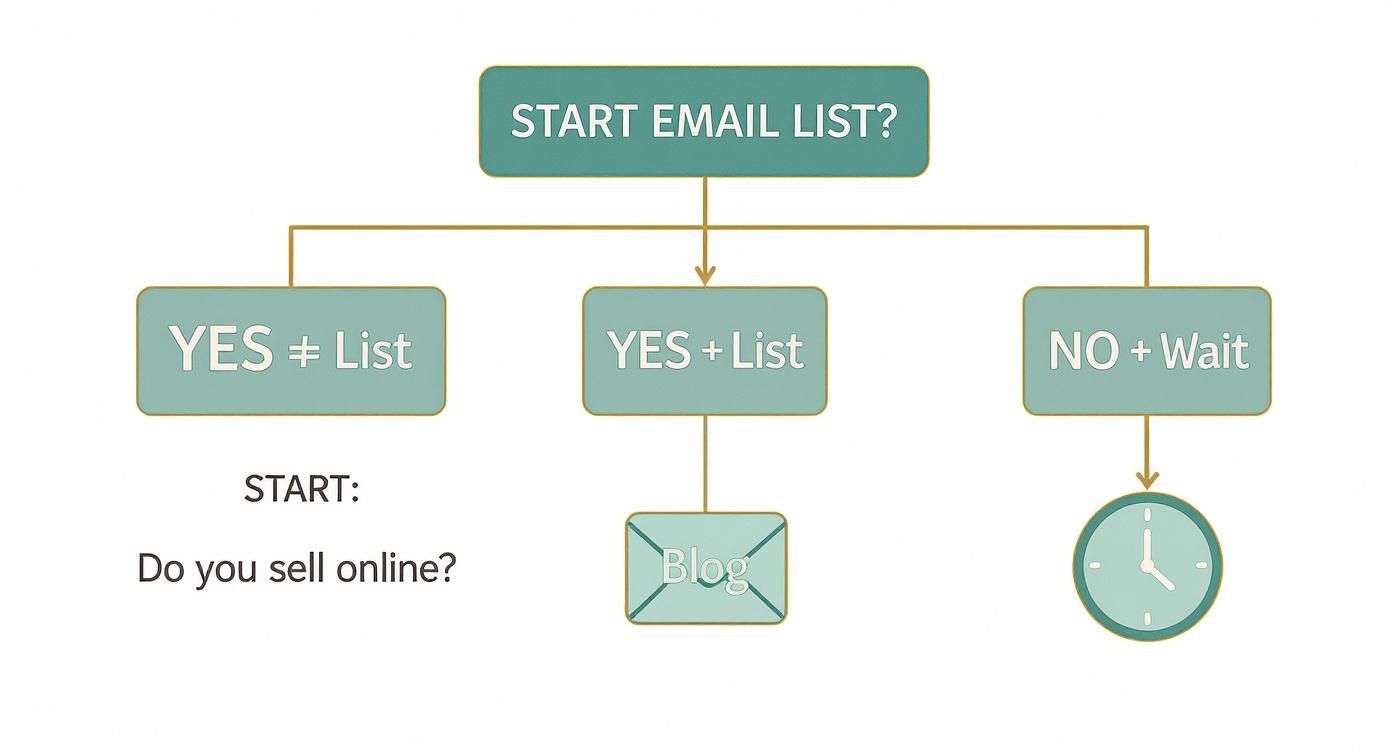
The visual makes it clear: if you’re selling products or creating content online, building an email list is a smart move.
Framing Your Offer to Maximize Value
How you present your lead magnet is just as important as the content itself. You need to frame it in a way that shines a spotlight on its immediate value, making the decision to sign up a total no-brainer.
Always write copy that focuses on the outcome, not just the features.
For example, instead of saying "Download our free ebook," try something like, "Get the 10-step blueprint to double your website traffic in 30 days." One is a feature; the other is a result people actually want.
A powerful lead magnet is your chance to make an incredible first impression. It’s where you demonstrate your expertise and prove that your emails are absolutely worth opening. Get this right, and you're not just building a list—you're building a real relationship.
Turn Every Digital Touchpoint into an Email Signup Machine
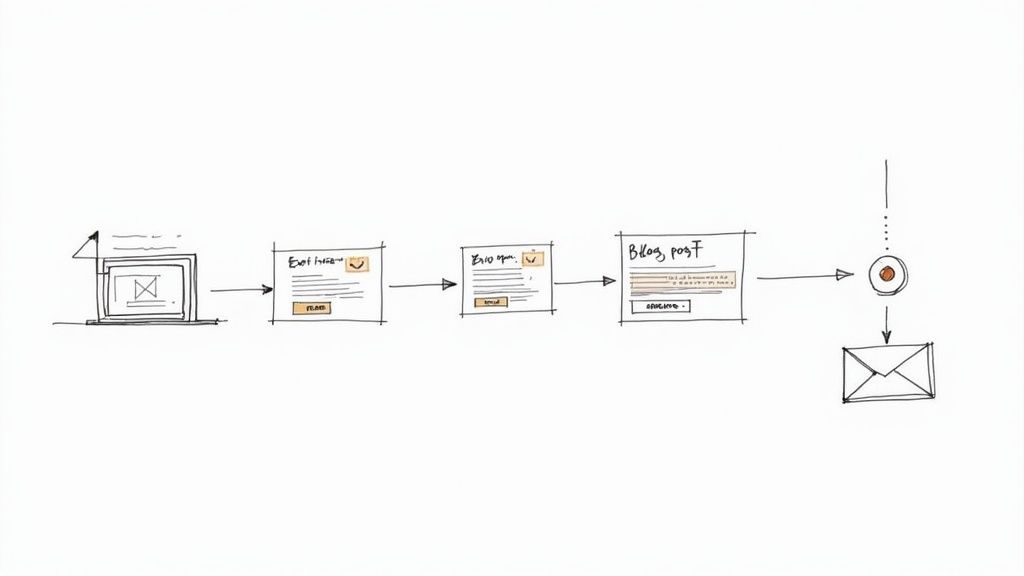
You've got a killer lead magnet ready to go. Now what? The next step is to transform your entire digital presence into a well-oiled machine for collecting subscribers. It’s not enough to just have a great offer; you have to put it where your ideal audience can't miss it.
Think of your website, blog, and social profiles as digital real estate. Every corner is an opportunity to put up a sign that invites people into your world. We want to make your offer a natural and unmissable part of their journey.
Design a Dedicated, High-Conversion Landing Page
Your lead magnet deserves its own home. A dedicated landing page is a focused, distraction-free space with a single, clear purpose: convincing visitors to trade their email for your awesome freebie. Unlike your homepage, a landing page gets rid of all the noise—no navigation, no sidebars, no competing calls to action.
Your copy needs to be sharp and laser-focused on the benefits. Don't just list what's inside the ebook; explain the transformation it delivers.
Craft a Compelling Headline: It must scream value. Instead of "Free Marketing Ebook," try "Get the 10-Step Blueprint to Double Your Website Traffic in 30 Days." See the difference?
Use Persuasive Bullet Points: Break down the specific outcomes. Focus on tangible results like "Save 5 hours of busywork every week" or "Learn the secret to writing captions that actually convert."
Include a Strong Call to Action (CTA): Use action-oriented language. "Download Now" is fine, but "Get Instant Access" or "Send Me the Cheatsheet!" creates a sense of urgency and excitement.
A landing page isn't just a signup form; it's a sales page for your free offer. Treat it with the same level of detail you would a paid product, focusing entirely on the value you're providing.
Master the Art of the Strategic Popup
I know, I know. Popups get a bad rap. But when used thoughtfully, they can be one of your most powerful list-building tools. The trick is to avoid being obnoxious and instead present your offer at the perfect moment. Many of the best form builder tools for selling digital products even come with advanced targeting rules to help you do this right.
For example, an exit-intent popup is pure genius. It only appears when a user's cursor moves toward the browser's back or close button.
This gives you one last chance to connect with a visitor who is already leaving, turning a lost opportunity into a new subscriber. It’s a low-friction way to grab their attention without interrupting their experience.
Beyond exit-intent, you should also experiment with:
Timed Popups: Set one to appear after a user has been on a page for 30-60 seconds. This targets people who are already engaged with your content.
Scroll-Triggered Popups: These appear after a visitor scrolls a certain percentage down the page (say, 70%), which is a great indicator they're invested in what you have to say.
Click-Triggered Popups: These are activated when someone clicks a specific link or button. It's a two-step process that can actually boost conversion rates because the user has already made a micro-commitment.
Weave Signup Forms into Everything You Do
Finally, don't make people hunt for a way to subscribe. Weave signup opportunities seamlessly into the fabric of your website and social profiles. No matter where someone discovers you, the path to joining your list should be obvious.
Here are a few high-impact places to embed your forms:
Within Blog Posts: Add a visually distinct signup box right in the middle of a relevant article. If the post is about social media strategy, offer your "Social Media Content Calendar" template right there. It’s a perfect match.
On Your Homepage: Feature your main lead magnet "above the fold"—the area people see without scrolling. Make it one of the first things a new visitor sees.
In Your Website Footer: This is a classic spot people expect to find a newsletter signup. It’s a valuable catch-all for motivated visitors.
On Your "About" Page: Anyone visiting this page is already curious about you and your story. It’s the perfect time to invite them to connect on a deeper level by joining your list.
In Your Social Media Bio: That "link in bio" is prime real estate. Point it directly to your lead magnet's landing page to turn your social media profiles into active list-building channels.
Building Your Automated Welcome Sequence
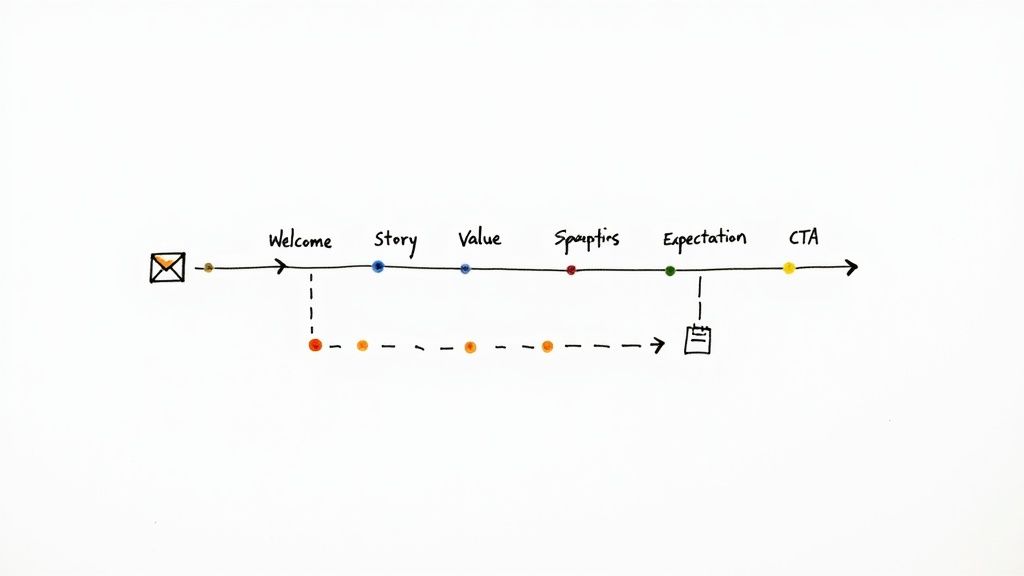
The moment someone gives you their email address is the peak of their interest. They’ve just raised their hand and said, "I want to hear more." Wasting this golden opportunity is one of the biggest mistakes you can make when building an email list. This is where a killer automated welcome sequence comes in.
This isn’t about firing off a single "thanks for subscribing" email and calling it a day. A real welcome sequence is a series of 3 to 5 automated emails sent over several days that makes a powerful first impression. It’s your chance to deliver on your promise, introduce your brand, and guide new subscribers toward their next step—all on autopilot.
Think about it: welcome emails have an insane average open rate of over 82%, which crushes just about any other type of marketing email. You’re talking to your most engaged audience right at this moment. Your job is to turn that initial spark of curiosity into a lasting relationship.
Email 1: The Instant Delivery
The very first email has to go out immediately. Its only job is to deliver the lead magnet you promised. There’s zero room for delay here. People expect instant gratification, and making them wait even a few minutes erodes trust before you've even started.
Keep this email short, sweet, and focused on one thing: getting them what they came for.
Subject Line: Make it stupidly obvious. Something like, "Here's your [Lead Magnet Name]!" or "Your free guide is inside."
Body: Start with a brief, warm welcome. Then, give them a clear, can't-miss link or button to download their resource.
Call to Action (CTA): The CTA is the download. Don't clutter this email with other asks. Just deliver the goods.
This first touchpoint sets the tone for everything that follows. A fast, clean delivery shows you're reliable and builds immediate goodwill.
Email 2: Your Brand Story and Mission
Okay, you've delivered the value. Now what? The second email, which I like to send a day later, is your chance to introduce the person behind the brand. This is where you shift from being a faceless resource to a real, relatable human.
Share a bit of your story. Why did you start your business in the first place? What’s the mission that gets you fired up every morning? What’s the big problem you’re passionate about solving for people just like them?
Don't just list facts about your company. Tell a compelling story with a clear beginning, a challenge you faced, and the solution you discovered. People connect with stories, not corporate bios.
This email is your best shot at building a genuine connection. Sharing your "why" gives subscribers a reason to care about your brand beyond the freebie they just downloaded.
Email 3: Setting Expectations and Adding More Value
The third email, usually sent another day or two later, is all about managing expectations and dropping another quick win. You need to tell subscribers what to expect from you so they know why they should stick around.
What's Coming: Be transparent. Let them know how often you'll email them (e.g., "I'll be in your inbox every Tuesday morning...") and what kind of stuff you'll be sending (tips, case studies, special offers). Honesty builds trust.
Another Dose of Value: This is key. Share one of your most popular blog posts, a helpful YouTube video, or a quick tip that reinforces your expertise. This proves your emails are consistently worth opening.
This step trains your audience to open your emails because they know there will always be something useful inside. You're conditioning them to become engaged readers.
Emails 4 and 5: Guiding the Next Step
The last couple of emails in your sequence should gently guide subscribers toward a deeper engagement or a small commitment. This is where you can start segmenting your audience based on their interests or even introduce a low-cost offer.
Here are a few effective ways to wrap up your sequence:
Ask a Question: Ask them to reply with their single biggest challenge. This boosts engagement like crazy and gives you incredible, firsthand insight into their needs.
Introduce a Core Offer: If you have a low-priced product or a popular entry-level service, now is a great time to talk about it.
Invite Them to Your Community: Guide them over to your Facebook group, social media channels, or another community platform where the conversation continues.
This automated series is the bedrock of a healthy, engaged list. If you really want to get into the nuts and bolts of automation, our complete blueprint on email autoresponder mastery is the perfect next step. By welcoming every new subscriber with an intentional, value-packed sequence, you build a strong foundation for turning casual leads into true fans.
Using Segmentation to Boost Engagement
Once your welcome sequence is bringing in a steady stream of new subscribers, the real work begins. How do you keep them hooked for the long haul?
Blasting the exact same email to every single person on your list is a surefire way to kill your engagement. Open rates plummet, unsubscribes climb, and your hard-earned list slowly goes cold. This is where segmentation comes in.
Segmentation is just a fancy word for dividing your email list into smaller, more focused groups based on what you know about them. Instead of shouting into a crowded room, you get to have a bunch of smaller, more personal conversations. The difference is night and day.
The numbers don't lie. Marketers who use segmented campaigns see, on average, a 30% jump in open rates and a massive 50% increase in click-through rates. It's so effective that 78% of marketers call segmentation their single most powerful email marketing tactic.
Actionable Segmentation Strategies You Can Use Today
Getting started with segmentation isn't nearly as complicated as it sounds. Most modern email service providers have these tools built right in, making it easy to group your subscribers based on a few simple (but incredibly powerful) data points.
Here are three ways to start segmenting your list right away:
Demographic Segmentation: This is the most basic approach. You group people by characteristics like age, location, gender, or job title. A clothing brand, for example, wouldn't blast a promotion for men's shoes to its entire list—they’d segment by gender and get a much better response.
Engagement-Based Segmentation: This one is all about how people interact with your emails. You can create groups for your die-hard fans (the ones who open and click everything), your casual readers, and even those who haven't opened an email in 90 days. This lets you reward your best subscribers and run targeted re-engagement campaigns for the ones slipping away.
Behavioral Segmentation: This is where the magic really happens. Here, you group people based on their actions—what they've bought, which links they've clicked in past emails, or even which pages they've visited on your website.
To really get the most out of your list, you need to implement effective customer segmentation strategies that let you tailor every message.
Putting Segmentation into Practice
Let's walk through a real-world scenario. Imagine you run an online store that sells premium coffee beans and brewing equipment. A new subscriber just signed up using your lead magnet, "The Beginner's Guide to Pour-Over Coffee."
Instead of just lumping them into your main "newsletter" list, you can automatically tag them with "interest: pour-over." Just like that, you've created a segment.
The point of segmentation isn't just to sell more. It's to make your subscribers feel seen and understood. When your content consistently speaks to their interests, they start seeing your emails as a valuable resource, not just another sales pitch.
This simple tag opens up a world of personalization:
Follow-Up Content: A week later, you could send this group an email showcasing your most popular pour-over kettles or a video tutorial on perfecting their brewing technique.
Targeted Promotions: Got a sale on pour-over coffee filters? You can send that announcement only to this segment instead of bugging your entire list.
New Product Launches: When you launch a new single-origin bean that’s perfect for pour-over, you know exactly who to tell first.
This focused approach makes your marketing feel genuinely helpful, not intrusive. When you move away from generic broadcasts and embrace smart segmentation, you transform your email list from a simple database into a powerful engine for building real relationships and driving growth.
Got Questions About List Building? Let's Get Them Answered.
As you dive into building your email list, you're going to hit a few roadblocks and have some questions. That's not just normal—it's part of the process. Knowing the answers upfront saves you a ton of guesswork and helps you focus on the actions that actually move the needle.
We're going to tackle some of the most common questions I hear from entrepreneurs. From "How long is this really going to take?" to "What's a 'good' conversion rate, anyway?", getting clear on this stuff helps you set realistic goals and build a smarter strategy from day one.
How Long Does It Take to Build a Substantial Email List?
There’s no magic number here. How fast your list grows depends entirely on your website traffic, how badly people want your lead magnet, and how consistently you’re putting your opt-in forms in front of them. A brand-new business might grind for a few months to get its first 1,000 subscribers. An established brand with an audience? They could hit that in a few weeks.
The real key is consistency. Forget about arbitrary deadlines and focus on the daily and weekly habits that drive signups.
Your growth rate is a direct reflection of the value you offer and the visibility you create. A successful webinar, a well-targeted ad campaign, or a viral piece of content can dramatically accelerate your progress at any time.
Find a steady rhythm of creating value and promoting it. That consistent effort is what compounds over time to build a list that’s not just big, but also engaged.
What Is a Good Opt-In Conversion Rate?
While you'll see industry benchmarks floating around the 1-5% mark, a "good" conversion rate is all about context. A simple signup form tucked away in your website's footer might only convert at 1%, and that’s perfectly fine for its purpose. On the other hand, a well-timed exit-intent popup with a killer offer could easily hit 5-7% or even higher.
And for a dedicated landing page promoting a high-value resource like a webinar or a comprehensive toolkit? Those can absolutely soar past 20%.
The metric that matters most isn't how you stack up against some vague industry average; it's your own performance over time. Track your numbers and constantly A/B test your key elements to see what your specific audience responds to.
Tweak your headline: Does it instantly communicate the big benefit?
Sharpen your call-to-action (CTA): Is the language exciting and urgent? "Download Now" is okay, but "Get My Free Toolkit" is better.
Rethink your offer: Is the lead magnet solving a real, painful problem they have right now?
The goal isn't just to hit a number someone else set. It's to be in a state of constant improvement.
How Do I Keep My List Engaged After They Subscribe?
Getting someone to hand over their email address is just the first handshake. The real work—and where all the value is—is in keeping them interested. An engaged list is one that actually opens your emails, clicks your links, and feels like they’re getting something worthwhile from you.
Engagement starts the second they sign up. You need a strong, automated welcome sequence that immediately sets the tone. This is where you deliver the goods (your lead magnet), share a bit of your story, and tell them what to expect from you—what you'll be sending and how often.
After that initial welcome, it's all about delivering consistent value.
Find a Regular Rhythm: Whether you send emails weekly, bi-weekly, or monthly, a predictable schedule trains your audience to look for you in their inbox.
Mix It Up: Don't just sell, sell, sell. Balance your promotional emails with purely educational content, behind-the-scenes stories, and personal insights.
Use Segmentation: As we've covered, sending the right message to the right people is a game-changer. It makes your emails feel personal and relevant, which is a massive driver of engagement.
Practice Good List Hygiene: Every few months, it's a good idea to clean out inactive subscribers—people who haven't opened your emails in a long time. This boosts your deliverability and ensures you're only talking to people who actually want to hear from you.
Ultimately, keeping your list engaged boils down to one simple rule: respect the inbox. If every email you send is genuinely valuable, your subscribers will have every reason to stick around.
Final Words
At Entrepedia, we provide entrepreneurs with thousands of ready-to-launch digital products, from lead magnet ebooks to complete online courses, helping you build your email list faster and monetize your expertise without starting from scratch. Explore our Master Library at https://entrepedia.co and accelerate your growth today.