

The 15 best marketing books, ranked by reader data

The marketing books that marketers, founders and experts keep coming back to, from positioning to copy, ranked by reader data. Updated October 2026.

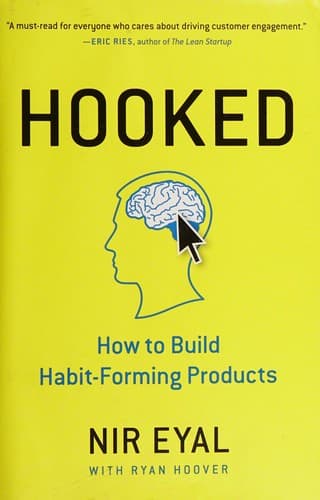
Cover of Hooked by Nir Eyal
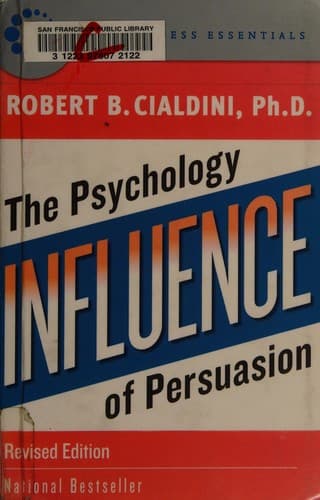
Cover of Influence: The Psychology of Persuasion by Robert B. Cialdini
Cover of Building a StoryBrand by Donald Miller

At a glance

  1. 1
    Cover of Influence: The Psychology of Persuasion by Robert B. Cialdini
    Influence: The Psychology of Persuasion by Robert B. Cialdini
  2. 2
    Cover of Hooked by Nir Eyal
    Hooked by Nir Eyal
  3. 3
    Cover of Building a StoryBrand by Donald Miller
    Building a StoryBrand by Donald Miller
  4. 4
    Cover of Contagious by Jonah Berger
    Contagious by Jonah Berger
  5. 5
    Cover of $100M Leads by Alex Hormozi
    $100M Leads by Alex Hormozi
  6. 6
    Cover of Made to Stick by Chip Heath
    Made to Stick by Chip Heath
  7. 7
    Cover of Purple Cow by Seth Godin
    Purple Cow by Seth Godin
  8. 8
    Cover of Ogilvy on Advertising by David Ogilvy
    Ogilvy on Advertising by David Ogilvy
  9. 9
    Cover of This Is Marketing by Seth Godin
    This Is Marketing by Seth Godin
  10. 10DotCom Secrets by Russell Brunson
  11. 11
    Cover of The 22 Immutable Laws of Marketing by Al Ries
    The 22 Immutable Laws of Marketing by Al Ries
  12. 12
    Cover of Expert Secrets by Russell Brunson
    Expert Secrets by Russell Brunson
  13. 13
    Cover of They Ask, You Answer by Marcus Sheridan
    They Ask, You Answer by Marcus Sheridan
  14. 14
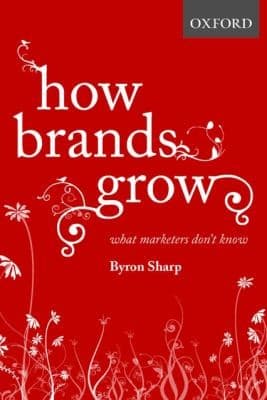
    Cover of How Brands Grow by Byron Sharp
    How Brands Grow by Byron Sharp
  15. 15
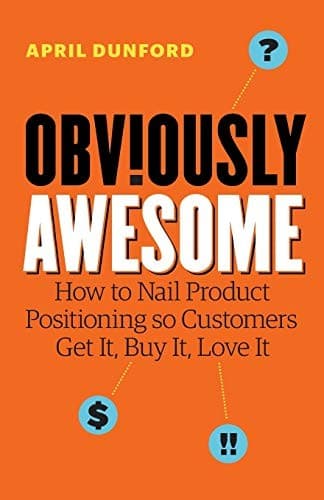
    Cover of Obviously Awesome by April Dunford
    Obviously Awesome by April Dunford
Cover of Influence: The Psychology of Persuasion by Robert B. Cialdini

#1

Influence: The Psychology of Persuasion

Robert B. Cialdini · 1983

4.5 on Amazon13k reviews3.6k searches a monthAbout 6 hours to read

A research-based look at why people comply, and how to use or resist persuasion.

Cialdini draws on experiments and his own undercover observation of salespeople, fundraisers, and marketers to explain why people say yes. He organizes the findings into six principles of influence that work largely by triggering mental shortcuts. Readers learn to recognize these levers in advertising, sales, and everyday requests, apply them ethically in their own work, and spot manipulation before it succeeds. The book is vivid, example-heavy, and practical.

Key ideas

  • Six core principles drive most compliance: reciprocity, commitment, social proof, liking, authority, and scarcity.
  • People rely on automatic shortcuts, which professionals can exploit when we are busy or unsure.
  • Understanding these triggers helps you persuade ethically and defend against manipulation.

Best for

Marketers, salespeople, managers, and curious general readers interested in the psychology of everyday decisions.

View on Amazon
Cover of Hooked by Nir Eyal

#2

Hooked

Nir Eyal · 2014

4.5 on Amazon9.4k reviews6.6k searches a monthAbout 5 hours to read

A practical guide to designing products that form user habits through a repeatable four-step cycle.

Eyal argues that habit-forming products follow a common pattern he calls the Hook Model, made up of a trigger, an action, a variable reward, and an investment. Repeated cycles build the associations that bring users back without heavy advertising. Drawing on psychology and real company examples, the book shows builders how to apply the model to their own products. It also raises questions about the ethics of manipulation and when habit design goes too far.

Key ideas

  • Habits form when a product links an internal need to a quick, easy use.
  • Variable rewards and small user investments increase the odds of return visits.
  • Builders should consider ethics, and whether their product truly improves users' lives.

Best for

Product managers, designers, and founders building consumer apps who want a framework for engagement.

View on Amazon
Cover of Building a StoryBrand by Donald Miller

#3

Building a StoryBrand

Donald Miller · 2017

4.7 on Amazon11k reviews590 searches a monthAbout 5 hours to read

A guide to clarifying your marketing message by framing your customer as the hero of a story.

Miller argues that most companies lose customers because their messaging is confusing and focused on themselves. He borrows from storytelling structure, positioning the customer as the hero and the brand as the trusted guide. The book walks through a seven-part framework for building clear messaging, then shows how to apply it to websites, emails, and sales pitches. Readers come away with a practical method for simplifying what they say and making it resonate.

Key ideas

  • Customers are the hero of the story, and your brand plays the guide.
  • Clear, simple messaging beats clever or complicated language when people are busy.
  • A repeatable story framework can organize your website, emails, and sales conversations.

Best for

Small business owners and marketers struggling to explain their offer in a way customers grasp.

View on Amazon
Cover of Contagious by Jonah Berger

#4

Contagious

Jonah Berger · 2013

4.6 on Amazon7.6k reviews1.9k searches a monthAbout 5 hours to read

Explains why some products, ideas, and messages spread through word of mouth and how to engineer that.

Berger, a marketing professor, argues that viral success is not luck or reserved for big budgets. He draws on research and case stories to identify six principles that make things catch on. His STEPPS framework covers Social Currency, Triggers, Emotion, Public, Practical Value, and Stories. Readers come away with a checklist for designing messages, products, and campaigns that people want to talk about and pass along, plus a clearer sense of why ordinary things sometimes take off.

Key ideas

  • People share what makes them look good, so build social currency into ideas.
  • Frequent environmental cues keep a product top of mind and talked about.
  • Emotionally charged, high-arousal content gets shared more than neutral information.

Best for

Marketers, founders, and communicators who want practical ways to make ideas spread organically.

View on Amazon
Cover of $100M Leads by Alex Hormozi

#5

$100M Leads

Alex Hormozi · 2023

4.9 on Amazon7.8k reviews50 searches a month

A practical guide to generating demand and attracting customers for any business, from first sales to scale.

Hormozi argues that every business depends on a steady flow of leads, and that most owners fail by being inconsistent or by quitting too soon. He lays out a framework of four core ways to reach people: warm outreach, content, cold outreach, and paid ads. He also covers lead magnets, advice on increasing volume, and ways to expand through other people. Readers come away with a clear menu of channels and a bias toward consistent action.

Key ideas

  • Reach prospects through four core channels: warm outreach, content, cold outreach, and paid ads.
  • Consistent, high-volume effort beats sporadic activity when you are building an audience.
  • Lead magnets work best when they solve a specific problem and lead to your offer.

Best for

Founders, freelancers, and marketers who need more customers and want a practical channel framework.

View on Amazon
Cover of Made to Stick by Chip Heath

#6

Made to Stick

Chip Heath · 1998

4.7 on Amazon1.8k reviews2.9k searches a monthAbout 6 hours to read

Chip and Dan Heath explain why some ideas spread and last, and how to craft them.

The Heath brothers argue that memorable ideas share six traits: they are simple, unexpected, concrete, credible, emotional, and told as stories. Drawing on urban legends, classroom experiments, and organizational examples, they show how ordinary communicators can use these traits deliberately. They also warn about the curse of knowledge, where expertise makes it hard to explain things clearly. Readers come away with a practical checklist for shaping messages that people understand, remember, and act on.

Key ideas

  • Sticky ideas share six traits: simple, unexpected, concrete, credible, emotional, and story-based.
  • The curse of knowledge makes experts poor at explaining what they know.
  • Concrete details and stories help audiences remember and act on abstract ideas.

Best for

Managers, marketers, teachers, and leaders who need to make their messages memorable and persuasive.

View on Amazon
Cover of Purple Cow by Seth Godin

#7

Purple Cow

Seth Godin · 2002

4.4 on Amazon3.9k reviews1.9k searches a monthAbout 3 hours to read

A case for building remarkable products that stand out, rather than relying on traditional advertising.

Godin argues that the old marketing playbook of buying attention through ads and polishing safe products no longer works in crowded markets. Consumers ignore the ordinary, so the best growth strategy is to create something genuinely remarkable that people want to talk about. He uses examples from many companies to show how standing out spreads ideas. Readers come away encouraged to design distinctiveness into the product itself and to accept the risk of being different.

Key ideas

  • Playing it safe is the riskiest strategy when consumers ignore ordinary products.
  • Remarkable means worth remarking on, so customers spread the word for you.
  • Marketing should shape the product itself, not just promote it afterward.

Best for

Product managers, founders, and marketers seeking fresh ways to differentiate offerings in saturated markets.

View on Amazon
Cover of Ogilvy on Advertising by David Ogilvy

#8

Ogilvy on Advertising

David Ogilvy · 1983

4.6 on Amazon2.6k reviews1.3k searches a monthAbout 4 hours to read

A veteran agency founder's practical guide to what makes advertising sell and what wastes money.

David Ogilvy draws on decades of running a major agency to explain how effective advertising works. He favors research, clear promises, strong headlines, and factual, informative copy over cleverness or artistic display. The book covers print, television, direct response, and managing an agency, with many sample ads as evidence. Readers come away with a results-focused mindset and concrete rules of thumb for judging and creating persuasive campaigns.

Key ideas

  • Advertising exists to sell, so judge every ad by its results.
  • Headlines do most of the work, so invest heavily in them.
  • Test and research your ideas rather than trusting instinct or fashion.

Best for

Marketers, copywriters, and small business owners wanting time-tested rules for persuasive advertising.

View on Amazon
Cover of This Is Marketing by Seth Godin

#9

This Is Marketing

Seth Godin · 2018

4.6 on Amazon5.6k reviews170 searches a monthAbout 5 hours to read

A guide to marketing that serves specific people with empathy, trust, and honest change, not manipulation.

Godin argues that modern marketing is about helping a chosen group of people get to a place they want to go, not shouting at the masses or tricking them. He urges marketers to find the smallest viable audience, understand their beliefs and desires, and offer something worth talking about. Success comes from consistency, generosity, and building trust over time. Readers leave with a mindset and practical questions for positioning and shaping their work.

Key ideas

  • Focus on the smallest viable market and serve it deeply.
  • Marketing is about changing people for the better, using empathy and trust.
  • Build status, tension, and stories that help people choose to engage.

Best for

Founders, freelancers, and marketers wanting an ethical, audience-first alternative to mass advertising tactics.

View on Amazon

DotCom Secrets

Russell Brunson

#10

DotCom Secrets

Russell Brunson · 2011

4.7 on Amazon3.4k reviews260 searches a monthAbout 4 hours to read

A guide to building online sales funnels that turn strangers into leads and paying customers.

Brunson argues that weak traffic or poor conversion is usually a symptom of a deeper problem: a missing or poorly designed funnel. He presents the funnel as the guided path that moves prospects from first contact to purchase. Readers learn how to attract an audience, build a relationship through a sequence of offers, and use proven funnel types and scripts to generate leads and sell products or services online.

Key ideas

  • Traffic and conversion problems usually point to a flawed funnel, not isolated tweaks.
  • Every business already has a funnel, and it either attracts or repels customers.
  • Guide prospects step by step through a sequence of offers, from free to premium.

Best for

Small business owners, marketers, and online entrepreneurs wanting a practical introduction to sales funnels.

View on Amazon
Cover of The 22 Immutable Laws of Marketing by Al Ries

#11

The 22 Immutable Laws of Marketing

Al Ries · 1993

4.5 on Amazon4k reviews480 searches a monthAbout 3 hours to read

A set of 22 marketing principles arguing that winning happens in the customer's mind, not the product.

Ries and Trout argue that marketing success depends on perception rather than product quality. Each law is a short chapter with real brand examples. The recurring themes are to be first in a category, own one clear idea, and resist stretching a brand too far. Readers come away with a sharper sense of positioning, a skepticism toward line extensions and big budgets, and a checklist for testing strategy against how buyers actually think.

Key ideas

  • Being first in a new category beats being better than existing competitors.
  • Strong brands focus on one simple attribute and own it in the prospect's mind.
  • Stretching a brand across many products usually weakens what it stands for.

Best for

Marketers, founders, and managers wanting a concise, opinionated guide to positioning and brand strategy.

View on Amazon
Cover of Expert Secrets by Russell Brunson

#12

Expert Secrets

Russell Brunson · 2017

4.7 on Amazon2.5k reviews170 searches a monthAbout 5 hours to read

A guide to turning your knowledge into a following, a movement, and a profitable business.

Brunson argues that selling expertise works best when you build a movement around a cause, not just pitch a product. He shows how to craft a compelling persona, tell stories that lead people to their own realizations, and frame your offer as a fresh opportunity. Readers come away with a practical outline for positioning themselves as a leader, persuading audiences through story, and presenting offers in webinars and other sales settings.

Key ideas

  • Build a movement around a cause and a future your audience wants to join.
  • Use an attractive character with a relatable backstory to earn trust and attention.
  • Epiphany bridge stories help prospects reach the belief needed to buy.

Best for

Coaches, consultants, and online entrepreneurs wanting to package expertise and sell it through story.

View on Amazon
Cover of They Ask, You Answer by Marcus Sheridan

#13

They Ask, You Answer

Marcus Sheridan · 2016

4.7 on Amazon986 reviews480 searches a monthAbout 5 hours to read

A guide to winning customers by answering their real questions honestly through content marketing and transparent selling.

Sheridan argues that businesses earn trust and sales by openly answering the questions buyers actually ask, including awkward ones about price, problems, and competitors. He draws on his experience growing a pool company through blogging and video. Readers take away a practical approach: gather customer questions, publish honest answers, and have sales teams use that content, so the company becomes the most trusted source in its field.

Key ideas

  • Address the questions buyers really ask, even uncomfortable ones about cost and drawbacks.
  • Honest, educational content builds trust before a prospect ever speaks to sales.
  • Sales and marketing should share content and treat it as a core company function.

Best for

Small business owners and marketers wanting trust-driven content strategies that generate leads and sales.

View on Amazon
Cover of How Brands Grow by Byron Sharp

#14

How Brands Grow

Byron Sharp · 2010

4.5 on Amazon1.2k reviews880 searches a monthAbout 5 hours to read

An evidence-based challenge to marketing folklore, arguing brands grow mainly by winning more customers.

Sharp draws on empirical studies of buying behavior to question common marketing beliefs. He argues that growth comes chiefly from increasing market penetration, not from deepening loyalty among a small core of devoted buyers. Brands compete mainly by being easy to notice and easy to buy, rather than by sharp differentiation or narrow segmentation. Readers come away with a more skeptical, data-driven view of targeting, loyalty programs, and positioning, and a focus on broad reach.

Key ideas

  • Growth mostly comes from acquiring more buyers, including light and occasional ones.
  • Mental and physical availability matter more than distinctive positioning or tight targeting.
  • Larger brands tend to have somewhat more loyal customers, a pattern known as double jeopardy.

Best for

Marketers and brand managers willing to test their assumptions against empirical buyer data.

View on Amazon
Cover of Obviously Awesome by April Dunford

#15

Obviously Awesome

April Dunford · 2019

4.6 on Amazon2.4k reviews90 searches a monthAbout 4 hours to read

A practical guide to positioning products so customers instantly understand their value and why they should buy.

Dunford argues that weak positioning, not a weak product, is often why offerings struggle to sell. She presents a structured process for defining positioning: identify true competitive alternatives, isolate unique attributes, translate them into customer value, find the customers who care most, and choose a market category that frames the product favorably. The book shows how to ground messaging and sales in that foundation, so a reader leaves with a repeatable method for clarifying what they sell.

Key ideas

  • Positioning is the context that lets customers quickly grasp why a product matters.
  • Start from what customers would do if your product did not exist.
  • Your market category shapes how buyers judge your strengths and set expectations.

Best for

Founders, product marketers, and sales leaders whose products are hard to explain or sell.

View on Amazon

How we rank these books

We start from 18 books that practitioners widely recommend on the topic, then rank them by what readers actually do rather than by our taste:

  • Review volume (55%): the number of Amazon US ratings on the book's main listing.
  • Rating (20%): the average Amazon US star rating.
  • Search demand (25%): how many people search Google in the US for the book each month.

Volume and demand are log-scaled so a few mega-sellers don't drown out everything else. Publication year and page counts come from Open Library. Summaries are our own, written from each book's catalog description. We don't take payment for placement.

From reader to author

Every book on this list started as one expert's know-how. Yours could be next.

BOOKED shows how experts turn what they know into a book that brings in clients. Rather not write it yourself? We can write it with you.

Questions about marketing books

Answers drawn from the data behind this list.

Browse all book lists
By reader data, Influence: The Psychology of Persuasion by Robert B. Cialdini ranks first, with 13k Amazon reviews and a 4.5 star rating. Hooked and Building a StoryBrand follow. A research-based look at why people comply, and how to use or resist persuasion.

More business book lists