Explained
What Is Audience Segmentation and How Does It Work?

Audience segmentation is all about breaking down a large, general audience into smaller, more focused groups based on what they have in common. Think of it less like shouting one generic message to everyone and more like having specific, relevant conversations with different groups of people who share similar needs, interests, or habits. This idea is the bedrock of any smart, personalized marketing.
Unlocking Growth by Understanding Your Audience
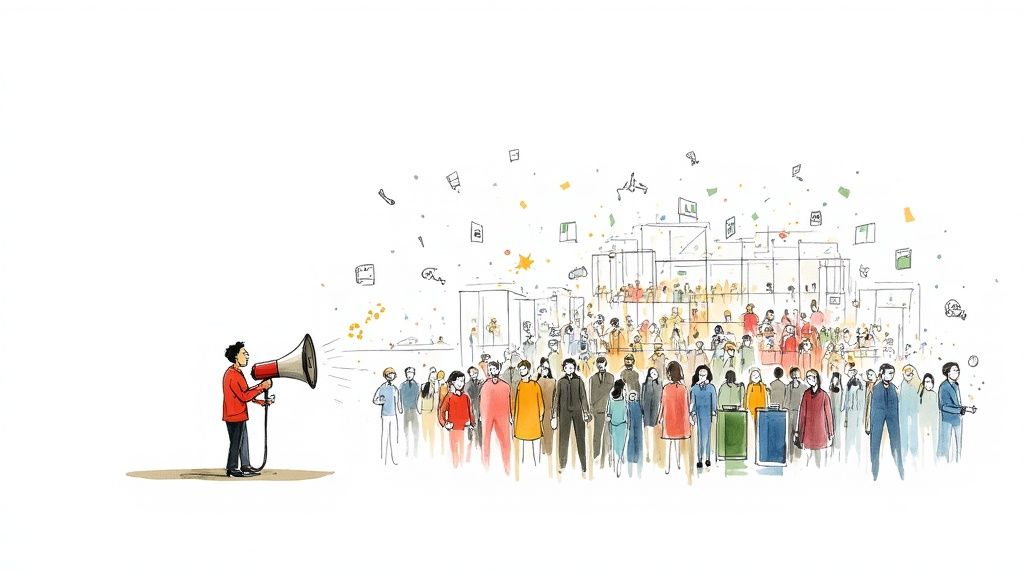
Imagine trying to have a single conversation with a packed stadium. It’s impossible. You've got die-hard fans, first-timers, families, and corporate guests all in one place. A one-size-fits-all message would feel impersonal and totally miss the mark for most of them.
That's the exact problem that audience segmentation solves for creators and businesses.
Instead of yelling into the void, segmentation helps you spot these smaller, like-minded groups within your crowd. When you get what makes each group tick, you can shape your products, content, and messaging to connect with their specific wants and pain points. This isn't just a marketing buzzword; it's how you build real connections that last.
Why Does Segmentation Matter So Much?
At its core, segmentation turns generic outreach into meaningful engagement. When you speak directly to what someone actually cares about, they’re far more likely to listen, trust you, and eventually buy from you. This targeted approach is the key to building stronger customer relationships and driving real growth.
The market for this strategy is huge—the global audience analytics market was valued at roughly USD 6.6 billion in 2025 and is expected to hit USD 10.68 billion by 2029, according to data from ResearchAndMarkets.com. That's a lot of businesses betting on the power of knowing their audience better.
The benefits are clear, simple, and powerful. We've put together a quick table to show you exactly how segmentation can impact your work.
Key Benefits of Audience Segmentation at a Glance
Benefit | Impact on Business |
|---|---|
Deeper Personalization | Move beyond generic campaigns and create experiences that feel custom-made for each group, making them feel seen and understood. |
Higher Engagement | Relevant content grabs more attention. That means better open rates, more clicks, and higher conversions. |
Better ROI | Stop wasting money on people who aren't interested. Focus your budget and energy on the most responsive segments for a much better return. |
Ultimately, a smart segmentation strategy helps ensure your marketing budget is working as hard as possible.
In essence, audience segmentation is the difference between broadcasting a message and starting a conversation. It's the first and most critical step toward creating marketing that people actually welcome.
Taking the time to do this is a fundamental part of truly understanding your target market in a way that produces real results. It sets the stage for every successful campaign you'll run.
Exploring the Four Core Types of Segmentation
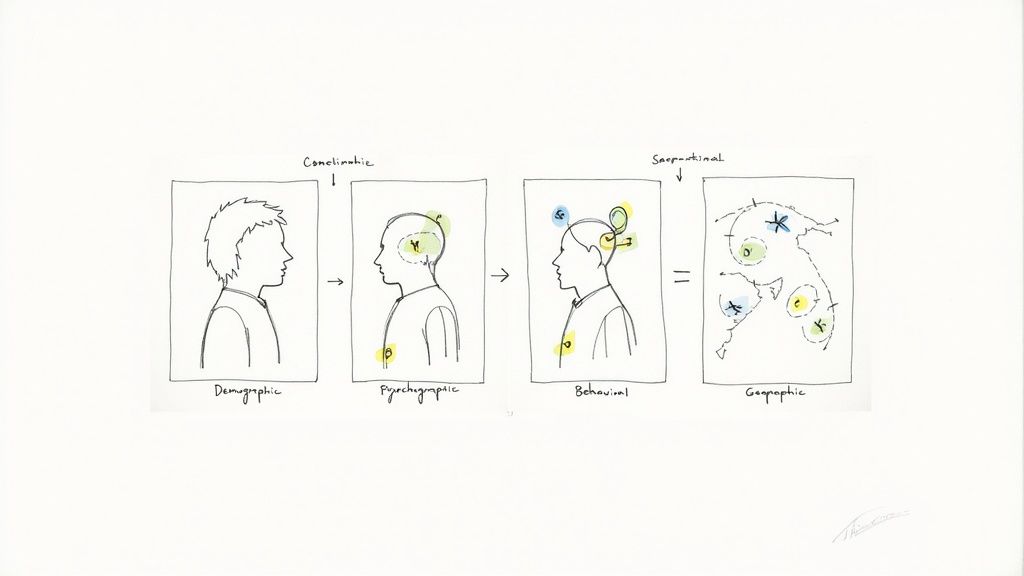
To really get what audience segmentation is all about, you have to look at the different lenses you can use to view your audience. Don't think of these core types as rigid boxes. Instead, see them as overlapping frameworks that help you make sense of complex human behavior. Each one gives you a different piece of the puzzle.
These four methods—demographic, psychographic, behavioral, and geographic—are the bedrock of nearly every smart segmentation strategy. By weaving them together, you can go from a blurry, one-dimensional snapshot of your audience to a rich, detailed profile that guides every single decision you make. Let's break down each one with real-world examples you can use today.
Demographic Segmentation: Who Your Audience Is
Demographic segmentation is usually the first layer that comes to mind. It groups people based on objective, statistical, and factual traits. This is the "who" of your audience—the basic, quantifiable data that describes them.
This type of segmentation is so popular because the data is relatively easy to get your hands on and analyze. It gives you a solid starting point for understanding the general makeup of your customer base.
For instance, a company rolling out a new high-tech gadget might find its features appeal differently to various age groups. They'd adjust their marketing accordingly:
For Gen Z (Ages 12-27): Their marketing would hit hard on social media like TikTok and Instagram, using influencer collaborations and highlighting camera quality and seamless social sharing. The messaging would be fast, visual, and wrapped up in current trends.
For Baby Boomers (Ages 60-78): The approach would be totally different. They might use Facebook ads and email newsletters, emphasizing the gadget's practical benefits, ease of use, large display, and reliable customer support.
Common demographic variables include age, gender, income level, education, occupation, and marital status.
Psychographic Segmentation: Why They Make Choices
If demographics tell you who your audience is, psychographics tell you why they do what they do. This method groups people based on their psychological traits—their values, beliefs, interests, attitudes, and lifestyles.
It digs so much deeper than statistics, helping you understand the real motivations driving their decisions. This is where you stop talking at your audience and start connecting with them on a personal, emotional level.
Key Takeaway: Psychographics transform your understanding from "a 45-year-old manager" to "a 45-year-old manager who values work-life balance, enjoys outdoor adventures, and prioritizes sustainable products." That context is pure marketing gold.
Think about a travel company. It would be crazy to send the same vacation package to everyone. By using psychographic segmentation, they can craft experiences that truly resonate:
The Thrill-Seekers: This segment gets emails and ads packed with images of mountain climbing, zip-lining, and scuba diving. The language is all about energy, excitement, adrenaline, and exploration.
The Relaxation Enthusiasts: This group is targeted with pictures of serene beaches, spa retreats, and all-inclusive resorts. The messaging is calm, reassuring, and highlights comfort, peace, and pure escape.
Behavioral Segmentation: What Your Audience Does
Behavioral segmentation is all about actions. It groups customers based on how they actually interact with your brand, website, or product. This is easily one of the most powerful types of segmentation because it's based on observable behavior, not just what people say they'll do.
This method lets you respond directly to a user's journey in real time. You can automate messages and offers based on specific triggers, which makes your marketing feel incredibly relevant. After all, research shows that 81% of customers now expect a personalized experience, and behavioral data is how you deliver it.
An e-commerce retailer can put this to work beautifully:
First-Time Visitors: Greet them with a pop-up offering a 10% discount on their first purchase to get them to buy right away.
Loyal Repeat Customers: Welcome them into an exclusive rewards program, giving them early access to new products or special "thank you" discounts.
Cart Abandoners: An hour after they leave, send an automated email reminding them what’s in their cart—maybe with a gentle nudge like a free shipping offer to seal the deal.
Geographic Segmentation: Where Your Audience Is
Finally, geographic segmentation groups your audience based on their physical location. This can be as broad as a continent or as specific as a single zip code.
While it might seem basic, location influences needs, culture, and buying habits more than we often realize. Climate, regional tastes, and local events all play a huge role in what consumers are looking for.
A clothing brand is a perfect example of this in action. It would be completely inefficient to market the same items to their entire customer base at once. Instead, they use geographic data to promote relevant products:
Colder Climates (e.g., Denver in November): This segment sees ads for heavy winter coats, insulated boots, and thermal layers.
Warmer Climates (e.g., Miami in November): This group gets promotions for swimwear, shorts, and lightweight fabrics.
By using these four lenses together, you stop seeing "an audience" and start seeing distinct groups of real people with unique needs, motivations, and lives. This is the foundational shift that turns generic marketing into powerful, resonant communication.
How to Gather the Data for Your Segments
Effective audience segmentation isn't built on guesswork—it’s built on good, clean, relevant data. Without the right information, your segments are just creative writing exercises. But where do you find these crucial insights?
The process starts by looking at the data you already own and then strategically sourcing what you don't. Before you do anything else, you need to understand the true value of your customer data. It’s not just a byproduct of doing business; it's the raw material for building deeper customer relationships and smarter marketing campaigns.
Luckily, the information you need is often closer than you think. Let's dig into the practical methods for gathering the data that will power your segmentation strategy.
Tapping into Your First-Party Data
First-party data is the information you collect directly from your audience. This is your most valuable asset. Why? Because you own it, it's highly accurate, and you know exactly where it came from. It's the gold standard for creating precise segments.
Common sources of first-party data are probably already at your fingertips:
Website Analytics: Tools like Google Analytics track how users behave on your site. You can see which pages they visit, how long they stay, and what actions they take, providing rich behavioral insights.
Customer Relationship Management (CRM) Systems: Your CRM is a treasure trove of information, holding contact details, communication history, and where each person is in your sales process.
Purchase History: Data from your e-commerce platform reveals what customers buy, how much they spend, and how often they come back for more.
Surveys and Feedback Forms: Directly asking your audience for information is one of the best ways to gather psychographic and demographic data you can’t get anywhere else.
By analyzing the data you already have, you can uncover powerful patterns about your most engaged customers without spending a dime on external sources. This is the lowest-hanging fruit in your data collection efforts.
Using Surveys and Social Listening
While analytics tell you what users do, they can't always tell you why. That’s where surveys and social listening come in. These methods are essential for gathering the qualitative data that adds color and context to your numbers.
A good survey asks clear, concise questions that align with your segmentation goals. You can ask about interests, challenges, or preferences to build out those detailed psychographic profiles. Likewise, monitoring social media conversations around your brand and industry helps you tap into emerging trends and customer sentiment.
You get to find out what your audience genuinely cares about, in their own words. For more detailed guidance, check out our resources on effective customer data collection and analysis.
Uncovering Value with RFM Analysis
For any business with sales data, RFM analysis is a powerhouse technique for identifying your best customers. This method segments users based on three simple but powerful behaviors:
Recency: How recently did the customer make a purchase?
Frequency: How often do they purchase?
Monetary Value: How much do they spend?
By scoring customers on these three factors, you can quickly sort them into distinct groups. For instance, a customer with high scores across all three is a loyal, high-value champion. On the other hand, someone with low recency but high frequency and monetary value might be a previously loyal customer who is at risk of churning.
This model gives you a clear, data-driven way to prioritize your marketing efforts. It helps you create targeted campaigns to re-engage at-risk customers or roll out the red carpet for your most loyal supporters. It turns raw purchase data into a strategic roadmap for growth.
Your Step-by-Step Guide to Creating Audience Segments
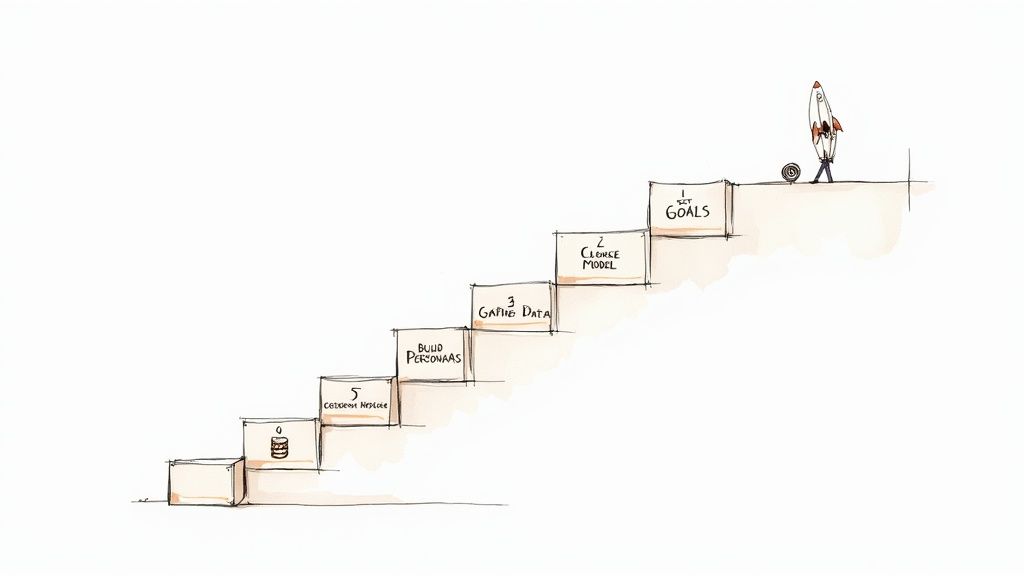
Knowing the theory is one thing, but putting it into practice is where you'll see the results. This process isn't about hiring a massive data team or wrestling with complex algorithms. It's really a logical framework that any creator or business can follow to turn a mountain of audience data into sharp, actionable insights.
Think of it like building a custom lens for a camera. Each step helps you refine the focus until you see your customers with perfect clarity. This lets you craft messages that actually connect, build products that solve real problems, and create experiences that turn casual buyers into loyal fans.
Let's walk through the essential steps to bring your segmentation strategy to life.
Step 1: Set Clear and Specific Goals
Before you even think about looking at data, you have to know what you're trying to accomplish. A segmentation strategy without a clear goal is like a map without a destination—you’ll just wander aimlessly. Your objective will steer every decision you make from here on out.
Are you trying to get existing customers to buy more often? Your goal might be to identify your most loyal fans and create a VIP program just for them. Or maybe you want to boost engagement with new leads? Then your goal is to segment first-time visitors so you can nurture them with targeted content that pulls them in.
Key Insight: Your goals need to be specific and measurable. Don't just say "increase sales." Instead, aim for something like, "increase the average order value of our 'Frequent Shoppers' segment by 15% in the next quarter."
Step 2: Choose Your Segmentation Models
With your goals locked in, the next question is how you’re going to group your audience. This is where you pick the segmentation types—demographic, psychographic, behavioral, etc.—that actually align with what you want to achieve. You don't need to use all of them. Just focus on what matters for your goal.
To increase engagement: Combining behavioral data (like pages visited) with psychographic data (interests and values) is a powerhouse combo.
To launch a location-specific service: Geographic data is your obvious starting point, probably layered with some key demographic details.
To boost customer loyalty: Transactional and behavioral data (purchase frequency, average order value) will be your best friends.
This is the stage where you decide which "lenses" will give you the most useful view of your audience.
Step 3: Gather and Analyze Your Data
Alright, time to roll up your sleeves and collect the information you need. As we covered, this data can come from all over the place: your CRM, website analytics, customer surveys, and purchase history. The trick is to gather clean, relevant data that directly supports the models you chose a minute ago.
Once you have it, the analysis begins. Start looking for patterns, connections, and meaningful clusters. Are there groups of users who consistently buy a specific product? Do customers from a certain region have a higher lifetime value? To help guide your process, you can explore some actionable customer segmentation techniques that show you how to build precise groups. This is the moment raw numbers start turning into human insights.
Step 4: Build Segments and Develop Personas
This is where the magic happens and your segments truly take shape. Based on your analysis, you can now define and name your distinct audience groups. Try to move beyond boring labels like "High Spenders." Get creative with descriptive names that capture their essence, like "Weekend Hobbyists" or "Budget-Conscious Families."
To make these segments feel even more real, develop a customer persona for each one. A persona is just a semi-fictional character that represents the entire segment. Give them a name, a job, motivations, and pain points. This step transforms abstract data into relatable human stories that your whole team can understand and get behind. To get this right, a solid customer research interview protocol can be invaluable for fleshing out these profiles.
Step 5: Activate and Refine Your Segments
The final step is to put all your hard work into action. This means creating marketing campaigns, personalized content, and specific offers tailored to each group. The message you send to your "Thrifty New Parents" segment should feel completely different from the one you send to "Luxury Tech Enthusiasts."
But remember, segmentation isn't a one-and-done project. It's an ongoing cycle of testing, learning, and refining. Keep a close eye on the performance of each segment. Be ready to adjust your strategy as customer behaviors shift and market trends evolve. This constant tweaking is what keeps your understanding of your audience sharp and effective.
How Leading Brands Use Audience Segmentation
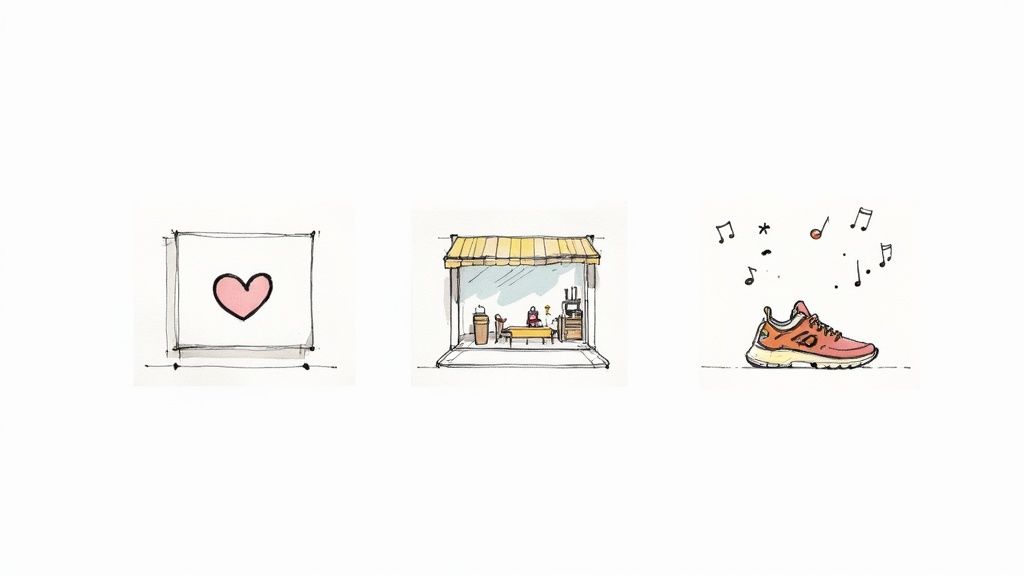
Knowing the theory behind audience segmentation is one thing, but seeing it in the wild shows you its real power. The world’s biggest brands don’t treat segmentation as just another marketing tactic; they build their entire customer experience around it. They’ve perfected the art of blending data with creativity to make millions of customers feel seen and understood.
These companies prove that when you truly get what makes different groups of people tick, you can create products, messages, and experiences that connect on a much deeper level. Let's look at how giants like Spotify, Amazon, and Nike use segmentation to create massive value and earn unwavering loyalty.
Spotify: The Master of Personalization
Spotify is a masterclass in using behavioral and psychographic segmentation. The platform tracks what you listen to, when you listen, which songs you skip, and what playlists you build. This firehose of behavioral data fuels its famously personal user experience, from the daily “Made for You” playlists to the iconic “Wrapped” campaign each year.
But it’s more than just listening habits. Spotify also makes smart psychographic guesses about your life. It understands your mood when it creates a "Chill Mix" or knows you’re active when it serves up a "Workout" playlist.
Behavioral Data: Listening history, skipped tracks, time of day for listening.
Psychographic Data: Inferred moods, activities, and musical tastes.
The result is a platform that feels like it was made just for you. “Wrapped” isn’t just a clever marketing campaign; it’s a shareable, data-driven story all about the user. This strategy turns cold user data into a powerful engagement tool, sparking social media conversations and cementing customer loyalty year after year.
Amazon: The Everything Store for Everyone
Amazon’s dominance is built on a deceptively simple idea: make a gigantic online warehouse feel like a tiny local shop that knows you by name. Its recommendation engine is a brilliant example of behavioral and transactional segmentation working at an almost unimaginable scale.
Every single thing you do on the site—every product you click on, item you buy, or review you leave—is a data point. Amazon crunches this information to build a unique storefront for every person who visits. Those "Customers who bought this item also bought" and "Recommended for you" sections are the direct result of this powerful segmentation.
This approach uses your past actions to predict your future needs, making shopping faster, more relevant, and much more likely to end in a purchase. It’s a seamless system that not only boosts the average order value but also gives customers a powerful reason to keep coming back.
Nike: Speaking Directly to Every Athlete
Nike gets it: the word "athlete" means something different to everyone. The company is fantastic at segmenting its audience by both psychographic interests and behavioral commitment levels. This allows it to design hyper-specific products and marketing campaigns that speak directly to each unique group.
Instead of shouting one generic message, Nike tailors its approach for distinct segments:
By Athletic Interest: It has entirely separate product lines and messaging for runners, basketball players, yogis, and skateboarders.
By Commitment Level: The way it markets to professional athletes is worlds away from its campaigns for weekend warriors or people just starting a fitness journey.
This detailed segmentation lets Nike present itself as an authentic and supportive brand for every kind of athlete. By recognizing and serving the unique needs of each group, Nike builds an incredible sense of community and inclusion, turning casual customers into lifelong fans.
Measuring Success and Avoiding Common Mistakes
Launching an audience segmentation strategy is a huge step, but it’s just the beginning. A great strategy is only as good as its results, and without a clear way to measure success, you’re just flying blind. Tracking performance isn’t just a nice-to-have—it’s how you prove your efforts are actually driving growth.
You need to know if your segments are working. Are your “loyal customers” spending more since you launched that VIP program? Is your “new subscriber” segment opening emails at a higher rate? These insights tell you what’s hitting the mark and what needs a rethink.
Key Metrics for Tracking Segment Performance
You don’t need to track dozens of different numbers. Instead, focus on a few key performance indicators (KPIs) that connect directly to the goals you set in the first place. This keeps your analysis sharp and actionable.
Here are the most critical KPIs to keep an eye on:
Conversion Rate per Segment: This is the ultimate test. It shows you which groups are taking the action you want, whether that’s making a purchase, signing up for a newsletter, or downloading a resource.
Customer Lifetime Value (CLV): Are certain segments more valuable over the long haul? Tracking CLV helps you spot your most profitable groups so you can double down on what’s working for them.
Engagement Levels: Keep a close watch on open rates, click-through rates, and time spent on your pages for each segment. A drop in engagement is an early warning that your messaging is missing the mark.
Common Pitfalls and How to Avoid Them
Even the most carefully planned strategies can run into trouble. Knowing the common mistakes ahead of time helps you sidestep these challenges and keep your strategy effective, agile, and profitable.
A personalized experience is now an expectation, not a perk. The data proves it: 81% of consumers are more likely to buy from brands that offer it, and companies using audience segmentation see up to a 760% increase in email revenue. Discover more insights about segmentation strategy on Britopian.com.
To get anywhere near those results, you absolutely have to avoid the common traps.
It's easy to get bogged down when you're sorting through customer data. Below is a quick-reference table outlining the most common segmentation mistakes and, more importantly, how to fix them.
Common Pitfall | Solution |
|---|---|
Over-Segmentation | Creating too many tiny, complex segments makes your marketing impossible to manage. Start with 3-5 broad, high-impact segments and only get more granular as you gather more data. |
Using Outdated Data | Customer behavior changes fast. Segments built on year-old data are practically useless. Schedule regular data audits (quarterly is a good starting point) to refresh your information. |
Ignoring Small Niches | It’s easy to focus only on your largest segments, but the biggest profits can hide in small, highly engaged niches. Analyze the CLV of all segments, not just their size. |
Remember, segmentation isn't about creating perfect, permanent boxes for your customers. It's about developing a flexible framework that helps you understand them better today, so you can serve them better tomorrow. Stay agile, keep testing, and let the data guide your next move.
Frequently Asked Questions About Audience Segmentation
Even with a solid plan, a few questions always seem to pop up once you start putting audience segmentation into practice. This section tackles the most common uncertainties with straightforward, actionable answers to help you move forward.
Think of this as your go-to reference for those nagging "what if" or "how do I..." moments. We’ll get right into the practical side of starting, picking your tools, and keeping your strategy sharp.
How Many Segments Should I Start With?
It's tempting to dive in and create dozens of hyper-specific groups, but that’s a classic mistake that just leads to confusion. The best way to begin is to start small and focused. Aim for just three to five broad, high-impact segments that represent your most distinct customer types.
For example, you could easily start with:
New Subscribers: People who just joined your list and are still getting to know you.
Loyal Customers: The regulars who have made multiple purchases.
At-Risk Users: Customers who haven't engaged in the last 90 days.
This gives you a manageable starting point to test your messaging and actually see what works. You can always get more granular and add new segments later as you gather more data and get a feel for the process.
The goal of audience segmentation is clarity, not complexity. Starting with a few meaningful groups is far more powerful than getting lost in dozens of minor ones. Focus on the segments that will have the biggest impact on your goals first.
What Are the Best Tools for Audience Segmentation?
The right tool really depends on your budget and how deep you need to go. You absolutely don't need a complex, expensive platform to start understanding your audience better. In fact, you probably already have some great options in your toolkit.
You can get a lot done with free and accessible tools like Google Analytics to analyze website behavior. Once your needs grow, a Customer Relationship Management (CRM) system or a dedicated Customer Data Platform (CDP) can pull all your data into one place for much deeper insights.
How Often Should I Update My Segments?
Your audience segments aren't set in stone. Think of them as living profiles that change as your customers and the market evolve. How often you review them depends on your industry, but a good rule of thumb is to conduct a quarterly review.
During this check-in, dig into the performance data, look for any shifts in behavior, and ask yourself if your segments still accurately reflect who your audience is today. Regular updates ensure your strategy stays sharp, relevant, and effective.