Explained
Private Label Rights Ebooks Explained
Think of a private label rights ebook as a ready-made blueprint for your next digital product. You're buying a pre-written book and, more importantly, the permission to rebrand it, tweak it, and sell it as if you wrote it yourself. It’s a massive head start.
Unlocking Content Creation with PLR
Imagine you want to open a bakery, but you don't have time to create the perfect cake recipe from scratch. So, you buy a premium, professional-grade cake mix. You've got a solid foundation—the flour, sugar, and core ingredients are handled. Your job is to add the magic. Maybe you mix in some exotic spices, whip up a signature frosting, or decorate it with a design that becomes your bakery's trademark. You then box it up and sell it as your own masterpiece.
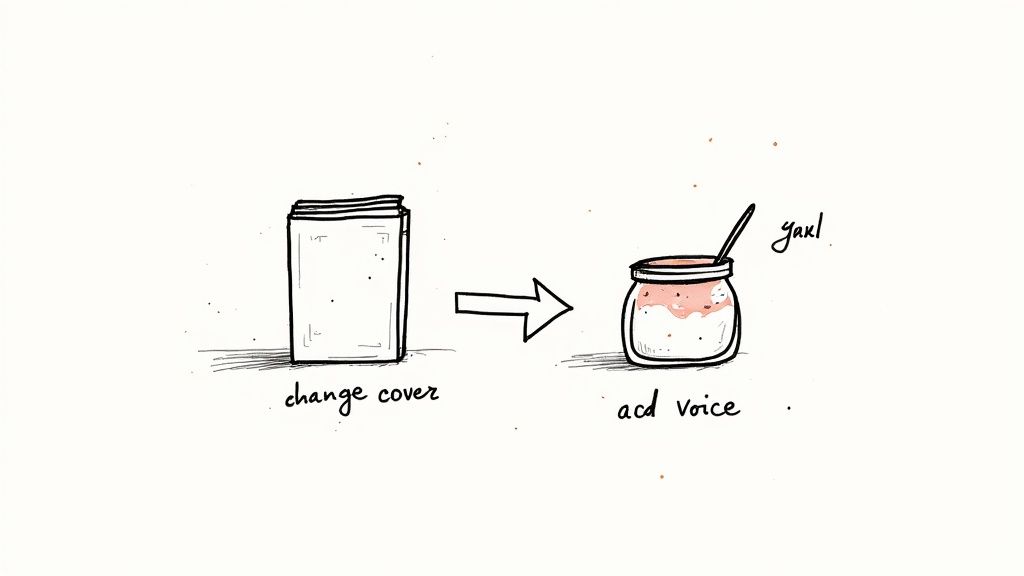
Private label rights (PLR) ebooks work just like that. You start with a pre-made digital product, which saves you hundreds of hours of research, writing, and formatting. But unlike that finished cake, PLR gives you the license to completely change the "recipe." You can rewrite entire chapters, drop in new case studies, design a fresh cover, and proudly put your name on it as the author.
This level of creative freedom is what makes PLR so powerful. It's no wonder the market is booming. By 2025, the digital product market, which includes PLR ebooks, is expected to hit an incredible $1 trillion in value. You can learn more about the scale of this opportunity over at Tevello.com.
Understanding Different Digital Rights
To really get why PLR is such a big deal, it helps to see how it stacks up against other common licenses. Each one offers a different level of freedom, and knowing the difference is key for anyone selling digital products.
It can get a little confusing, so here’s a simple table to break it down.
A Quick Guide to Digital Content Rights
License Type | Can You Edit and Rebrand? | Can You Resell It? | Can You Pass on Resell Rights? |
|---|---|---|---|
Resale Rights (RR) | No. Content must be sold as-is. | Yes, to the end customer. | No. Your customer cannot resell it. |
Master Resale Rights (MRR) | No. Content must still be sold as-is. | Yes. | Yes! Your customers can also sell it. |
Private Label Rights (PLR) | Yes! This is the main benefit. | Yes. | Usually. Check your specific license. |
As you can see, there's a clear winner for creators.
Resale Rights (RR): This license lets you sell the product to your customer, but you can’t change a single word. Think of it like selling a paperback from a major publisher—you can sell the book, but you can’t edit the pages or claim you wrote it. Your customer can’t resell it, either.
Master Resale Rights (MRR): This is a step up. With MRR, you can sell the product and pass on the resale rights to your customers. Now they can sell it to their own audience. Still, you typically can't edit the content itself.
Key Takeaway: Private Label Rights (PLR) is the most flexible option by a long shot. It’s the only license that gives you the legal green light to significantly alter the content, rebrand it, and claim authorship. You’re turning a generic asset into something that truly reflects your brand.
This flexibility makes PLR an incredible tool for quickly building lead magnets, digital products, course materials, and more. It’s not just about reselling something; it’s about having a solid foundation you can mold into countless assets that grow your business.
How to Find High-Quality PLR Ebooks
The world of private label rights ebooks is a bit like a sprawling marketplace. On one end, you have meticulously crafted, valuable assets that can become the cornerstone of your next product launch. On the other, you'll find dusty, outdated content that can do more harm than good to your brand. The key is learning how to spot the difference.
Investing in high-quality PLR is non-negotiable. It gives you a solid foundation, saving you time while positioning your brand as an authority. Low-quality content, though, quickly becomes a liability. It demands endless hours of edits and can chip away at the trust you've built with your audience. Think of it this way: you’re looking for a reliable blueprint, not a fixer-upper project.
Start with Reputable PLR Providers
The single most important factor in finding great PLR is the source. Established, reputable PLR websites invest in professional writers, designers, and researchers to create their content. A poorly designed, unprofessional-looking PLR store is often a huge red flag—if they don't care about their own brand, they probably don't care about the quality of what they're selling.
Look for providers that specialize in your niche and consistently get good feedback from other entrepreneurs. To get started, you can explore a curated list of the best PLR websites in 2026 to find platforms known for their quality standards and fresh content. A great provider acts as your first line of defense against subpar material.
Vet the Seller and Read Recent Reviews
Before you even think about buying, do a little detective work. A trustworthy PLR provider will have a clear digital footprint. Look for testimonials, case studies, or reviews from other business owners who have actually used their content.
Pay close attention to recent reviews. The PLR space moves fast, and a provider that was great a year ago might not hold the same standards today. Fresh, positive feedback is a strong sign that you’re dealing with a reliable source that consistently delivers value.
A Practical Checklist for Evaluating PLR Ebooks
Once you find a potential PLR ebook, don't just take the sales page at its word. Use this checklist to assess its quality before you buy, and make sure to examine any available samples or previews with a critical eye.
Content Accuracy and Relevance: Is the information up-to-date? Look for current statistics, modern terminology, and relevant examples. An ebook on social media marketing from 2015, for instance, is practically a historical document today.
Writing Style and Tone: Does the writing flow well? Scan for grammatical errors, awkward phrasing, and a professional tone. The content needs to be clear, engaging, and easy for your audience to digest.
Professional Formatting: A quality ebook will be well-structured with clear headings, subheadings, and a table of contents. If it looks like a wall of text, that's a sign of a low-effort product that will require a ton of work to fix.
Included Graphics and Cover: Does it come with a professionally designed cover and internal graphics? While you'll be rebranding these anyway, their initial quality reflects the overall effort put into the package.
Important Takeaway: Think of your PLR purchase as an investment. Taking just 15 minutes to run through this checklist can save you dozens of hours in editing and protect your brand's reputation from the fallout of shoddy content.
Make a Small Test Purchase
If you're still on the fence about a provider but their offerings look promising, one of the smartest things you can do is make a small, low-cost test purchase. Buy one of their cheaper reports or a small article pack. This lets you see their work firsthand—the content quality, the download process, the customer support—without a big financial commitment.
This small investment can give you immense clarity. Industry reports suggest that roughly 60% of PLR content fails to meet basic quality standards. At the same time, top sellers generate massive revenue, highlighting the huge gap between low-tier and high-tier products. You can find more insights about PLR content trends on MarketingLegion.com. This simple test helps ensure you only invest in the good stuff, setting you up for success from the start.
Your Step-By-Step Guide to Rebranding PLR Content
Getting your hands on a quality PLR ebook is just the starting line. The real magic, the part that actually makes you money, happens when you rebrand it. This is where you take a generic file and turn it into something that feels like it came directly from you—a signature product for your brand.
This isn't just about slapping your logo on it. It’s a thoughtful process of weaving your voice, your expertise, and your unique value into the pages. Done right, rebranding is the difference between selling a forgettable, generic item and offering a solution that feels tailor-made for your audience.
Step 1: Infuse Your Brand Voice
Before you even think about colors or fonts, your first job is to rewrite the content so it sounds like you. The original PLR ebook might be packed with great information, but it almost certainly lacks your personality. People follow you for your take on things, not a generic one.
Go through the ebook, chapter by chapter. Is your brand conversational and peppered with humor? Or is it more direct and data-driven? Tweak the language, sentence structure, and overall tone until it mirrors how you already communicate with your audience. This is also the perfect opportunity to sprinkle in your own stories, case studies, or inside jokes that the original author could never have included.
Don’t skip this. A pretty design can't save an ebook that feels disconnected from your brand.
Step 2: Design a Compelling New Cover
Let's be honest: people absolutely judge a book by its cover, especially when scrolling through a crowded digital marketplace. A cheap, generic cover screams "low-quality product." The good news is that creating a professional, eye-catching cover is easier than ever with tools like Canva.
Your new cover needs to do three things well:
Reflect Your Brand: Use your brand’s colors, fonts, and logo. It should be instantly recognizable to anyone who already follows you.
Communicate the Topic: The title and design should make it crystal clear what the ebook is about and who it's for. No confusion allowed.
Look Professional: Steer clear of cluttered designs and pixelated images. A clean, modern look builds trust before a single word is read.
This visual facelift is one of the most powerful changes you'll make. It’s your product’s first impression, so give it the attention it deserves.
Step 3: Update the Internal Layout and Formatting
The reading experience inside the book is just as important as the cover. No one wants to slog through dense walls of text. A poorly formatted ebook is frustrating to read and makes your brand look amateurish. The goal is a clean, organized, and visually appealing layout.
Focus on readability. Break up long paragraphs. Use clear headings (H1, H2, H3) to give the content structure. Use bullet points or numbered lists to make information easy to skim. For a nice touch, add your brand’s colors or logo to the header or footer of each page for consistent branding. As you work, thinking about the standard sections of a well-structured book can help ensure you’re creating a complete, professional-grade product.
This diagram shows a simple quality check process you should run before you start the heavy lifting of rebranding.
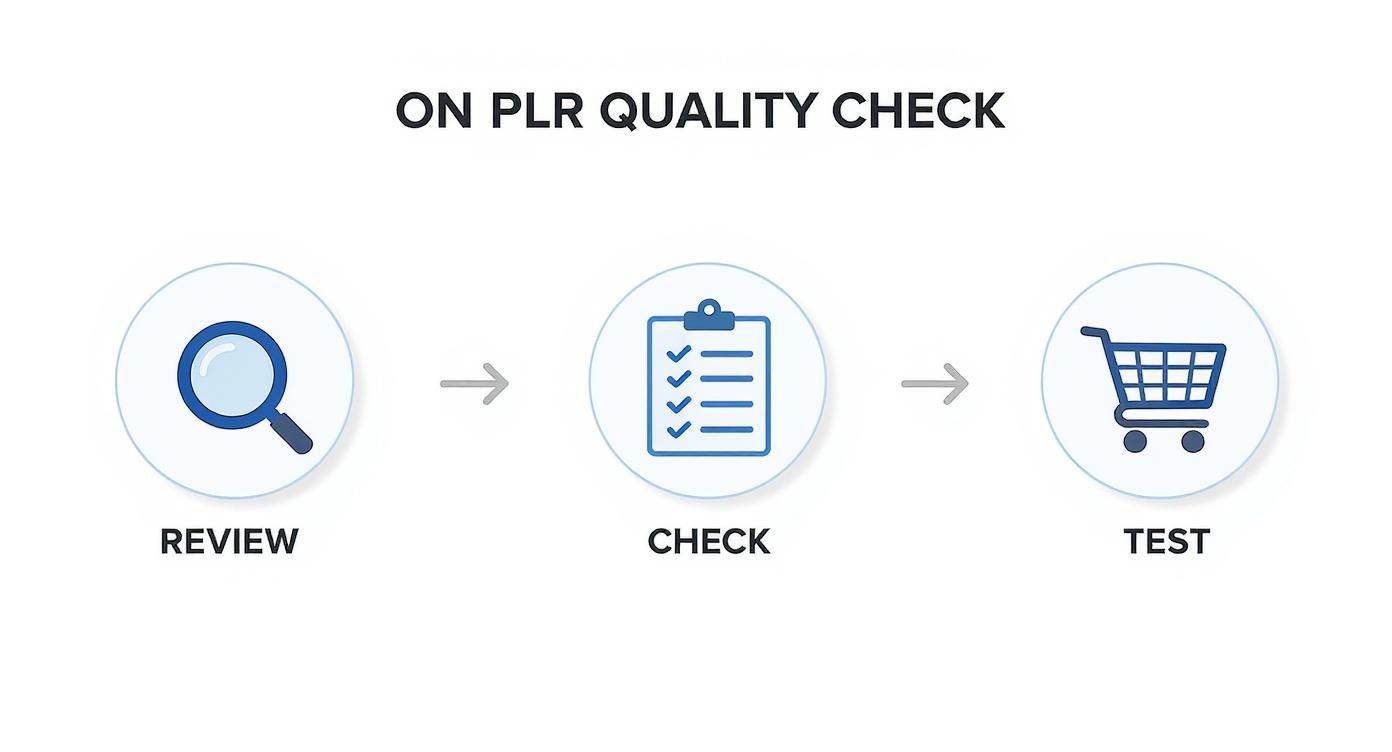
This workflow just reinforces the idea that a good review upfront saves you from wasting time customizing a weak foundation.
Step 4: Add Exclusive, High-Value Content
This final step is the most powerful. It’s where you add unique value that no one else who bought the same PLR can possibly offer. This is what truly makes the product your own and gives you the confidence to charge a premium for it. Ask yourself: what could I add that would be wildly helpful for my specific audience?
Here are a few ideas to get the wheels turning:
A Custom Introduction and Conclusion: Frame the core content with your own perspective. Open by explaining why this topic is so critical right now, and close by summarizing the key takeaways in your own words.
A Bonus Checklist or Worksheet: Create a simple, one-page resource that helps readers put what they've learned into action immediately.
An Exclusive Video Tutorial: Record a short video where you walk through one of the most important concepts from the ebook, adding your own live commentary.
A Brand New Chapter: Is there a related topic you’re an expert in? Add a whole new chapter that delivers even more value and makes the ebook truly comprehensive.
By adding these unique elements, you elevate the PLR from a simple commodity to a premium, one-of-a-kind resource. This strategy is central to building a sustainable business with digital products. To dig deeper, read our guide on why rebranding PLR ebooks is the key to long-term success.
Following these four steps will ensure your private label rights ebooks aren't just rebranded—they're completely transformed into valuable assets that grow your business and genuinely serve your audience.
So, you've put in the work. You took a generic PLR file and hammered it into a polished, branded asset that's truly yours. What now?
A common mistake I see is stopping there—thinking the only option is to sell the ebook directly. While that's a perfectly fine strategy, it’s only scratching the surface. You're leaving a lot of potential on the table.
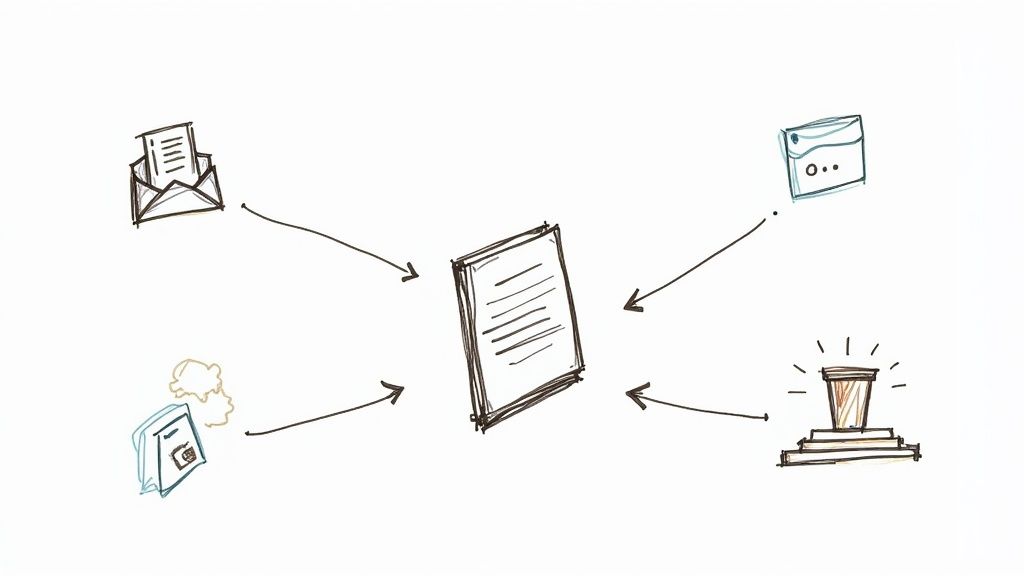
Think of that rebranded ebook as a multi-purpose engine for your business. It can be a magnet for new leads, a powerful bonus for your existing offers, or even the foundation for entirely new products. The real magic happens when you match the right strategy to your business goals.
Create a High-Value Lead Magnet
One of the smartest ways to use your rebranded ebook is to give it away. Sounds a bit backward, right? But offering it as a lead magnet is a battle-tested way to grow your email list at lightning speed. And your email list? That’s one of the most valuable assets you can own, giving you a direct line to your future customers.
Instead of a flimsy one-page checklist, offering a comprehensive, professionally designed ebook for an email address massively increases the perceived value. This approach doesn't just get you more subscribers; it gets you better ones—people genuinely interested in your topic who are far more likely to buy from you down the road.
Bundle It as a High-Impact Bonus
Already have a flagship product? Maybe an online course, a coaching program, or a software tool? Your rebranded ebook can make that core offer completely irresistible when you position it as an exclusive bonus. It adds a ton of perceived value without costing you anything extra to create.
For instance, if you sell a course on digital marketing, you could throw in your ebook on "Advanced SEO Tactics" as a bonus for the first 50 buyers. This creates urgency and scarcity, two powerful triggers that can seriously boost your conversion rates. Sometimes, a great bonus is the final nudge someone needs to click "buy."
A well-chosen bonus can increase the perceived value of your main offer by 25% or more, making your product a clear choice over competitors. It reframes the customer's decision from "Should I buy this?" to "How can I afford to miss out on all this value?"
This simple move transforms your main product into a complete package, showing customers you're invested in their success.
Repurpose Chapters into Fresh Content
Your ebook isn't a one-and-done deal. It’s a goldmine of content just waiting to be repurposed across all your marketing channels. This is how you get the maximum return on your initial investment, feeding your content calendar for weeks, or even months.
Just think of each chapter as its own pillar of content. You can slice and dice it into different formats to reach your entire audience, wherever they hang out.
Blog Post Series: Turn each chapter into a detailed blog post. This is fantastic for SEO, as you can target multiple long-tail keywords related to your ebook's main topic.
Social Media Updates: Pull out key quotes, stats, and quick tips to create dozens of engaging posts for Instagram, LinkedIn, or Twitter.
Email Newsletter Content: Use a chapter to craft a valuable, educational newsletter for your subscribers, keeping them engaged and reminded of your expertise.
Video or Podcast Scripts: The ebook's structure is the perfect script or outline for a YouTube video series or a few podcast episodes.
By breaking down your private label rights ebook, you create a steady stream of high-quality content that drives traffic, builds authority, and keeps your brand top-of-mind. No part of your investment ever goes to waste.
Monetization At a Glance
To bring it all together, here are some of the most effective ways to turn your rebranded PLR ebook into a revenue-generating asset. Each strategy serves a different purpose, so you can pick the one that best fits your current business goals.
Strategy | Primary Goal | Ideal For | Potential Business Impact |
|---|---|---|---|
Direct Sales | Generate immediate revenue | Entrepreneurs with an established audience or strong marketing funnels. | Creates a direct profit stream from a single asset. |
Lead Magnet | Build your email list | Businesses focused on long-term growth and customer relationships. | Attracts high-quality leads for future sales and nurturing. |
Bonus Offer | Increase conversion rates | Course creators, coaches, and software sellers with a core product. | Boosts the perceived value of your main offer, driving more sales. |
Tripwire/Low-Ticket Offer | Convert subscribers into buyers | Marketers with an email list they want to segment and monetize. | Identifies active buyers and helps fund ad spend. |
Membership Content | Enhance recurring revenue | Membership site owners looking to provide continuous value. | Increases member retention and justifies subscription fees. |
Course Foundation | Create a high-ticket product | Experts looking to develop a comprehensive educational program. | Turns a low-cost asset into the basis for a premium offer. |
Choosing the right approach depends entirely on what your business needs most right now: more leads, higher conversions, or new revenue streams. The beauty of a rebranded private label rights ebook is its flexibility—it can do any of these jobs for you.
Navigating PLR Licenses and Legal Pitfalls
Think of a PLR license as the rulebook that comes with your new content. Before you even think about rebranding and selling private label rights ebooks, you have to know exactly what that rulebook allows. Skipping this step is like building a house without checking the zoning laws—it’s just asking for trouble down the road.
Every single PLR package includes a license agreement that clearly spells out your rights and limitations. This isn’t just legal fine print; it's the document that protects both you and the original creator. A few minutes spent reading it now can save you from massive headaches later.
Decoding Common PLR License Terms
The language in these licenses can look a bit formal, but the ideas behind them are pretty simple once you know what to look for. Most agreements will tell you what you can do with the content itself, the included sales materials, and what rights you're allowed to pass on to your own customers.
Here are some of the most common terms you’ll run into and what they actually mean:
Claim Authorship: This gives you the green light to put your name or brand on the ebook as the author. It's one of the biggest perks of using PLR.
Edit and Modify: You have permission to change the content. You can rewrite paragraphs, add your own chapters, and inject your brand’s unique voice to make it truly yours.
Giveaway Rights: This one is important. It tells you if you can offer the ebook for free, usually as a lead magnet to grow your email list. Some licenses forbid this to keep the product's perceived value high.
Sell with Resell Rights: This right determines if you can sell the product to customers and also grant them the license to sell it to their customers. This is much less common with high-quality PLR, which usually restricts these rights to prevent the market from getting oversaturated.
Crucial Insight: Never, ever assume what a license allows. The rights for one PLR ebook can be completely different from another, even if you bought them from the same seller. Always read the specific terms for every single product you buy.
Avoiding Common Legal and Ethical Mistakes
For the most part, navigating the world of PLR is safe, but there are a few common tripwires that can get new entrepreneurs into hot water. The biggest mistake is simply not reading the license and accidentally breaking a key rule.
For example, a license might say you can't sell the ebook on auction sites like eBay. Another might set a minimum selling price to stop people from devaluing the content. Violating these terms could get your license revoked. A solid understanding of what private label rights are and how they work legally is non-negotiable for building a secure business.
Another huge issue is not changing the content enough. Sure, you can claim authorship, but selling a PLR ebook without making significant changes can lead to market saturation. Suddenly, hundreds of people are selling the exact same file. This doesn't just kill your sales; it can damage your brand's reputation and make you look unoriginal.
Properly rebranding your PLR isn't just a smart marketing move—it's a critical step for your legal and ethical protection. When you add your unique insights, your own design, and your voice, you create a new derivative work that is truly yours. That's how you build a business on a solid, secure foundation.
When you learn how to properly rebrand private label rights ebooks, you’re doing a lot more than just filling out your content calendar. You're plugging directly into a massive, borderless global market.
Digital products are one of the most scalable business models out there for one simple reason: they have no borders.
There are no shipping costs to worry about, no physical inventory to manage, and zero geographical boundaries holding you back. This setup lets you run a business from anywhere, reaching customers across the planet with nothing more than an internet connection. It’s a powerful departure from traditional commerce.
A Market That’s Only Getting Bigger
The demand for digital information isn’t just growing; it’s accelerating. In 2025, the worldwide eBooks market is expected to pull in a staggering $14.92 billion in revenue. PLR ebooks are a huge and growing slice of that pie. You can dig into more of the numbers over at the market forecast on Statista.com.
Because it's so easy to acquire and resell PLR, the barrier to entry has dropped, letting all kinds of creators and entrepreneurs get in on the action and tap into international markets. This isn't just some fleeting trend; it's a fundamental shift in how knowledge gets packaged and sold.
Think of PLR not just as a content shortcut, but as your strategic entry point into the thriving world of digital entrepreneurship. It’s a low-risk way to start building a global brand and creating assets that can generate revenue around the clock.
By turning PLR content into unique, valuable resources, you position yourself to claim a piece of this ever-expanding digital pie. The tools are right there, the market is global, and the potential for high-profit margins is undeniable. Your rebranded ebook is more than just another product—it’s a key that unlocks a worldwide audience.
Common Questions About Private Label Rights Ebooks
Diving into the world of private label rights ebooks is exciting, but let's be honest—it can also bring up a few nagging questions. If you're wondering about the legal side of things or how to make a product truly yours, you're not alone. Most entrepreneurs have the exact same concerns when they first start out.
Let's clear the air and tackle the most common questions head-on so you can move forward with total confidence.
Is It Really Legal to Sell PLR as My Own?
Yes, it’s 100% legal, as long as you stick to the terms of the license agreement that comes with your purchase. A PLR license is a legal contract that gives you the right to modify the content, put your name on it, and sell it as your own creation.
Think of it like hiring a ghostwriter. You're not just buying the text; you're buying the legal right to claim authorship. The most important thing is to always read the specific license for each PLR product you buy. Some might have small restrictions, like a minimum price you have to sell it for or rules about where you can sell it.
How Do I Stand Out if Others Bought the Same Ebook?
This is the big one. It's where your effort makes all the difference. The fear of a saturated market is only a real problem if you plan on selling the PLR ebook exactly as you bought it. The secret to making it a bestseller is thorough and strategic rebranding.
Your job is to transform that generic PLR template into a unique asset that nobody else has. Here’s how you do it:
Rewrite the Content: Inject your own voice, stories, and expertise. Don't just edit—make it sound like you.
Create a New Design: Get a professional cover and layout that aligns with your brand. First impressions matter.
Add Exclusive Value: Toss in a bonus chapter, a handy checklist, a quick video tutorial, or even just a personal intro and conclusion.
By adding these unique elements, you create a derivative work that is fundamentally different from the original PLR. This not only eliminates the competition but also significantly increases the product's perceived value.
What Are the Best Platforms for Selling My Ebook?
Once your rebranded ebook is polished and ready to go, you have plenty of great options for selling it. You don't need a complicated tech setup to get started, either.
Your Own Website: Using platforms like Shopify, WooCommerce, or Gumroad gives you complete control over your pricing, branding, and customer list.
Marketplaces: A platform like Etsy is fantastic for digital products, especially if your ebook serves a creative or niche audience.
Course Platforms: If your ebook is part of a larger course or membership, you can sell it directly through services like Teachable or Podia.
The best platform is simply the one that fits into your existing business and makes it dead simple for your audience to find and buy your work.