Explained
7 Private Label Examples You Should Know

Ready to see what a successful private label business looks like? This guide provides a curated collection of real-world private label examples to inspire and inform your next venture. We're moving beyond theory to give you a practical look at how entrepreneurs are building profitable brands from the ground up.
This isn't just a simple list. For each example, we'll break down the strategy behind it, offering actionable insights you can apply directly. You'll discover how to identify market opportunities, rebrand existing products effectively, and implement monetization strategies across various niches and product formats. Whether you're interested in physical goods, digital products like courses and templates, or even complex software systems, you'll find tangible ideas here. To dive deeper into the specifics of this business model, explore our comprehensive guide on Amazon private label products.
Our goal is straightforward: to help you understand the private labeling process through clear, detailed examples. We'll explore platforms like Alibaba and Printful, and research tools such as Jungle Scout, showing you exactly where to source products and how to validate your ideas. Each entry includes direct links and screenshots, providing a clear roadmap from concept to launch. By the end of this article, you will have a comprehensive understanding of what it takes to build a successful private label brand and the resources to get started.
1. Entrepedia
Entrepedia has established itself as a premier done-for-you infoproduct engine, serving as an exceptional resource for private label examples. It’s built for entrepreneurs, coaches, and agencies who need to launch digital products without the typical content creation bottleneck. The platform provides a massive library of high-quality, rebrandable assets, making it a powerful accelerator for anyone looking to scale their digital offerings quickly and professionally.
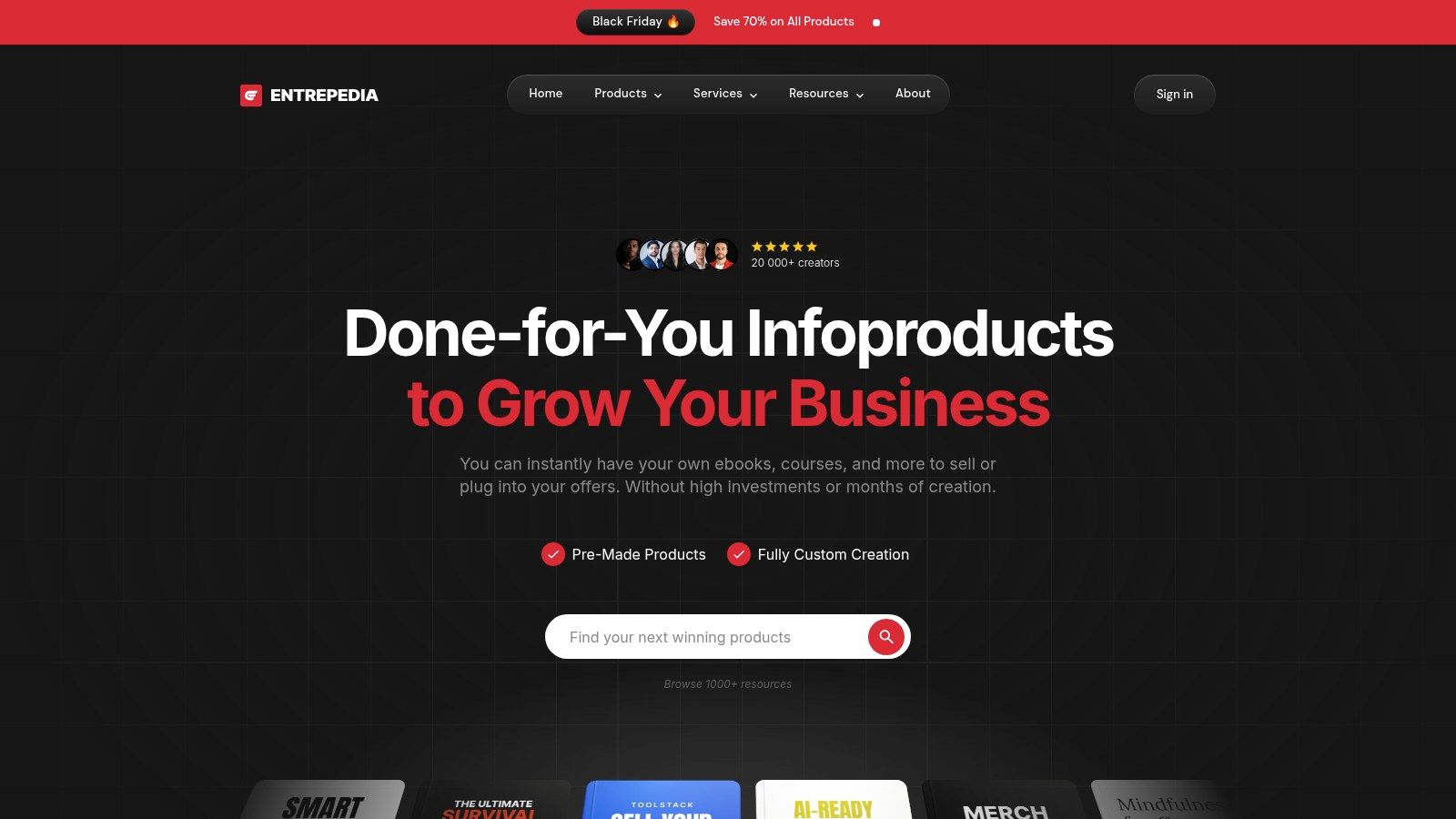
What sets Entrepedia apart is the sheer scale and quality of its in-house production. Unlike many PLR sites that aggregate content of varying quality, Entrepedia researches, writes, and designs all its materials. This ensures a consistent, market-tested standard across its entire catalog, which is a significant advantage for brands focused on maintaining a premium image.
Comprehensive Asset Library & Use Cases
The core of Entrepedia is its Master Library, which contains over 1,000 assets across 15 different formats. This diversity allows for an incredible range of applications, far beyond simple ebooks.
For Coaches & Consultants: Use the pre-written courses, video scripts, and Notion templates as foundational materials for your coaching programs. This saves hundreds of hours in curriculum development, allowing you to focus on client delivery.
For Marketing Agencies: Leverage the ebooks, checklists, and templates as powerful lead magnets to attract new clients. You can also rebrand and provide them as value-added resources for existing customers.
For Course Creators: The platform's video courses and workbooks provide a solid base for building a comprehensive educational program. You can edit, add your unique insights, and launch a polished course in a fraction of the time.
For Amazon KDP Authors: The PLR ebooks can be customized, redesigned, and published directly on Amazon under your name. This is a rapid path to building a portfolio of author credits and creating passive income streams.
Strategic Deep Dive: Key Differentiators
Entrepedia’s strategic advantages lie in its dual-pronged approach to content fulfillment: a vast, ready-made library combined with a rapid custom creation service.
Feature | Strategic Advantage |
|---|---|
In-House Content Production | Guarantees a high, consistent quality standard, protecting your brand's reputation. |
Weekly Content Updates (~20) | Keeps your product catalog fresh and aligned with current market trends, preventing content stagnation. |
Custom Book Service (7-Day Turnaround) | Offers a solution for creating a unique, signature asset without the long timelines and high costs of traditional ghostwriting. You retain full ownership and profits. |
Comprehensive Monetization Guides | Provides free playbooks and funnel blueprints, lowering the barrier to entry for monetizing PLR content effectively. |
Key Takeaway: Entrepedia isn't just a content repository; it's a complete product launch system. It provides the assets, the strategy for custom creation, and the monetization blueprints, making it a holistic solution for creators.
Analysis of Pros and Cons
Pros:
Massive Time & Cost Savings: The ready-to-use library of 1,000+ assets eliminates months of work and expensive outsourcing.
High-Quality, Relevant Content: In-house production and weekly updates ensure materials are polished and up-to-date.
Versatile Licensing: Full Private Label Rights allow for complete rebranding, editing, and selling across multiple channels.
Rapid Custom Creation: The 7-day Custom Book Service is a unique offering for creating a flagship product with full ownership.
Strong Social Proof: Trusted by over 20,000 creators with excellent ratings (4.8/5 on Trustpilot).
Cons:
Non-Exclusive Content: As with all PLR, the library assets are not unique to you. Customization is essential to stand out.
Opaque Pricing: Public pricing for subscriptions and services is not clearly listed, requiring direct contact for a full cost breakdown.
Quick Implementation Tips
Start with a Lead Magnet: Choose a relevant ebook or checklist from the library. Spend 30 minutes updating the cover in Canva and adding your logo and website URL to the footer.
Bundle for Higher Value: Combine a PLR ebook, a related video course, and a Notion template into a single high-ticket "starter kit" product.
Repurpose into Micro-Content: Break down a single PLR ebook into 10-15 social media posts, a blog article, and a short email series.
Website: https://entrepedia.co
2. Alibaba
Alibaba is the world’s largest B2B wholesale marketplace, making it an essential starting point for sourcing physical private label examples. It connects entrepreneurs directly with manufacturers across virtually every product category imaginable, from beauty and supplements to electronics and pet supplies. The platform is specifically designed to facilitate private labeling, with most suppliers offering OEM (Original Equipment Manufacturer) and ODM (Original Design Manufacturer) services.
Unlike other platforms that might resell existing brands, Alibaba gives you direct access to the factory floor. This allows for deep customization, from altering product formulations and materials to designing completely bespoke packaging. The sheer scale of its supplier base ensures competitive pricing, enabling even small businesses to achieve profit margins typically reserved for large corporations.
Strategic Analysis & Actionable Takeaways
What It Is: A global B2B sourcing platform connecting businesses with manufacturers for private label production.
Website: Alibaba
Unique Features & Strategic Advantages:
Massive Supplier Base: Access to millions of suppliers provides unparalleled choice and competitive leverage. You can compare quotes from multiple factories simultaneously using the built-in Request for Quote (RFQ) feature.
Transparent Vetting Tools: Supplier profiles display crucial data like years in business, response rate, certifications (e.g., ISO, CE), and on-site verification status. This helps you filter for reliable partners.
Trade Assurance: Alibaba’s escrow service protects your payment until you confirm the order meets the agreed-upon quality standards, significantly reducing financial risk when working with new suppliers.
Monetization & Use-Case Ideas:
Launch a Niche Product Line: Find a manufacturer for a trending product, like eco-friendly kitchenware or specialized skincare serums. Apply your branding, packaging, and marketing to create a unique CPG (Consumer Packaged Goods) brand.
Create Branded Merchandise: Source high-quality custom merchandise (e.g., apparel, mugs, journals) to sell to your audience or include in high-ticket coaching packages.
Develop a Proprietary Electronic Device: Work with an ODM to modify an existing electronic product (like headphones or a smart-home gadget) with your unique features and branding.
Key Insight: The most successful private label entrepreneurs on Alibaba don't just find a product; they build a relationship with a reliable supplier. Use the platform’s messaging tools to communicate clearly, request samples, and negotiate terms. A strong supplier relationship is your competitive advantage.
Quick Implementation Tips
Filter Aggressively: Use filters for "Trade Assurance" and "Verified Supplier" to narrow your search to more reputable and established manufacturers.
Always Order Samples: Never commit to a large order without first ordering and thoroughly testing a product sample to verify its quality, materials, and functionality.
Master the RFQ Tool: Instead of messaging individual suppliers one by one, post a detailed public RFQ to receive multiple competitive bids quickly.
Vet Thoroughly: Supplier vetting is critical for success with physical products. To streamline this process, you can find a comprehensive guide on our Merchandise Supplier Vetting System.
3. Global Sources
Global Sources is a veteran B2B sourcing platform that uniquely blends online discovery with offline verification. It serves as a vital bridge connecting global buyers with manufacturers, primarily in Asia, offering a curated alternative to larger marketplaces. While its online presence is robust, its key differentiator is its long-standing history of hosting major international trade shows, particularly in Hong Kong.
This hybrid model allows entrepreneurs to browse and vet physical private label examples in person, a crucial step for quality assurance that is often missing from purely digital sourcing. The platform focuses on specific high-demand categories like consumer electronics, mobile accessories, and fashion, presenting a more specialized and often higher-quality selection of potential suppliers compared to broader platforms.
Strategic Analysis & Actionable Takeaways
What It Is: A hybrid B2B online marketplace and offline trade show operator for sourcing private label products.
Website: Global Sources
Unique Features & Strategic Advantages:
Integrated Trade Shows: Global Sources' flagship trade fairs allow you to meet suppliers face-to-face, handle product samples directly, and build stronger business relationships. This hands-on verification is invaluable.
Curated Supplier Base: The platform often features more established and export-focused manufacturers, which can translate to higher quality control and more experience with international shipping and compliance.
Detailed Supplier Profiles: Profiles include extensive information such as business licenses, production capacity, and third-party certifications, helping you vet potential partners more effectively before making contact.
Monetization & Use-Case Ideas:
Develop High-End Electronics: Source and brand premium consumer electronics like smart watches, wireless chargers, or portable projectors. The ability to inspect samples at trade shows is key for this category.
Launch a Niche Fashion Accessories Line: Find manufacturers for specialized accessories such as custom-designed jewelry or tech-integrated bags. When exploring international options, a guide on finding reliable wholesalers in China for jewelry can be an essential resource for vetting suppliers in this specific vertical.
Create a Smart Home Product Brand: Partner with an OEM/ODM supplier to private label a suite of interconnected smart home devices, from smart plugs to security cameras, under a single cohesive brand.
Key Insight: Leverage the hybrid online-offline model. Use the website to conduct initial research and shortlist potential suppliers, then plan a trip to a relevant Global Sources trade show to finalize your selection, negotiate terms, and verify product quality in person.
Quick Implementation Tips
Focus on Verified Suppliers: Prioritize suppliers marked as "Verified" on the platform, as they have undergone a third-party audit of their business registration and production capabilities.
Check the Trade Show Schedule: Regularly check the Global Sources trade show calendar. Attending an event can accelerate your sourcing process from months to days.
Use Specific Search Queries: Instead of broad terms like "headphones," use detailed queries like "ANC Bluetooth 5.2 headphones OEM" to find manufacturers with the exact capabilities you need.
Request a Proforma Invoice (PI): Before placing a large order, always ask for a PI. This document formalizes all order details, including product specifications, pricing, payment terms, and shipping info.
4. Thomasnet
For entrepreneurs prioritizing domestic sourcing, Thomasnet is the leading industrial sourcing platform for finding North American private label examples. It serves as a comprehensive directory connecting buyers with U.S. and Canadian manufacturers across an extensive range of categories, from food and beverage to industrial components and personal care products. The platform is an essential resource for businesses seeking shorter lead times, simplified logistics, and adherence to North American quality and regulatory standards.
Unlike global marketplaces focused on high-volume, low-cost goods, Thomasnet excels in connecting businesses with specialized, high-quality contract manufacturers. This makes it ideal for developing products where quality control, material traceability, and intellectual property protection are paramount. Its detailed supplier profiles provide deep insights into a company’s capabilities, certifications, and even diversity ownership status, enabling a more strategic and targeted sourcing process.
Strategic Analysis & Actionable Takeaways
What It Is: A B2B sourcing directory focused on connecting buyers with North American manufacturers and industrial suppliers. Website: Thomasnet
Unique Features & Strategic Advantages:
North American Focus: Sourcing domestically significantly reduces shipping times, simplifies customs and compliance, and often leads to easier communication and collaboration with suppliers.
Detailed Supplier Vetting: Profiles include in-depth information like certifications (e.g., ISO 9001, FDA Registered), company history, and capabilities, allowing for rigorous pre-qualification.
Advanced Search & Filtering: Users can filter suppliers by location, company type (manufacturer, distributor), diversity status (e.g., woman-owned, veteran-owned), and specific manufacturing capabilities.
Monetization & Use-Case Ideas:
Launch a "Made in the USA" Brand: Source and brand a line of consumer goods, such as gourmet food products, high-end cosmetics, or durable pet supplies, and use the domestic origin as a key marketing differentiator.
Develop a Niche Health Supplement: Partner with a GMP-certified U.S. contract manufacturer to create a unique supplement formula. Domestic production simplifies FDA compliance and builds trust with health-conscious consumers.
Create Custom Industrial Components: For businesses in engineering or product design, Thomasnet is invaluable for finding specialized manufacturers to produce proprietary parts or components under a private label agreement.
Key Insight: Thomasnet's strength lies in its quality over quantity. While pricing may be higher than overseas alternatives, the strategic advantages of faster turnarounds, simplified logistics, and stronger IP protection can deliver a superior long-term ROI.
Quick Implementation Tips
Use Specific Keywords: Search for "private label manufacturing" or "contract manufacturing" combined with your specific product category (e.g., "contract manufacturing skincare") for the best results.
Leverage RFI Tools: Use the platform’s built-in Request for Information (RFI) feature to easily contact and compare multiple suppliers at once with a standardized inquiry.
Verify Certifications: Always cross-reference claimed certifications (like USDA Organic or GMP) with the issuing bodies to ensure they are current and legitimate.
Start with Regional Searches: Filter by state or region to find local or nearby manufacturers, which can further reduce shipping costs and allow for potential on-site visits.
5. PLMA (Private Label Manufacturers Association)
The Private Label Manufacturers Association (PLMA) is an industry trade organization that offers a different, high-touch approach to discovering physical private label examples. Rather than a digital marketplace, its primary offering is the annual U.S. Private Label Trade Show in Chicago, an essential event for anyone serious about launching a retail store brand in North America. This event gathers thousands of manufacturers under one roof, showcasing ready-to-brand products across every major consumer category.
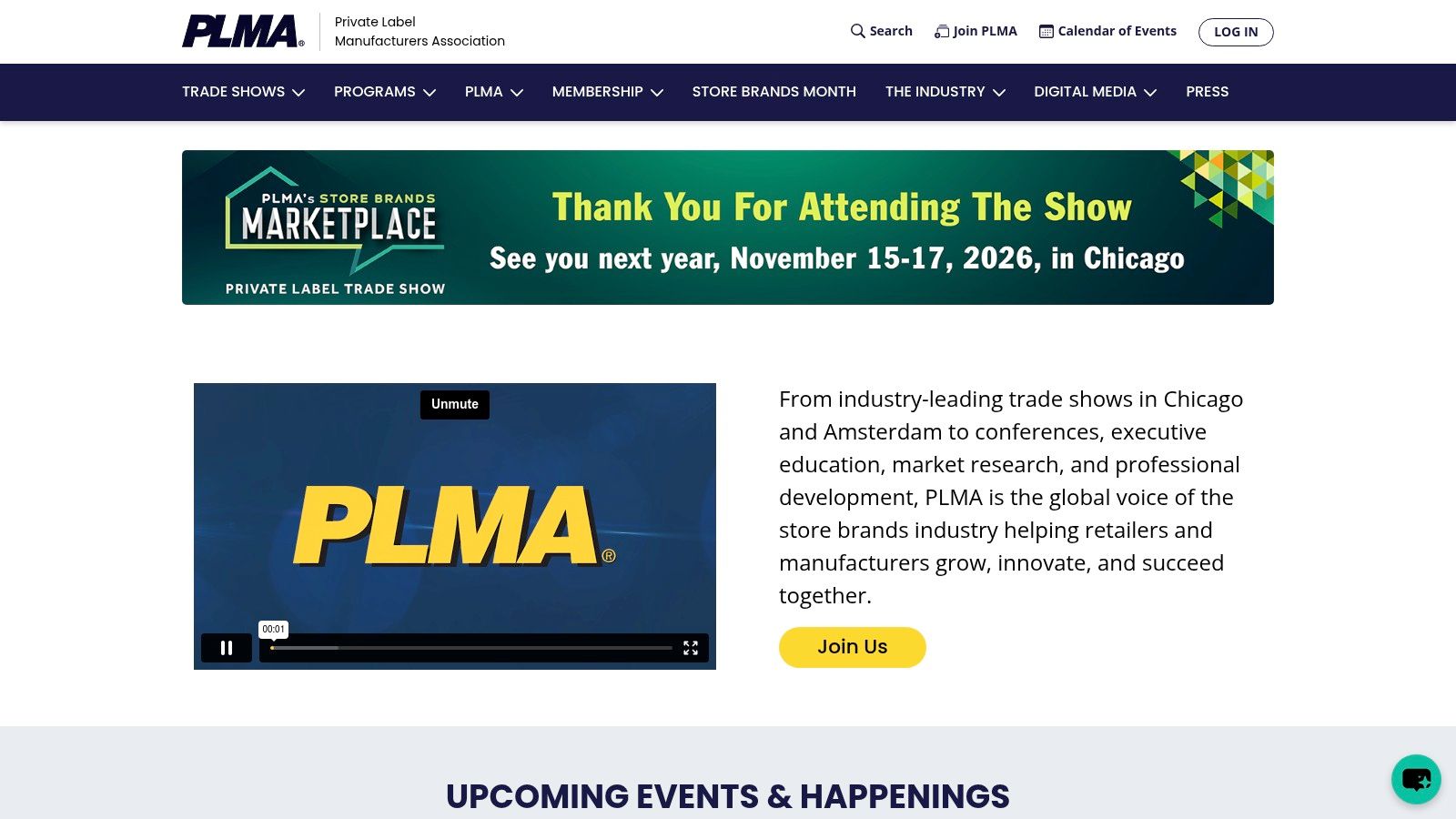
PLMA provides an unparalleled opportunity for in-person vetting and relationship-building. Entrepreneurs can touch, taste, and test thousands of products, from specialty foods and beverages to health supplements, beauty items, and household goods. This direct interaction allows for immediate feedback and deeper conversations about customization, minimum order quantities, and supply chain logistics, accelerating the sourcing process significantly compared to purely online discovery.
Strategic Analysis & Actionable Takeaways
What It Is: An industry association that hosts major trade shows for private label manufacturers and buyers.
Website: PLMA
Unique Features & Strategic Advantages:
High-Density Sourcing: The trade show offers maximum efficiency by concentrating thousands of pre-vetted, retail-ready suppliers in one location. This is ideal for quickly identifying market trends and potential partners.
In-Person Vetting: Directly sampling products and meeting manufacturing teams face-to-face builds trust and clarity that is difficult to achieve online, reducing the risk of quality issues.
Market Intelligence: PLMA provides ongoing industry insights, trend reports, and seminars through its PLMA Live! platform, helping you make data-driven decisions about which product categories to enter.
Monetization & Use-Case Ideas:
Launch a Gourmet Food Brand: Attend the show to source unique food products like artisanal sauces, specialty snacks, or organic coffees. The ability to taste-test products on the spot is a massive advantage for food-based businesses.
Create a Store-Brand OTC Line: Identify manufacturers of over-the-counter health products (e.g., vitamins, supplements, first-aid items) that meet FDA regulations and rebrand them for sale in pharmacies or online.
Develop a Niche Pet Product Collection: Connect with suppliers specializing in pet food, treats, or grooming supplies to build a cohesive, branded line for a specific pet-owner demographic.
Key Insight: PLMA is not for casual browsing; it's a strategic sourcing event. Go with a clear plan: know your target product category, prepare your brand concept, and schedule meetings in advance using the show's directory. Your goal is to leave with a shortlist of qualified manufacturing partners.
Quick Implementation Tips
Plan Your Visit: Use the exhibitor list and "Show Navigator" tool on the PLMA website before the event to identify and pre-schedule meetings with relevant manufacturers.
Prepare Your Pitch: Have your brand concept, packaging ideas, and key business questions ready. Suppliers will take you more seriously if you come prepared.
Focus on Relationship Building: Your primary goal is to establish a personal connection. Discuss capabilities, ask about their process, and understand their business culture.
Expand Your Knowledge: To get the most out of industry events like this, familiarize yourself with the broader product landscape by exploring resources like our White Label Master Library.
6. Jungle Scout
Jungle Scout is less a direct source of products and more a strategic intelligence tool for discovering and validating physical private label examples. This Amazon-focused research suite helps entrepreneurs identify high-demand, low-competition product niches before investing a dollar in inventory. It provides the data needed to move from a vague idea to a data-backed business plan, analyzing competitor sales, keyword trends, and supplier options.
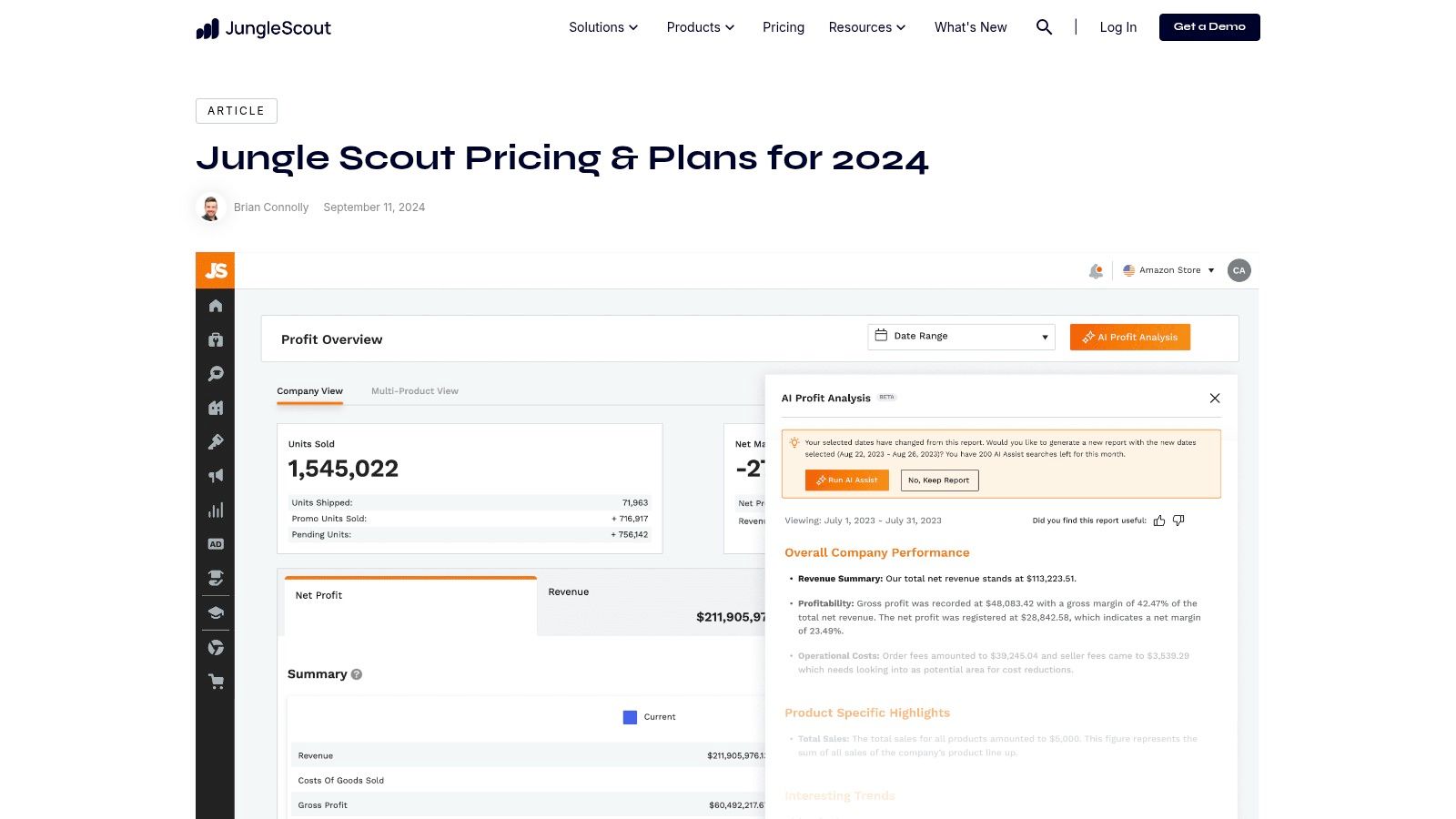
Instead of browsing endless supplier catalogs, Jungle Scout allows you to reverse-engineer success. You can see what's already selling well on the world's largest marketplace, estimate potential revenue, and find gaps in the market. Its tools connect the dots between product opportunity and sourcing, making it an indispensable platform for mitigating risk and maximizing the potential for a successful private label brand launch.
Strategic Analysis & Actionable Takeaways
What It Is: An all-in-one platform for selling on Amazon, providing data-driven tools for product research, supplier sourcing, and brand management.
Website: Jungle Scout
Unique Features & Strategic Advantages:
Opportunity Finder: This tool uncovers high-demand, low-competition keywords, helping you identify profitable product niches that others may have overlooked.
Browser Extension: Get real-time sales estimates, revenue data, and competitive insights directly on Amazon search and product pages, allowing for rapid on-the-fly validation of ideas.
Supplier Database: Move seamlessly from product validation to sourcing by accessing a database of verified global suppliers, viewing their top customers and shipment histories.
Monetization & Use-Case Ideas:
Validate a Niche Before Investing: Use the Product Database to confirm that a product idea (e.g., sustainable yoga mats) has sufficient monthly sales and a manageable level of competition before contacting suppliers.
Bundle and Differentiate: Analyze top competitor listings to identify common complaints in customer reviews. Source a similar product and create a unique bundle or improved version that addresses those specific pain points.
Find "Shoulder" Niches: Instead of competing in a saturated market like "iPhone cases," use the keyword tools to find related, less-competitive niches like "iPhone camera lens protectors" or "MagSafe car vent mounts."
Key Insight: Jungle Scout transforms private labeling from a guessing game into a data-driven science. The most powerful strategy is not just finding a product, but validating a market demand before creating the product to fill it.
Quick Implementation Tips
Set Clear Filters: In the Product Database, filter for products with high demand (e.g., 300+ monthly sales) but low competition (e.g., under 150 reviews) to find the sweet spot.
Use the Profit Calculator: Before committing, use the built-in FBA profit calculator on any product listing to get a realistic estimate of your potential profit margin after all Amazon fees.
Track Competitors: Add the top 5-10 listings for your target product to the Product Tracker to monitor their daily sales, pricing changes, and inventory levels over time.
Master Product Research: Effective data analysis is key to leveraging Jungle Scout. For a step-by-step process, see our complete Winning Product Research Guide.
7. Printful
Printful is a leading print-on-demand (POD) and fulfillment service that provides a crucial entry point into the world of physical private label examples without requiring upfront inventory investment. It allows entrepreneurs to sell custom-branded apparel, accessories, and home goods by handling printing, packing, and shipping directly to the customer. The platform is engineered for white-labeling, ensuring that all products ship under your brand, not theirs.
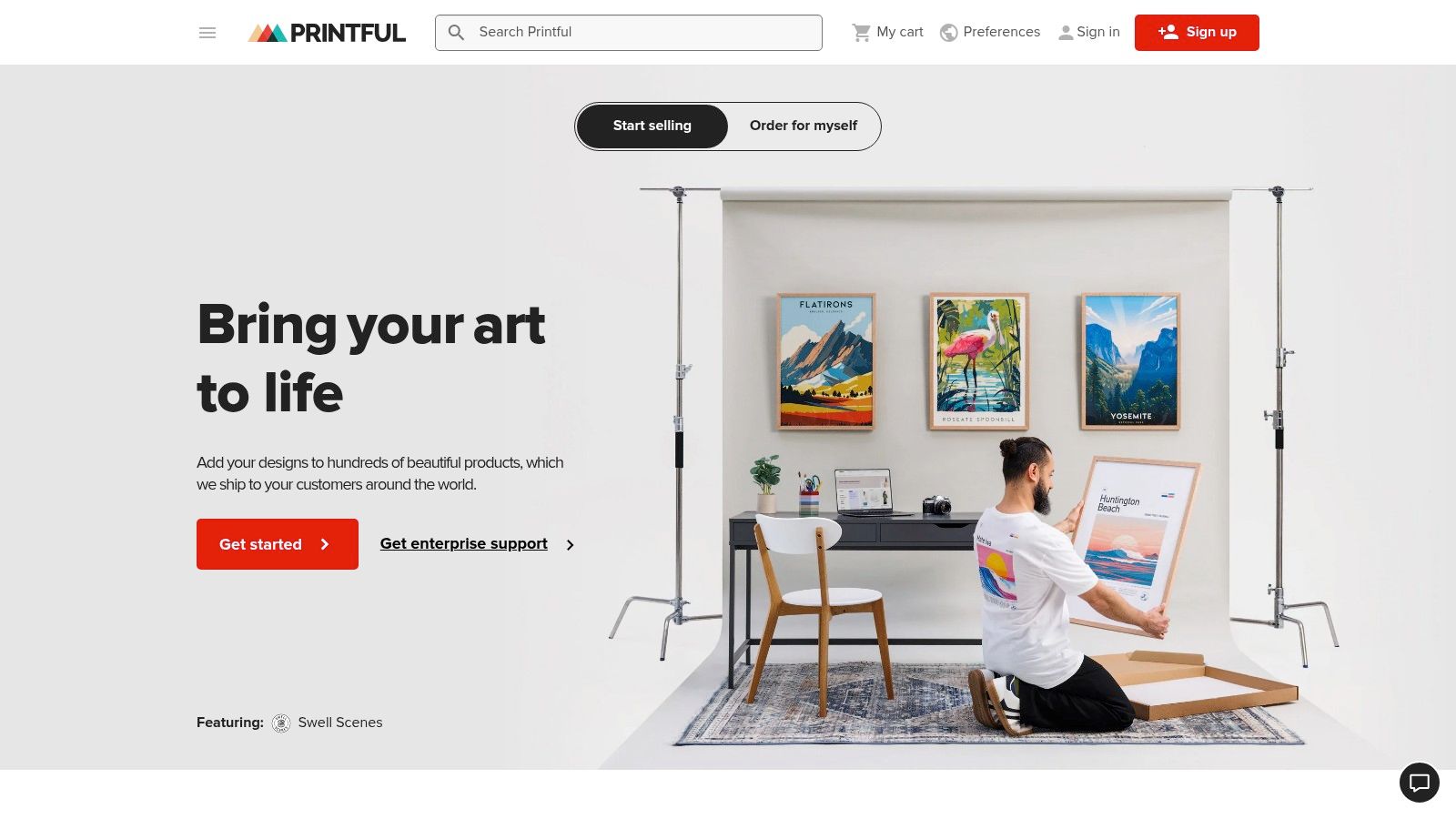
Unlike bulk manufacturing, Printful operates on a per-order basis, which eliminates the financial risk of holding stock. This model is ideal for testing new designs and product ideas. Its key private labeling features include the ability to add custom inside and outside neck labels to apparel, plus options for branded packing slips and custom packaging, creating a cohesive and professional brand experience for the end customer.
Strategic Analysis & Actionable Takeaways
What It Is: A white-label, print-on-demand service for creating custom apparel, accessories, and home goods with no inventory risk.
Website: Printful
Unique Features & Strategic Advantages:
Zero Inventory Risk: You only pay for a product after a customer places an order, making it an extremely low-cost way to launch a branded product line. This is a significant advantage over traditional private labeling, which requires a large minimum order quantity (MOQ).
Comprehensive Branding Options: Printful allows you to remove their branding and add your own through custom neck labels (inside and outside), branded packing slips, and even custom mailer bags for eligible orders.
Seamless E-commerce Integrations: The platform connects directly with major storefronts like Shopify, Etsy, WooCommerce, and Wix, automating the entire order fulfillment process from purchase to delivery.
Monetization & Use-Case Ideas:
Launch a Niche Apparel Brand: Create a clothing line for a specific community (e.g., yoga enthusiasts, coders, book lovers) using high-quality garments and unique designs. Use the custom labeling features to build a premium, boutique feel.
Sell Branded Merchandise for a Community: If you have an audience (e.g., a podcast, YouTube channel, or newsletter), offer them branded merchandise like t-shirts, hats, and tote bags to strengthen community ties and create a new revenue stream.
Test Product Ideas Before Bulk Production: Use Printful to validate demand for specific designs or product types. If an item sells consistently, you can then use those sales-proven designs for a larger, more cost-effective manufacturing run with a supplier from a platform like Alibaba.
Key Insight: Printful's strategic power lies in market validation. It allows you to test product-market fit with real customers and real money on the line, but without the financial exposure of a bulk inventory order. Use it as a launchpad, not just a fulfillment service.
Quick Implementation Tips
Order Sample Kits: Before launching, order product samples to verify the print quality, material feel, and color accuracy. This ensures the final product aligns with your brand standards.
Utilize Branding Presets: Set up your logo and packing slip message in Printful’s branding presets. This automatically applies your branding to all eligible orders, saving time and ensuring consistency.
Choose Products with Maximum Branding Options: When selecting items for your store, filter for those that support inside or outside neck labels to create the most authentic private label experience.
Price for Profit: Remember that POD costs are higher per unit. Calculate your prices carefully to account for the product base cost, shipping, and platform fees while still leaving a healthy profit margin.
Top 7 Private Label Platforms Comparison
Solution | Implementation complexity | Resource requirements | Expected outcomes | Ideal use cases | Key advantages |
|---|---|---|---|---|---|
Entrepedia | Low–Medium — plug‑and‑play PLR; custom service requires coordination | Subscription/custom service fees, minimal content production time, some branding/customization work | Rapid launch of polished info products, rebrandable digital assets, ready-to-publish books | Creators, coaches, agencies, digital product launches, lead magnets, Amazon books | Large PLR library, in-house quality, PLR rights, fast custom book service |
Alibaba | Medium–High — requires supplier vetting and logistics management | Capital for MOQs, international shipping, QC, time for RFQs and negotiations | Access to wide range of physical private‑label products at competitive prices | Brands sourcing overseas OEM/ODM across many categories | Huge supplier base, RFQ system, supplier storefront data, competitive pricing |
Global Sources | Medium — online sourcing plus in-person trade shows | Travel/time for fairs, sampling, supplier vetting, import logistics | Validated supplier relationships, hands‑on sample evaluation, regional sourcing options | Buyers preferring in-person verification, Asia‑focused sourcing | Trade shows for direct comparisons, curated exhibitors, sample evaluation |
Thomasnet | Low–Medium — easier domestic procurement and compliance | Potentially higher unit costs, shorter lead times, regulatory checks, sample testing | Faster lead times, simpler US compliance and logistics, domestic manufacturing | US‑based brands needing North American manufacturers | North American focus, detailed company profiles, location and certification filters |
PLMA (trade show) | Medium — event attendance and post‑show follow up required | Travel/registration costs, time for meetings and sourcing after the event | High exposure to many private‑label examples, retail insights, supplier leads | Retailers and brands seeking many category examples and retail contacts | Dense supplier showcase, trend briefings, retail‑focused connections |
Jungle Scout | Medium — learning curve to interpret data | Subscription cost, time to analyze Amazon metrics and supplier signals | Data‑driven product opportunity validation, competitor and sales estimates | Amazon sellers or brands validating Amazon private label niches | Actionable Amazon market data, product/supplier discovery, training resources |
Printful | Low — plug‑and‑play integrations, no MOQ | Low upfront cost, higher per‑unit prices, design assets | Branded products with no inventory, on‑demand fulfillment, fast market testing | Small brands testing apparel/accessories, low‑risk launches | No inventory risk, branding on packaging/labels, storefront integrations |
Final Thoughts
The journey through these diverse private label examples has illuminated a powerful truth: success in this space is no longer just about finding a cheap product to rebrand. It's about strategic selection, deep market understanding, and creative execution. From sourcing physical goods on platforms like Alibaba and Global Sources to leveraging data with Jungle Scout and exploring on-demand models with Printful, the landscape is rich with opportunity for those willing to look beyond the obvious.
What we've seen is that the most successful private label ventures are built on a foundation of strategic insight. They don’t just slap a new logo on a generic item; they identify a specific audience, understand their pain points, and then source or create a product that provides a genuine solution. The examples explored in this article underscore the importance of differentiation, whether through superior branding, unique product bundling, or value-added content.
Key Takeaways from Our Exploration
As you move forward, keep these core principles at the forefront of your strategy. They are the common threads that connect the most profitable private label endeavors.
Audience-Centric Sourcing is Paramount: Don't start with a product; start with a problem. Tools like Jungle Scout are invaluable for identifying market gaps, but your own understanding of a specific niche audience is your greatest asset.
Branding is Your Core Differentiator: In a market saturated with similar products, your brand is what creates connection and loyalty. This goes beyond a logo to encompass your messaging, customer experience, and the perceived value of your offer. Printful exemplifies how even a single custom-designed item can carry a powerful brand identity.
The "Private Label" Concept is Evolving: The term no longer applies exclusively to physical products sourced from overseas. As we've seen, it extends to digital assets like ebooks, courses, and templates, as well as on-demand manufactured goods. This expansion opens up a world of low-overhead, high-margin opportunities for entrepreneurs, coaches, and creators.
Supplier Vetting is Non-Negotiable: Platforms like Thomasnet and directories from PLMA highlight the importance of due diligence. Your brand's reputation is directly tied to the quality and reliability of your supplier. Rushing this step is a recipe for disaster, leading to poor reviews and costly returns.
Your Actionable Next Steps
Feeling inspired by these private label examples? It's time to translate that inspiration into action. Avoid the common pitfall of analysis paralysis by taking small, deliberate steps forward.
Define Your Niche and Audience: Before you even think about a product, get laser-focused on who you want to serve. What are their biggest challenges? What are they already buying? Where do they hang out online?
Conduct Initial Market Research: Use a tool like Jungle Scout to validate demand and assess the competitive landscape for potential product ideas within your chosen niche. Look for high demand coupled with an opportunity to improve upon existing offers.
Explore Sourcing Options: Based on your product idea, begin exploring the relevant platforms. For physical goods, browse Alibaba and Global Sources. For print-on-demand, start designing on Printful. For digital assets or business systems, consider a resource like Entrepedia.
Create a Minimum Viable Brand (MVB): You don't need a perfect brand from day one. Develop a simple brand name, logo, and core message that resonates with your target audience. You can refine and build upon this foundation as you grow and gather customer feedback.
Order Samples and Test: Never commit to a large inventory order without first getting your hands on a sample. Test the quality, functionality, and overall feel of the product. If possible, get it in the hands of a few potential customers for their honest feedback. This single step can save you thousands of dollars and immense frustration.
The world of private labeling is a dynamic and accessible path to building a valuable brand. By learning from the diverse private label examples we've covered and applying a strategic, customer-focused approach, you can carve out your own profitable corner of the market. The tools and platforms are more powerful than ever; the only remaining ingredient is your unique vision and commitment to execution.