Guide
How to Grow Online Community: A Practical Guide

To grow a thriving online community, you have to build it on a solid foundation. That starts with getting crystal clear on your community's purpose, identifying your ideal member, and articulating the unique value they'll get from joining.
Everything else—from the content you create to your moderation style—flows from getting this initial strategy right.
Defining Your Community's Purpose and Identity
Before you write a single welcome post or even think about a platform, you need to answer one crucial question: Why should this community exist?
A vague answer like "to connect people" just won't cut it. A powerful community is built on a specific, compelling mission that attracts the right folks and, just as importantly, repels the wrong ones. Nailing this clarity upfront is the strategic blueprint for everything that follows.
Think of your community's purpose as its north star. It guides every decision you make. Without it, you’re just running a group chat that will probably fizzle out in a few months.
Pinpoint Your Core Mission
What's the central transformation or goal your community will help members achieve? A strong mission is active and focused on an outcome. It’s not just about discussion; it’s about progress.
Here are a few ways to frame a mission:
Support-focused: Maybe you’re helping users master a new piece of software. The community becomes a place to share tips, troubleshoot bugs, and celebrate wins.
Passion-driven: This is about creating a space for people to geek out over a shared interest. Think of a group for vintage comic book collectors to showcase their latest finds and debate classic storylines.
Growth-oriented: A professional network for marketers, for example, where they can share campaign results, ask for tough career advice, and find people to collaborate with.
Your mission becomes the heart of your brand. If you're struggling to wrap a strong identity around this mission, a good brand identity guide can give you the structure you need to build it out.
Profile Your Ideal Member
Once your mission is clear, you can get laser-focused on who you're building this for. Who is the one person who would get the most out of this space?
Get specific here. Don't be afraid to create a simple persona that details their goals, their biggest challenges, and what they're truly looking for from a group of peers.
For instance, an ideal member for a sustainable living community isn't just "anyone interested in the environment." It might be "a busy parent in their 30s who wants practical, budget-friendly ways to reduce household waste but feels completely overwhelmed by all the information online."
That level of detail makes it so much easier to create content and experiences that genuinely resonate.
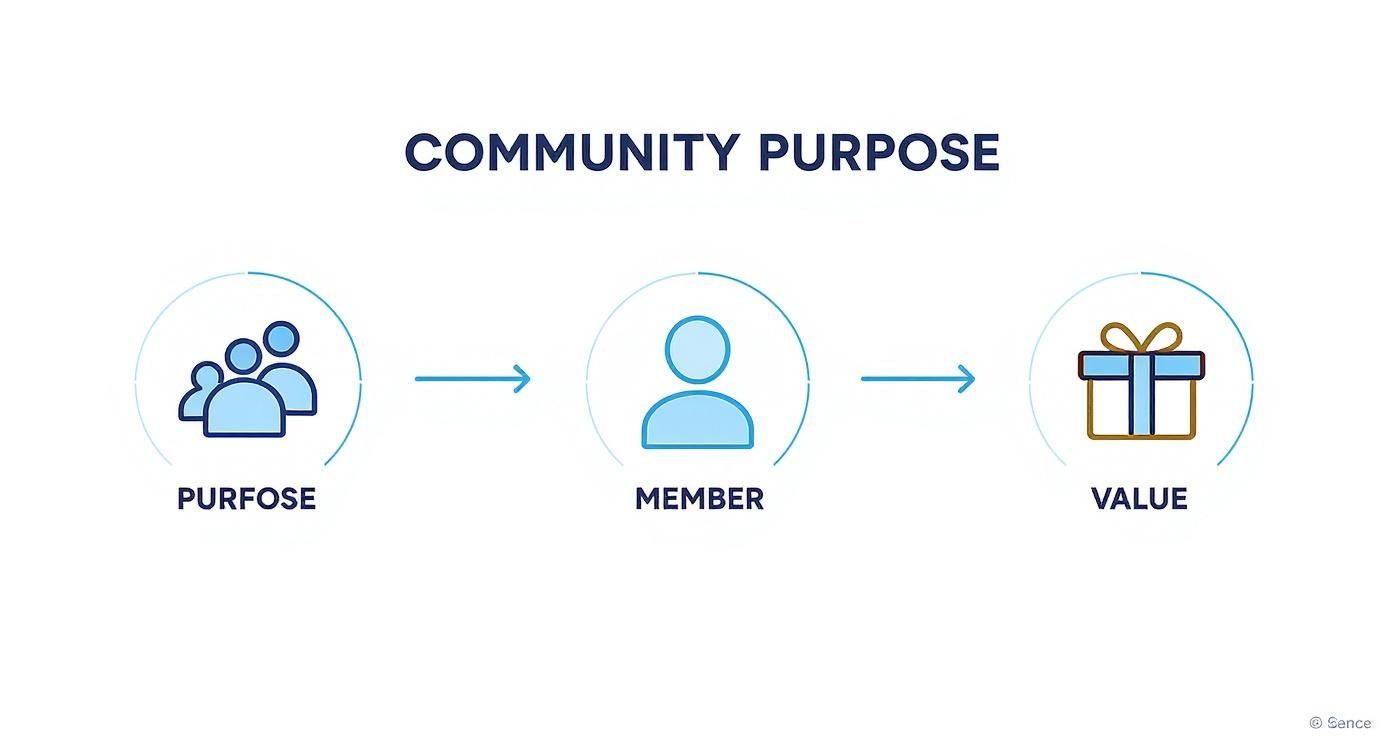
This simple flow shows how a clear purpose naturally attracts the right members. When you have the right people in the room, delivering meaningful value becomes almost effortless.
Articulate Your Unique Value Proposition
With your mission and ideal member locked in, the final piece of the puzzle is your value proposition. What tangible and intangible benefits will members get here that they can't get anywhere else? This is your unique selling point, and it has to be sharp.
Before you get too deep into the weeds of your own community, it helps to take a step back and make sure you're solid on understanding community marketing as a whole.
A great community doesn't just give members access to content; it gives them access to each other. The real value is in the connections, shared experiences, and collective wisdom that emerge from member interactions.
The digital world is noisy. You're competing for attention against, well, everything. As of early 2025, there are 5.56 billion internet users, and the average adult spends over 6.5 hours online every single day.
To capture a tiny slice of that time, your community's value has to be immediately obvious and compelling. This foundation ensures that when people discover your community, they instantly get why they should join—and more importantly, why they should stick around.
Choosing the Right Platform for Your Community

The platform you pick is so much more than just software. It’s the digital home where your members will connect, learn, and grow together. This decision is critical because a platform's design fundamentally shapes the member experience and the entire culture of your community. It’s the framework that supports every single interaction, so don’t take this choice lightly.
Before you get lost comparing feature lists and pricing tiers, anchor your decision in the purpose you defined earlier. A community built for professional networking and deep-dive courses has completely different needs than one for casual gaming fans. The wrong platform creates friction at every turn, while the right one feels like a natural extension of your community's identity.
Aligning Platform Type with Community Goals
The market is flooded with options, but they generally fall into a few key categories. Getting a handle on these archetypes is the first step to narrowing your search. Each type is built to excel at a different kind of interaction.
Dedicated Community Platforms (e.g., Circle, Mighty Networks): These are the all-in-one solutions built specifically for community building. They usually offer features like discussion forums, event management, member directories, and often include course hosting and monetization tools. They’re perfect for creators and brands who want a branded, controlled environment.
Communication-First Tools (e.g., Slack, Discord): Originally designed for team collaboration or gaming, these platforms are fantastic for real-time, fast-paced chat. Their channel-based structure is great for organizing conversations around specific topics and creating a sense of immediacy. They really shine for highly interactive, discussion-driven groups.
Social Media Groups (e.g., Facebook Groups): The biggest advantage here is low friction—your members are probably already on the platform. The trade-off? You sacrifice control over branding, features, and the ever-changing algorithm, and you’re constantly competing with an endless scroll of distractions in their feed.
To make a truly informed decision, it helps to dive deeper with a structured comparison. For a more detailed breakdown, our guide on The Ultimate Platform Selection Strategy gives you a framework for weighing your options based on your specific needs.
Designing a Frictionless Onboarding Journey
Choosing the platform is only half the battle. How you welcome new members in their first few minutes is arguably more important for long-term retention. A confusing or empty welcome experience is the fastest way to lose someone who was genuinely excited to join.
Your goal is to make a powerful first impression that instantly validates their decision to sign up.
The best onboarding sequences don't just show members how to use the platform; they show them why they should care. They guide newcomers from passive observers to active participants as quickly as possible.
Create a welcome sequence that makes new members feel seen and valued. This isn't just about a single "welcome!" email. It’s a series of deliberate steps designed to weave them into the fabric of the community.
Key Elements of a Powerful Welcome Sequence
A successful onboarding flow should feel like a guided tour, not a user manual. It should encourage three key actions: completing their profile, exploring core community spaces, and making their first contribution.
Here’s a practical flow you can adapt:
The Instant Welcome: As soon as someone joins, trigger an automated message or email. Don't just make it a confirmation. Point them to the single most important first step, like an "Introduce Yourself" thread.
Profile Completion Prompts: Gently nudge them to add a profile picture and a short bio. A community of faceless avatars feels cold and impersonal. Frame this as a way for "other members to connect with you."
The Guided Tour: Don't expect them to figure everything out on their own. Highlight 2-3 key areas or channels. For example, point them to the general discussion area, a resources library, and the upcoming events calendar. Too many options create decision paralysis.
The First Contribution Nudge: This is the most critical step. Actively prompt them to engage. Pose a simple, low-stakes question in your welcome thread, like, "What's the #1 thing you're hoping to learn here?" This makes it easy for them to jump into the conversation.
By designing this journey thoughtfully, you transform a simple sign-up into the beginning of a meaningful relationship. This initial investment in the member experience pays dividends in engagement and builds the foundation for how to grow your online community sustainably.
Creating Content and Rituals That Spark Engagement
An engaged online community is never an accident—it's built with intention. A great platform and a smooth onboarding process are just the first step. They get people in the door, but it’s the culture of content and connection that convinces them to stay. This is where you transition from architect to community leader, sparking conversations and creating the reliable rhythms that members start to look forward to.
The real secret is balancing predictability with spontaneity. Members should know when to expect certain events or content, but still feel the excitement of a spontaneous chat. Nailing this balance is how you turn a passive audience into a vibrant, self-sustaining community where people feel like they actually belong.
Craft a Value-Driven Content Calendar
An empty community feels like an abandoned town square. In the beginning, you have to be the one starting the conversations. A well-planned content calendar is your best friend here, ensuring you're consistently delivering value and giving members easy ways to jump in.
Your content mix needs to be diverse enough to appeal to different personalities. Some people love to write long posts; others prefer to react to a poll or join a live Q&A. Think beyond just text.
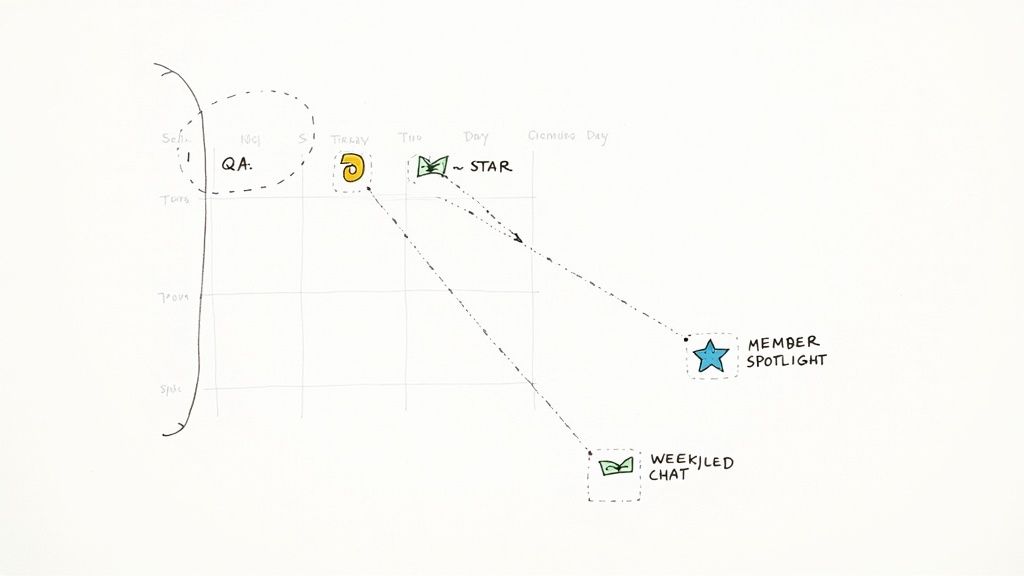
Expert Q&As: Bring in an industry expert (or position yourself as one) for a live "Ask Me Anything" session. This is a massive value-add and concentrates activity at a specific time, creating a real buzz.
Interactive Challenges: A 7-day challenge, a weekly photo prompt, or a monthly goal-setting thread encourages people to participate instead of just scrolling.
Member Spotlights: Make a habit of highlighting a member's success, a cool project they shared, or an insightful comment. This not only gives them well-deserved recognition but also shows everyone else what’s possible.
Planning this content shouldn't be a daily scramble. Using a structured content calendar lets you map out your key engagement prompts weeks or even months ahead. This frees you up to do what really matters: facilitating the conversations as they happen.
Establish Meaningful Community Rituals
Rituals are the heartbeat of your community. They're the recurring, predictable events that create a shared experience and give people a reason to check in regularly. These don't need to be complicated. In fact, simple is usually better.
A great ritual quickly becomes part of the group's unique culture and language.
The most effective community rituals are simple, consistent, and focused on member contribution. They create a reliable rhythm that members can depend on, turning passive check-ins into an active habit.
For instance, a community for freelance writers could roll out a few simple rituals:
Wins Wednesday: A weekly thread where members share their successes, big or small. This fosters a positive, supportive vibe that people want to be around.
Feedback Friday: A designated space for members to post drafts and get constructive criticism from their peers. It provides direct, tangible value.
Monthly Goal-Setting: At the start of each month, a thread goes up where members publicly state their goals, creating a powerful sense of shared accountability.
These rituals provide a clear structure. They remove the guesswork for members, making it easy to know how and when to participate. Over time, they become the cultural cornerstones that define what your community is all about.
Foster Member-Led Discussions
Your ultimate goal is to evolve from being the primary content creator to being the primary facilitator. The magic happens when members start answering each other's questions and kicking off their own discussions. That's the key to growing a community that can scale beyond your own time and effort.
Research from GWI shows that 76% of people trust content from 'normal' people—like their peers in a community—far more than official brand messages. This peer-to-peer trust is the fuel for genuine engagement and long-term retention. It’s why so many brands are pouring resources into building these spaces.
To encourage this shift, you have to learn to step back. When a member asks a question, resist the urge to answer it yourself right away. Instead, you could tag another member you know has experience in that area and invite them to share. Celebrate and amplify user-generated content every chance you get. Make it obvious that member contributions are the most valued part of the community.
Finding Your First 100 True Fans
When you’re just starting out, the temptation is to think big. How can I get thousands of members, fast? My advice? Resist that urge. Your first, most critical mission isn’t mass marketing; it’s finding your first 100 true fans.
These are the people who will set the tone for everything that follows. They're the cultural foundation. This early stage is all about manual, personal, and often unscalable effort. It's less about automation and more about genuine, one-on-one outreach. Think of them as co-creators, not just members. They’ll spark the first discussions, shape the vibe, and become your most powerful advocates.
Tap into Your Existing Network First
Before you start hunting for strangers, look at the people who already know, like, and trust you. Your email list, your social media followers, your professional contacts—this is the warmest audience you'll ever have. They are the most likely to give your new community a shot.
But don’t just send out a generic blast. That’s a surefire way to get ignored. Personalization is everything here. A mass email feels like an ad, but a personal note feels like an exclusive invitation.
Take the time to pinpoint individuals who perfectly fit the ideal member profile you built earlier. Send them a direct message or a short, personal email explaining what you're building and—this is the important part—why you thought of them specifically.
It could be as simple as: "Hey [Name], I'm launching a small community for [your niche], and I immediately thought of you because of your insightful posts about [specific topic]. I'd be honored if you'd consider joining as a founding member to help us shape the conversation from the start."
This approach does more than just invite; it makes people feel valued and seen. It's how you recruit members who are already primed to be active participants, not just silent observers.
Go Where Your Ideal Members Already Gather
Once you’ve tapped your personal network, it’s time to find your people in their natural digital habitats. Where do they already hang out online to discuss the topics your community is built around? The idea is to become a valued contributor in these existing spaces, not to spam them with links.
Identify a handful of relevant places:
Niche Subreddits: Find subreddits dedicated to your topic and start answering questions and sharing valuable insights.
LinkedIn or Facebook Groups: Participate in professional or hobbyist groups where your ideal members are active.
Industry Forums: Many specialized fields still have active, old-school forums that are goldmines for finding passionate experts.
Your goal isn't to poach members. It's to build a reputation as a helpful, knowledgeable person. Once you've established trust, you can mention your community when it's genuinely relevant to a conversation.
Let’s say you’re building a community for SaaS marketers. Spend a few weeks answering questions in a marketing subreddit. When someone posts a complex problem that your community is designed to solve, you can respond with a helpful answer and add, "We're actually discussing this exact challenge in a small, private community I run for SaaS marketers. Happy to share an invite if you're interested." It feels natural, not salesy.
Collaborate with Micro-Influencers
Working with micro-influencers (those with a smaller, but highly engaged, following) can be incredibly effective at this early stage. They’ve built deep trust with a specific audience that likely overlaps with yours. A single, authentic mention from the right person can bring in dozens of high-quality members.
The key is to approach this as a partnership, not a transaction. Don't just ask for a shoutout. Instead, find ways to provide genuine value to them and their audience first.
Offer them free, lifetime access to your community.
Invite them to co-host a Q&A session or a live event for their audience.
Feature their work or insights prominently within your own content.
By building a real relationship, you're not just getting a promotion; you're gaining a powerful ally. Their endorsement carries weight because it’s authentic. This thoughtful, hands-on approach is how you attract the founding members who will create the organic momentum you need for sustainable growth.
Scaling Moderation and Exploring Monetization

As your community picks up steam, two new realities will hit you, both exciting and a little daunting. First, keeping conversations on track and protecting the culture you’ve built gets a whole lot harder. Second, you’ll start thinking about long-term sustainability, which naturally leads to the money question.
Moderation and monetization are more connected than you might think. A healthy, well-moderated community is valuable—and a valuable community is one that can eventually pay for itself. Getting this stage right is what separates communities that fizzle out from those that thrive for years.
Building a Scalable Moderation Framework
When you’re just starting, you can moderate everything yourself. But once you cross a few hundred members, that’s just not realistic. The goal is to evolve from being the sole police officer into a leader who creates a system where the community helps regulate itself.
It all starts with solid guidelines. A simple “be nice” rule won’t cut it anymore. Your guidelines need to be a living document that spells out exactly what’s okay and what’s not, with real examples. Crafting effective community rules is non-negotiable for long-term health.
Think of these guidelines as your community’s constitution. They should cover:
Topic Relevance: What kind of content belongs here? What should be posted elsewhere?
Promotion Rules: Can members share their own projects or businesses? If so, what are the ground rules?
Conflict Resolution: What’s the official process when members get into a heated debate?
Consequences: What happens when someone breaks the rules? Lay out a clear warning system and removal process.
Keep an eye out for members who consistently set a positive tone and offer helpful input. These are your future moderators. Empowering them isn’t just about delegating tasks; it’s about giving your most invested members a real stake in the community’s future.
A great moderation team acts more like gardeners than police officers. Their primary role is to cultivate a positive environment where good conversations can flourish, not just to punish rule-breakers.
You can start small with a "member leader" or "ambassador" program. Give them a special badge or title and the ability to flag problematic content. This fosters a sense of shared ownership and helps moderation grow alongside your member count, keeping that human touch.
Exploring Sustainable Monetization Models
Let’s get one thing straight: monetization isn’t about squeezing money out of your members. It’s about creating more value that they’re genuinely happy to pay for. Done right, it actually strengthens the community by funding better tools, exclusive content, and unique experiences.
There are a few proven ways to do this, and the best fit depends entirely on why your community exists and what your members truly value.
Popular Monetization Strategies
Premium Memberships: This is the most straightforward model. Members pay a recurring fee (monthly or yearly) for access to the community itself or a special, premium section. This works wonders when the core value is ongoing access to networking, exclusive content, or expert support.
Exclusive Content & Courses: Instead of a subscription, you can offer one-off paid products like deep-dive workshops, detailed courses, or valuable downloadable templates. This lets members pick and choose what they want to invest in.
Brand Partnerships & Sponsorships: If you’ve built a super-engaged, niche audience, brands will pay to get in front of them. This could look like a sponsored virtual event, a dedicated channel for a partner, or a featured newsletter spot. The trick is making sure any partnership is a genuine win for your members.
Affiliate Programs: Recommend tools, books, or services that you actually use and love. When a member buys through your link, you get a small commission. This only works if it’s built on a foundation of trust you’ve already established.
Whatever you choose, it has to align with your community's values. A growing number of creators are finding success with paid, private spaces. In fact, 77% of digital creators report better revenue and follower growth after launching a paid community. This model not only generates recurring revenue but also fosters a more committed and engaged group.
Ultimately, whether you’re fine-tuning moderation or introducing a payment tier, the guiding principle is the same. Always focus on making the member experience better and reinforcing the value they get. That’s the only way to build a community that lasts.
Common Questions About Growing a Community
As you start building a community from the ground up, it's completely normal to have questions and hit a few roadblocks. Let's tackle some of the most common hurdles community builders face so you can stay focused on what actually moves the needle.
How Long Does It Take to See Real Growth?
Everyone wants to know the magic number, but there isn't one. What I can tell you is this: expect to spend the first 3-6 months just laying the foundation. Your goal isn't a massive member count; it's creating a magnetic culture with a small, core group of people.
Your first 90 days are all about deep, meaningful engagement. You need to provide a high-touch, incredible experience for your founding members. Their excitement and early activity are the sparks that will eventually ignite word-of-mouth growth. Trying to rush this part is probably the single biggest mistake I see people make.
The most frequent mistake new community builders make is promoting an empty community. They focus on acquisition before sparking a single conversation. New members arrive, see a ghost town, and leave immediately.
To avoid this fate, become obsessed with your first 10-20 members. Get to know them, engage with them personally, and build the culture with them. A small but vibrant core is the only foundation that can support real, scalable growth later on.
What Are the Best Metrics to Track?
It’s so easy to get caught up in vanity metrics like the total number of members. But that big number on your dashboard often hides the real story and can give you a false sense of security. To get a true read on your community's health, you need to look at the KPIs that show real participation.
Instead of just member count, focus on these numbers:
Monthly Active Members (MAMs): This tells you how many people are actually showing up and participating, not just lurking in the background. It's a much better health indicator than your total member list.
Content Contribution Rate: Are your members just consuming, or are they creating? This metric, which tracks posts and comments per active member, tells you if your community is truly collaborative.
Member-to-Member Interactions: Pay attention to the number of replies between members, not just replies to your own posts. This is a huge signal that genuine connections are forming and the community is becoming self-sustaining.
Retention Rate: What percentage of your members are sticking around month after month? High retention is proof that you're delivering on your community's core promise.
These metrics paint a much clearer picture of whether you're building a space where people feel a genuine sense of belonging and connection. They tell you what’s really happening inside your community.