Guide
Create and Sell Digital Products: A Practical Guide
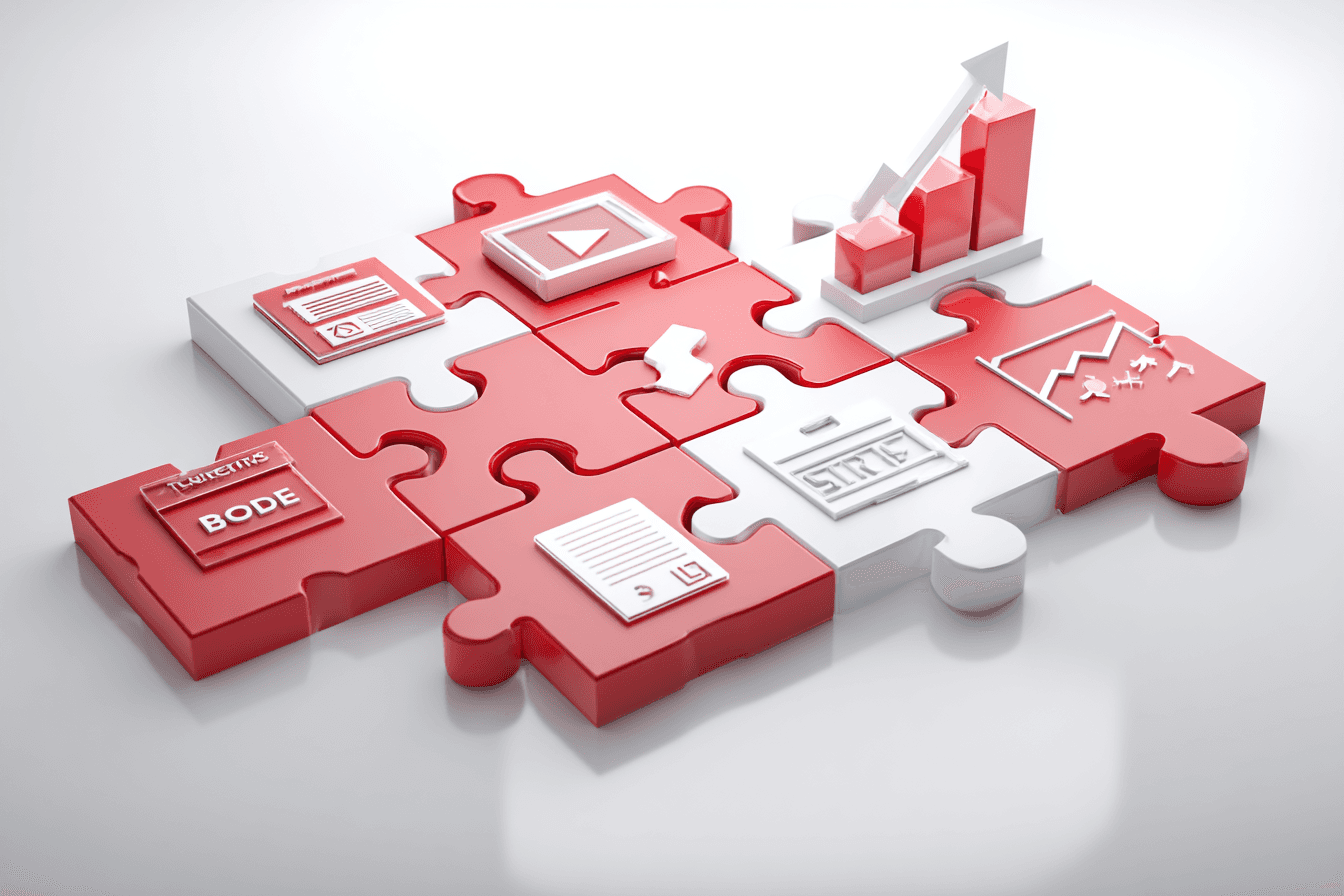
Ready to build an online business that actually works for you? This guide breaks down exactly how to create and sell digital products, turning your expertise into a real, sustainable income stream. It’s the entire blueprint, from validating your first idea all the way to building an automated sales machine.
Your Path to a Profitable Digital Product Business
Turning a skill or passion into a digital product is one of the smartest ways to build a flexible, scalable online business. Think about it: unlike physical goods, digital products have no inventory and no shipping costs. You can sell them an infinite number of times.
This opens up a massive opportunity for entrepreneurs, coaches, and creators to finally generate income that isn't directly tied to the hours they work.
The appeal is obvious. You build an asset once, and it can work for you 24/7. But success isn't just about making something cool; it's about making something people genuinely need and are happy to pay for. This takes a strategic approach that goes way beyond just having a good idea. It means deeply understanding a specific audience, solving one of their tangible problems, and then packaging your solution in a way they can't resist.
This simple process flow captures the core of any successful digital product business.
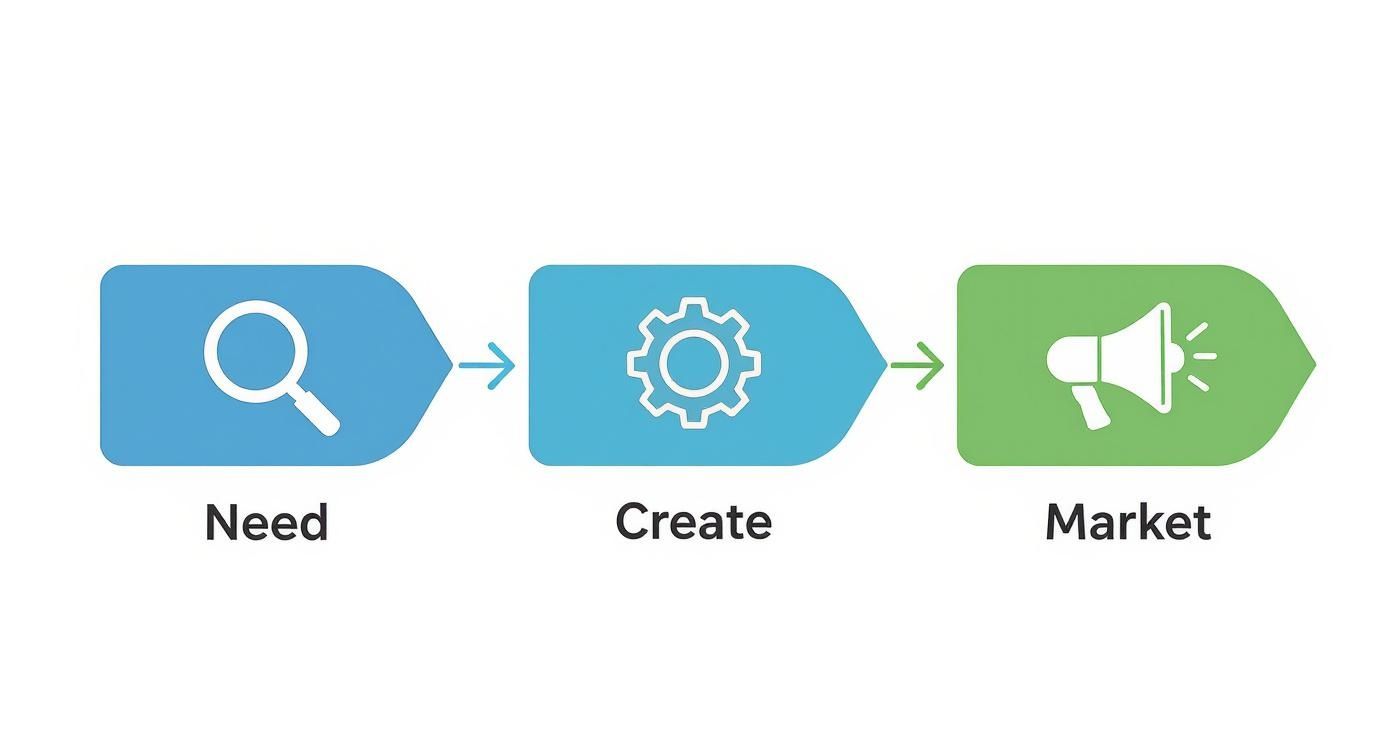
It all starts with identifying a real market need before you even think about creation or marketing. This ensures you’re building something with built-in demand from day one.
To get this right, you have to nail four key areas. Think of them as the pillars holding up your entire business. Each one builds on the last, creating a solid foundation for long-term growth and profit. This isn't a one-and-done checklist but a continuous cycle of building, learning, and refining.
Here’s a breakdown of what that looks like in practice.
The Four Pillars of a Digital Product Business
Pillar | Primary Goal | Key Activities |
|---|---|---|
Pillar 1: Validation | Confirm a profitable market need exists. | Audience research, competitor analysis, keyword research, surveys, problem interviews. |
Pillar 2: Creation | Build a high-value, problem-solving product. | Outlining content, designing assets, writing copy, recording videos, formatting files. |
Pillar 3: Marketing | Attract and convert your target audience. | Building a sales page, setting up an email funnel, creating content, running promotions. |
Pillar 4: Scaling | Automate and grow your revenue streams. | Optimizing funnels, creating upsells, expanding product lines, exploring paid ads. |
Focusing on these pillars in order prevents you from wasting months creating something nobody wants to buy.
The opportunity here is massive. The global digital product industry is valued at an estimated $2.5 trillion annually. This explosive growth is fueled by nearly 5 billion internet users, with around 2 billion of them buying digital goods back in 2020 alone—a number that's only gone up.
Building a digital product business is like constructing a bridge. Your expertise is on one side, and your customer's desired outcome is on the other. Your product is the bridge that gets them there.
As you start planning, one of the most critical decisions you'll make is where to host and sell your offerings. Getting this right from the start is paramount. Making an informed decision is much easier after choosing the right platform for selling digital products and comparing the popular options. This foundational choice directly impacts your ability to scale and manage your business efficiently down the road.
Finding and Validating Your Profitable Idea
Let’s get one thing straight: a brilliant digital product idea is completely worthless if nobody is willing to pay for it. I've seen countless creators spend months building something in secret, only to launch to the sound of crickets.
The most successful entrepreneurs don't start by building a product. They start by finding a painful, specific problem and then proving that people will happily pay for a solution. This is the critical step that separates a fun hobby from a profitable business.
Forget trying to invent something entirely new. The best ideas usually live at the intersection of your unique skills, your genuine interests, and a real market need. What problems have you already solved for yourself or others? What do people constantly ask you for help with? That’s your goldmine.
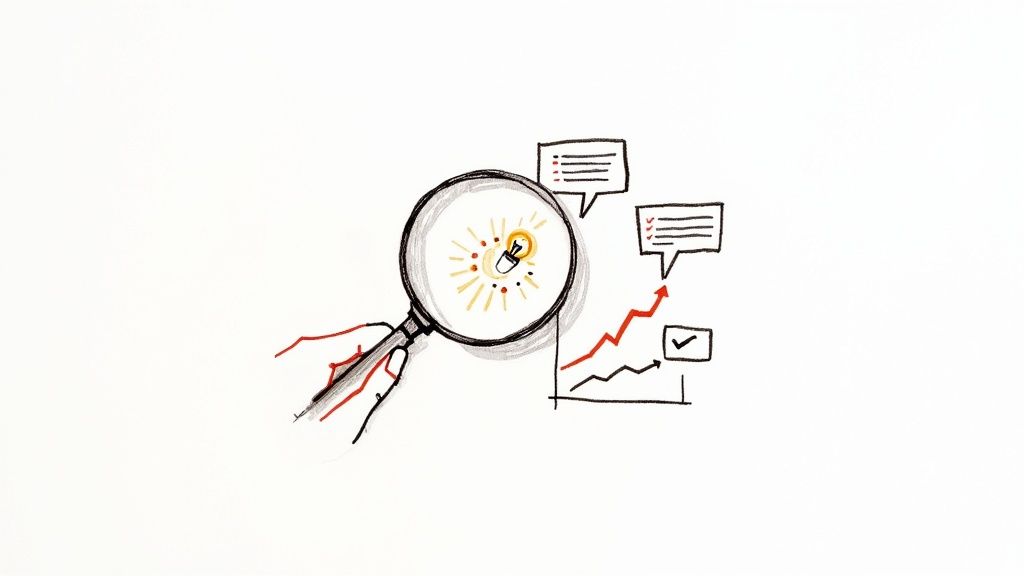
Your personal experience is your unfair advantage. Maybe you're the go-to person for organizing chaotic Notion workspaces, or you’ve perfected a specific photo editing style that gets tons of compliments. These aren't just skills; they're the seeds of potential digital products.
Uncovering Problems in the Wild
The internet is basically a giant, public database of human frustration. Your job is to become a digital anthropologist and listen—really listen—to what people are complaining about. This isn't about bland market research; it's about finding the exact words people use to describe their pain points.
Here are the best places I've found to start digging:
Online Communities: Dive deep into Reddit subreddits, Facebook Groups, and niche forums related to your expertise. Keep an eye out for posts that start with "How do I..." or "I'm struggling with..." These are literally people asking for a solution you can sell them.
Social Media Listening: Search for keywords in your niche on platforms like X (formerly Twitter) or TikTok. Don't just look at the top posts; read the comment sections. The real gold is in the questions people are asking popular creators.
Review Mining: Go read the 1-star and 3-star reviews for existing products in your niche. Whether they're on Amazon, Etsy, or software review sites, these reviews are a treasure trove of unmet needs and "I wish it had..." feature requests.
As you do this, document everything. I mean everything. Notice recurring themes, copy down specific phrases, and pay attention to the emotional language people use. This data will become the bedrock of your product and, later on, your marketing copy.
Defining Your Ideal Customer
Once you've got a problem in your sights, you need to know exactly who you're solving it for. A vague audience like "small business owners" is useless. To create a product that really connects, you have to get hyper-specific.
A product for everyone is a product for no one. The more specific your audience, the easier it becomes to find them, speak their language, and create something they feel was made just for them.
Create a simple avatar for your ideal customer. For instance, instead of targeting "new parents," you might zero in on "first-time moms of newborns who are desperate to establish a consistent sleep schedule and feel completely overwhelmed." See the difference? That level of detail makes every single decision—from product features to marketing emails—infinitely easier.
The All-Important Validation Step
Before you write a single line of code or design a single graphic, you must confirm that people will trade their hard-earned money for your proposed solution. Guesswork is the #1 killer of digital product businesses.
The good news? Validation doesn't have to be complicated or expensive.
You can test the waters with a few simple methods:
The Pre-Launch Landing Page: Set up a simple one-page website describing your product and its benefits. Add an email signup form to "get notified when it launches." If you can't get people you don't know to sign up, you don't have a business yet.
The Quick Survey: Use a free tool like Google Forms to create a short survey. Ask pointed questions about the problem and whether your proposed solution sounds valuable. Share it in the same communities where you did your research.
Direct Conversations: This is my favorite. Reach out to a handful of people who fit your ideal customer profile perfectly. Offer to buy them a coffee (virtual or real) and just ask about their struggles related to your topic. Your goal is to listen 80% of the time.
And if you’re still brainstorming, you can explore hundreds of potential concepts with a dedicated digital product idea generator to spark some new directions.
Your goal here is to gather undeniable proof of demand before you invest significant time and effort. When you have a list of people eagerly waiting to buy, you're finally ready to start building.
Choosing the Right Format for Your Digital Product
Once you’ve validated your big idea, the next move is figuring out how to package it. This is a bigger deal than most people think. The format you choose—whether it's an ebook, a video course, templates, or something else entirely—will shape everything from your creation timeline and pricing to how successful your customers will be.
Think of the format as the vehicle for your expertise. You wouldn't try to cross an ocean in a rowboat, and you wouldn't take a semi-truck to the corner store. The same logic applies here. The "best" format is simply the one that gets your specific audience from their current problem to their desired outcome in the most direct way possible.
A complex skill, like mastering a new piece of software, is almost always best taught through a video course where you can walk people through each step. But a busy professional just looking for a quick win? They'll probably love a downloadable checklist or a template they can use immediately without blocking out their entire afternoon.
Matching Format to Audience and Outcome
The secret is to align your product type with your customer’s needs and your own business goals. A low-priced ebook can attract a ton of people and act as a perfect entry point into your world. On the other hand, a high-ticket course is designed for a smaller, more committed group ready for a deep dive.
Here are a few of the most common formats and who they’re best for:
Ebooks and Guides: Perfect for foundational knowledge and step-by-step processes. They’re relatively quick to create and offer a low barrier to entry for customers, making them amazing for lead generation or introductory offers.
Templates and Checklists: These products deliver an immediate win by saving your customers a ton of time and effort. Think social media templates for Canva, Notion dashboard setups, or spreadsheet formulas for financial tracking.
Video Courses: When a topic demands visual demonstration and in-depth instruction, a course is the way to go. They have a much higher perceived value, which means you can charge premium prices.
Workshops and Webinars: A live or recorded workshop is a great way to teach a specific skill in a focused session. They create a sense of urgency and allow for direct engagement with your audience.
Out of all the options, online courses have become a true powerhouse. They’re hands down the most lucrative and in-demand category for creators who want to create and sell digital products. The online education market is projected to hit a staggering $840 billion by 2030. With nearly 57 million people in the US alone expected to take an online course by 2027, the demand for digital learning is only getting stronger. You can see more insights on these digital product trends on Klasio.com.
How to Make the Right Choice
To narrow down your options, ask yourself a few key questions. First, what’s the simplest, most direct way for your customer to get their result using your solution? Don't overcomplicate it. Sometimes a simple PDF is way more effective than a 10-module video course.
Next, be honest about your own strengths. If you're a great writer but the thought of being on camera makes you break out in a sweat, an ebook is a much better starting point than a video series. Play to your strengths so you can create something amazing without burning out.
The most successful digital products aren't just informative; they are designed for action and results. Choose the format that removes the most friction between your customer and their desired transformation.
Finally, think about your pricing potential. The effort you put in and the depth of the solution directly impact what you can charge. A comprehensive video course is naturally going to command a higher price than a one-page checklist.
To help you weigh your options, I've put together a quick comparison of the most popular formats. Think about where your idea fits best.
Digital Product Format Comparison
Product Type | Typical Price Range | Creation Effort | Best For |
|---|---|---|---|
Ebook | $9 - $49 | Low | Foundational knowledge, detailed guides, and lead magnets. |
Templates | $19 - $99 | Low to Medium | Saving customers time with pre-made designs or systems. |
Video Course | $99 - $1,997+ | High | Teaching complex skills with visual, step-by-step instruction. |
Membership | $19 - $99/mo | Medium (Ongoing) | Building a community and providing continuous value. |
Making this decision sets the stage for everything that comes next. Take your time, really listen to what your audience needs, and pick the format that gives them the best possible shot at success.
For a deeper dive into even more formats, check out our guide on the best digital products to sell online.
Building a Product That People Love
Alright, this is where the rubber meets the road. Your idea has been validated, and now it’s time to turn that concept into a real, tangible asset that you can sell.
But let’s be honest: building a great digital product isn’t about just dumping a bunch of information into a PDF or a video. It’s about crafting an experience. You want to create something that delivers a genuine transformation, making your customer feel brilliant for choosing you.
The real goal isn't just to solve their problem. It's to do it in a way that feels polished, professional, and worth every penny. This is the stuff that turns a one-time buyer into a raving fan who can’t wait to see what you release next.
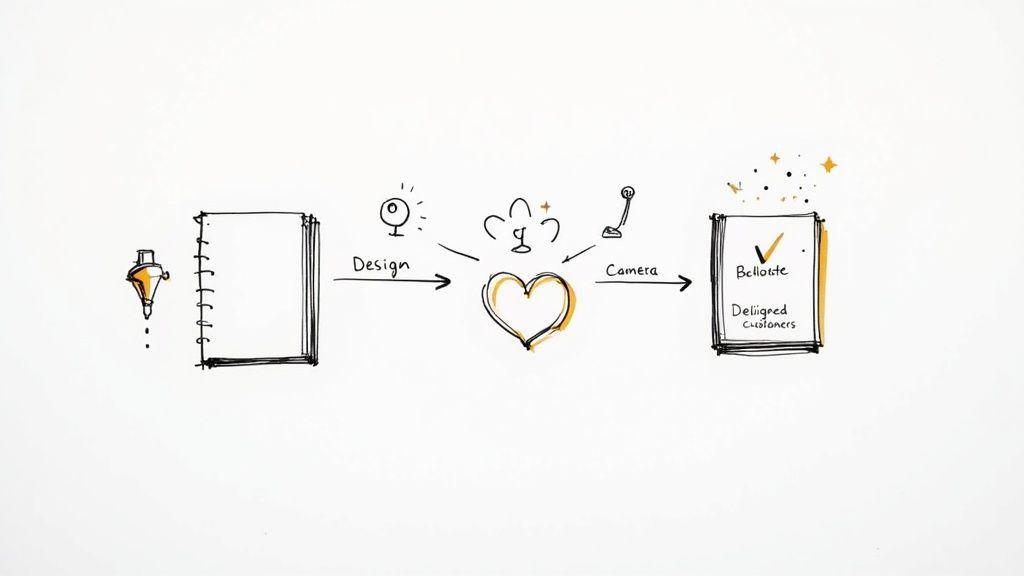
A truly well-made product just feels right. It guides the user from where they are to where they want to be, without any confusion or frustration. And the secret to achieving that smooth journey? A solid outline.
Outlining for Maximum Impact
Before you write a single word or record a single second of audio, you need a blueprint. A killer outline is your best friend here, ensuring your content flows logically, hits all the crucial points, and doesn't overwhelm your customer with a wall of information.
Think of it like building a house. You wouldn't just start nailing boards together without architectural plans, right? Your outline is that plan. It ensures every module, chapter, and lesson has a clear purpose and fits into the bigger picture.
Let’s say you’re creating a video course called "Sourdough for Beginners." A logical outline might look like this:
Module 1: The Foundation: What exactly is a sourdough starter? We'll cover the science behind fermentation and the essential tools you'll need.
Module 2: Bringing Your Starter to Life: A step-by-step daily feeding schedule. How to spot a healthy, active starter (and what to do if it’s struggling).
Module 3: Baking Your First Loaf: The simple "no-knead" recipe. We’ll walk through mixing, folding, shaping, and that final, glorious bake.
See how that structure takes the student on a clear path? They go from zero knowledge to a successful outcome. This same principle works whether you're writing an ebook, designing templates, or producing an audio series.
Choosing Your Creation Toolkit
Good news: you don't need a Hollywood budget or a team of designers to create and sell digital products that look and feel premium. Today, a handful of easy-to-use tools can handle 99% of the work.
The key is to keep it simple. Don't get bogged down trying to learn a dozen different programs. Just master a few that get the job done right.
Your tools should make creation faster, not more complicated. The best software is the kind that gets out of your way and lets you focus on creating value.
Here are some of my personal go-to tools for different types of products:
Tool Category | Recommended Tools | Best For |
|---|---|---|
Design & Visuals | Ebook covers, worksheets, social media templates, and presentations. | |
Writing & Editing | Drafting content, outlining ideas, and collaborating with others. | |
Video Recording | Screen recordings, tutorials, and editing course videos with shocking ease. | |
Audio Recording | Audacity, Descript | Recording podcast episodes, audio lessons, and voiceovers. |
The best part? Many of these have fantastic free versions that are more than powerful enough to get you started.
The Power of Professional Polish
Finally, let's talk about the little details that make a massive difference. These are the small touches that signal quality and build trust the moment someone opens your product.
Consistent Branding: Stick to the same fonts, colors, and logo across all your materials. This creates a cohesive, professional vibe that screams "I know what I'm doing."
Clear Formatting: Nobody likes a wall of text. Break things up with headings, bullet points, and bold text to make your content scannable and easy to digest.
High-Quality Media: Make sure your images are crisp, your videos are well-lit, and your audio is clear. Poor quality media can instantly sink the perceived value of your offer.
Putting in a little extra time on these finishing touches shows your customers you care about their experience. It tells them this isn't just an information dump—it's a thoughtfully designed solution built to help them win. That polish is what makes them feel great about their purchase.
Pricing Packaging and Launching Your Offer
You can have a world-class product, but it will fall completely flat if the offer is weak. This is the critical moment where you take your creation and wrap it in a package so compelling that your ideal customer instantly sees it as the solution they’ve been searching for.
It all comes down to a mix of smart pricing, persuasive presentation, and a simple launch plan. When done right, the buying decision feels effortless for them.
So many new creators make the mistake of pricing their products based on the hours they put in or what their competitors are charging. This is a dead-end street. Your pricing shouldn't be about your costs; it's about the value of the transformation you deliver. If your template saves a business owner 10 hours a month, what is that time really worth to them? That’s your starting point.
Strategic Pricing Models That Work
The way you price your digital product fundamentally shapes how customers see it and determines your long-term revenue. Don't just pick a number out of thin air. Instead, think about how to structure your offer to mirror the value you’re providing. Getting this right is foundational to how you create and sell digital products profitably.
Here are three powerful models I’ve seen work time and time again:
Value-Based Pricing: You anchor your price directly to the outcome. For instance, a bundle of social media templates isn't just a collection of design files; it's hours of saved time and a more professional brand image. Price it accordingly.
Tiered Packaging: This is a classic for a reason. You create a few different versions of your offer at different price points. A basic tier might just be the ebook, while a premium tier could add video tutorials and a one-on-one coaching call. This simple strategy lets you appeal to a much wider range of customers.
Subscription or Membership: If you're creating ongoing content like a community, monthly templates, or continuous training, a recurring revenue model is the way to go. It gives you predictable income and provides sustained value for your customers.
The goal here is to give people options that fit both their budget and how much support they feel they need. You'll often find this approach boosts your average order value, as many customers will happily choose a higher-priced tier when the extra value is crystal clear.
Crafting an Irresistible Sales Page
Think of your sales page as your 24/7 digital salesperson. Its one and only job is to turn a curious visitor into a confident buyer. This takes more than just a big "buy now" button; you need persuasive copy, clean visuals, and a logical flow that guides the reader straight to a decision.
Start with a powerful headline that speaks directly to your customer's biggest frustration or their ultimate goal. Then, using the research you did earlier, fill the page with the exact language your audience uses to talk about their problems. Sprinkle in testimonials, show detailed breakdowns of what’s inside, and tell a clear "before and after" story.
A great sales page doesn't sell a product; it sells a new reality. Focus on the transformation, not just the features. Your customer isn't buying a 10-module course; they're buying the confidence to finally achieve their goal.
Want to dramatically increase the perceived value of your offer? Use professional mockups. Tools like Canva can instantly make your ebook, course, or template bundle look like a tangible, premium product. This visual polish makes your price feel more than justified. For a comprehensive look at setting your prices, you might be interested in our free digital product pricing ebook.
Executing a Simple No-Stress Launch
A launch doesn't have to be some massive, terrifying event. Just think of it as a coordinated effort to build excitement and drive focused sales. For your first product, a simple "internal launch" to your existing email list or social media followers is almost always the most effective path.
The goal is to warm people up before you ever ask for the sale. A simple sequence might look something like this:
Anticipation (7-10 days before): Start dropping hints that something new is coming. Share behind-the-scenes content on social media or in your newsletter to build curiosity.
The Reveal (3-5 days before): Officially announce the product, what it does, and exactly who it's for. If you have testimonials from beta testers, now is the time to share them.
Open Cart (Launch Day): Open the doors for purchase! I highly recommend offering an early-bird bonus or a limited-time discount to reward the people who take immediate action.
Final Push (Last 24 hours): Remind your audience that the special launch offer is about to end. This sense of urgency is a powerful, and honest, motivator.
This controlled approach builds momentum without the overwhelm. It creates a successful launch that sets you up for consistent, long-term sales down the road.
Marketing That Drives Consistent Sales
Your product is live, the sales page looks sharp, and the buy button works. So… now what?
A big launch is exciting, but the real win is building a marketing system that keeps sales coming in long after the initial buzz dies down. This is how you turn a one-time project into a real, sustainable business.
Sustainable marketing isn’t about jumping on every new trend. It’s about creating assets that pull in your ideal customers automatically. The two most powerful assets you can build? A content engine and an email list.
Content marketing—like writing helpful blog posts or creating valuable YouTube videos—is a long game that pays off for years. When you create content that genuinely answers the questions your audience is already asking, you attract qualified leads from search engines. This is the foundation for how to create and sell digital products without feeling like you're always chasing a sale.
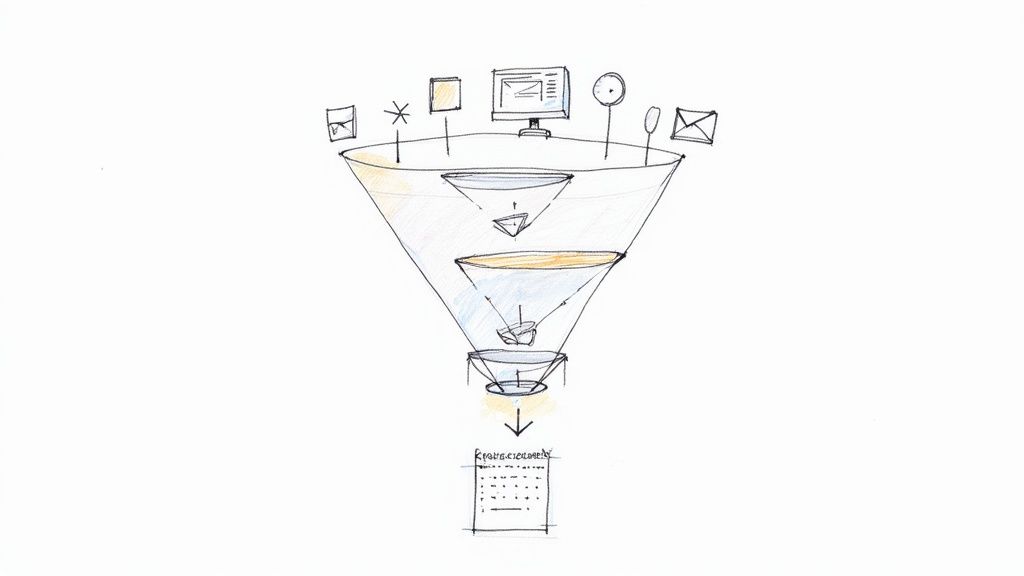
Building Your Core Marketing Assets
Every single piece of content you put out there should have one primary job: get that visitor onto your email list.
Your email list is the single most valuable asset you own. Forget social media followers—with email, you have direct, unfiltered access to your subscribers. You own the connection.
Here’s a simple, effective way to get started:
Create a Valuable Lead Magnet: This is a free, high-value resource you offer in exchange for an email address. It could be a checklist, a short ebook, or a free template that gives them a quick win related to your main product.
Set Up a Simple Welcome Sequence: Don't just leave new subscribers hanging. Create a short series of automated emails (3-5 is perfect) that introduces you, delivers the freebie, and provides even more value before you ever mention your paid product.
Nurture with Consistent Content: Send a regular newsletter (weekly is a great place to start) packed with useful tips and insights. This builds trust and keeps you top-of-mind, so when you finally make an offer, your audience is actually ready to listen.
Your marketing system should feel like a helpful conversation, not a constant sales pitch. Provide value first, last, and always. The sales will follow.
Scaling Your Reach Strategically
Once your content and email system is consistently bringing in leads, it's time to think about scaling.
Social media is a great tool for this, but don't try to be everywhere at once. It’s a classic mistake. Instead, pick one platform where your ideal customers are already spending their time and focus on mastering it.
For instance, if your product is highly visual (like design templates), Instagram or Pinterest are perfect. If it's for professionals, LinkedIn is probably a better bet. The goal here is depth, not breadth.
Once you have a proven offer and a predictable conversion rate, you can start exploring paid advertising. Platforms like Facebook, Instagram, or Google Ads can seriously accelerate your growth. But to make sure your marketing budget turns into actual revenue, digging into effective Google Ads sales funnel optimization strategies is non-negotiable. This is the step that turns clicks into a reliable stream of income.
Common Questions About Digital Products
When you first dip your toes into the world of digital products, a handful of questions always seem to pop up. It’s totally normal. Getting these sorted out is often the one thing standing between a great idea and a successful launch.
Let's clear the air on some of the most common things people ask when they start to create and sell digital products.
How Much Money Can I Realistically Make?
This is the big one, right? The honest answer is: it’s all over the map. Your income depends entirely on your niche, the size of your audience, your product's price point, and how well you market it. Some creators pull in a few hundred dollars a month, while others build seven-figure empires.
A great place to start is with a lower-priced product, like a handy template or a short ebook. These can create a nice, consistent stream of side income. Once you've built up some trust and a bigger audience, you can roll out more premium products like an in-depth course, which obviously has a much higher earning potential.
Do I Need a Big Audience to Start?
Absolutely not. You don't need a massive social media following to make your first sales. In fact, starting with a small, highly engaged audience is often way better.
Think about it: a list of 100 true fans who hang on your every word is infinitely more valuable than 10,000 followers who barely notice you.
Your job at the beginning is to solve a very specific problem for a very specific group of people. Your first sales will almost always come from one-on-one conversations, jumping into niche online communities, and good old-fashioned word-of-mouth.
The goal isn't to be everywhere at once. It's to be exactly where your ideal customer is, offering a solution they've been actively looking for.
What if Someone Steals My Product?
It's a legitimate worry, but it shouldn't be a roadblock. While piracy is always a possibility, the vast majority of people are honest and will happily pay for something that provides real value.
Obsessing over the tiny percentage of people who might steal your work will only paralyze you. It stops you from serving the huge majority who are ready and willing to buy.
The best defense is a good offense. Focus your energy on building a strong brand and a loyal community around your work. People who trust you and feel connected to your mission are far more likely to buy directly from you than to go hunting for a pirated copy.