Digital Products
Boost Your Business with Done for You Course Creation

Done-for-you course creation is exactly what it sounds like: a premium service where a team of experts steps in to build your entire online course for you. You bring the knowledge and the vision, and they handle everything else—from outlining the lessons to producing the videos and setting up the tech.
What Exactly Is Done-for-You Course Creation?
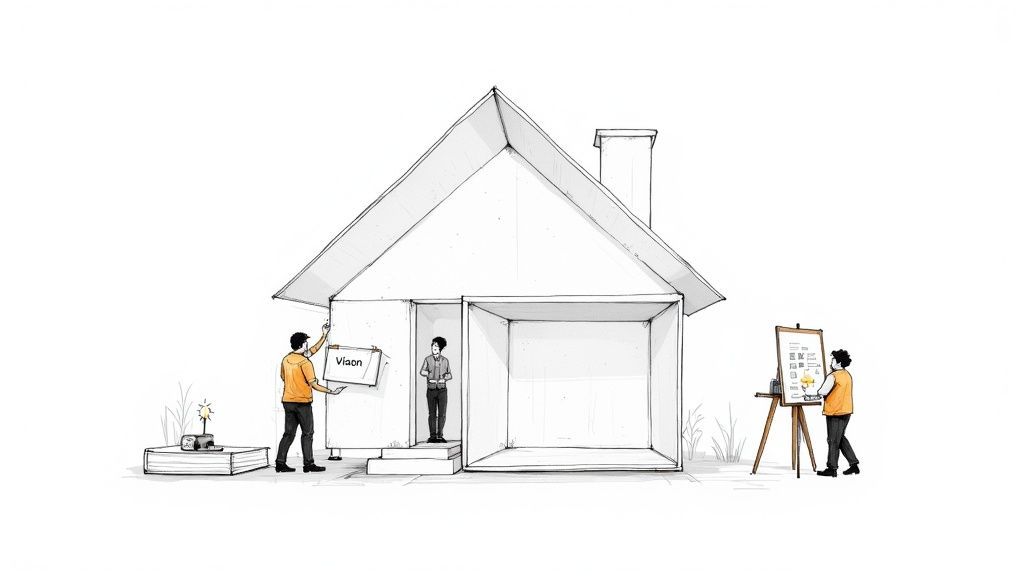
Think about hiring an architect and a general contractor to build your dream home. You share your vision, pick the finishes, and approve the blueprints, but you don't have to pour the concrete or frame the walls yourself. That’s the perfect way to think about done-for-you course creation.
It’s an end-to-end service built for busy experts who have incredible knowledge but lack the time, technical skills, or team to create a polished online course from the ground up.
This service is all about transforming your expertise into a market-ready educational product. Instead of getting lost in the weeds of curriculum design, video editing, and learning management systems (LMS), you get to stay in your zone of genius. A professional team takes your raw ideas and handles all the heavy lifting.
The Core Components of DFY Services
So, what does this partnership actually look like? While every agency has its own packages, most done-for-you services cover a few key areas to get you from concept to a launched course.
Here’s what’s usually included:
Instructional Design: Experts take your knowledge and structure it into a logical, engaging curriculum. They map out modules, lessons, and clear learning goals to keep students on track and ensure they get real results.
Content Development: The team helps you create or refine scripts, workbooks, quizzes, and other materials. They’re skilled at turning your expertise into content that’s easy to digest.
Professional Production: This is the hands-on creative work. It covers filming and editing your video lessons, designing branded slide decks, and creating high-quality graphics.
Platform and Tech Setup: Your team will build out the entire course on your chosen platform, handling all the tech setup, software integrations, and user experience design.
The real goal of a DFY service is to remove all the technical and creative friction that stops most experts from ever launching. It’s about turning your intellectual property into a scalable digital asset without the overwhelming workload.
Who Benefits Most From This Model
This hands-off approach isn’t for everyone, but it’s a game-changer for certain professionals. Busy entrepreneurs, established coaches, and corporate trainers who need to launch fast and maintain a high standard of quality get the most out of this model.
These services are especially valuable for anyone in the fast-growing Edtech and online learning space, where the demand for professional, high-impact content never stops.
Ultimately, done-for-you course creation is an accelerator. It lets you skip the massive learning curve of course production and get a superior product to market in a fraction of the time it would take to do it all yourself.
Why Smart Experts Outsource Course Creation

The journey from a brilliant idea to a polished online course is a lot rockier than most experts think. It’s a road paved with technical glitches, creative dead-ends, and a mountain of time-sucking tasks that can stop even the most driven entrepreneur in their tracks. This is the exact point where smart experts switch from a DIY mindset to a strategic one.
Outsourcing isn’t just about clawing back a few hours in your week. It's about getting a better result, faster, and maximizing your impact. You’re the expert on the topic, but a done for you course creation team brings a totally different toolbox to the project—instructional design, video production, and graphic design skills that turn your raw knowledge into a premium learning experience.
Beyond Time Savings: The True ROI of Outsourcing
The number one thing that gives experts pause is the cost. But the DIY route has plenty of its own hidden costs—revenue you miss out on from launch delays, low student engagement because the design is clunky, and the massive opportunity cost of spending your own time on work you’re not an expert in.
When you bring in a professional team, you get specialists who know exactly how to build courses that are engineered for student success, not just ones that look pretty. That focus on how people actually learn is what really moves the needle.
Improved Student Outcomes: People trained in adult learning know how to structure content to make it stick. That leads directly to higher completion rates and students who actually get the results you promised.
Enhanced Brand Perception: A polished, professionally produced course instantly elevates your brand’s authority. Crisp video, clean audio, and sharp graphics signal value and make it easier to justify premium pricing.
Faster Path to Revenue: A dedicated team can build and launch your course in a fraction of the time it would take you to do it all alone. You start bringing in revenue sooner, period.
Outsourcing course creation is a strategic investment in quality and speed. You're not just buying a service; you're buying a faster, more effective path to turning your expertise into a profitable, high-impact asset.
Solving the DIY Course Creation Headaches
Anyone who’s tried to build a course themselves knows the pain. It feels like you're juggling three different full-time jobs: content expert, video editor, and tech support specialist. Outsourcing takes these headaches off your plate for good.
Common DIY Problems vs. DFY Solutions
DIY Frustration | How Done-For-You Solves It |
|---|---|
Overwhelming Workload | A dedicated team manages the project from start to finish, letting you focus on your actual business. |
Poor Learning Flow | Instructional designers map out a logical curriculum that’s engaging and gets real results for your students. |
Amateur Production Quality | You get access to professional-grade equipment and talent for video, audio, and design. |
Technical Glitches | Experts handle the entire platform setup, integrations, and testing process so everything just works. |
Financially, this is more doable than you might think. While hiring an entire in-house team is a huge expense, a DFY service is a much more focused and affordable path. The average cost to create an online course can be surprisingly low, making it a solid option even for solo entrepreneurs. You can find more course creation statistics on Whop.com that break this down.
This approach saves you from the technical and creative grind, but more importantly, it makes sure your course is set up for success from day one. To learn more about bringing in outside help, check out our guide on how to outsource digital product creation.
Comparing Your Course Creation Options
Deciding how to build your online course is a huge business decision. It's not just a technical choice—it directly impacts your budget, your timeline, and the quality of the final product your students will experience. Generally, you have three paths to choose from: Do-It-Yourself (DIY), Done-With-You (DWY), and the increasingly popular done-for-you course creation (DFY) model.
Each route offers a different trade-off between control, cost, and convenience. Getting clear on these differences is the first step to picking the model that actually fits your resources and business goals.
Do-It-Yourself: The Hands-On Approach
The DIY path is exactly what it sounds like. You’re the writer, the designer, the videographer, and the tech support specialist, all rolled into one. This model gives you absolute creative control over every single detail, from the first word of your script to the final button on the sales page.
This approach is perfect for bootstrapped entrepreneurs who have more time than money, or for those who genuinely love getting their hands dirty with the creative and technical side of building a digital product. Be warned, though: the learning curve is steep, and the time commitment is massive. You'll need to master everything from video editing to instructional design. To get a sense of the tech involved, you can explore our list of the best course creation platforms.
Done-With-You: The Collaborative Partnership
The Done-With-You model is a hybrid approach. It positions you as a partner working alongside a coach or an agency. They bring the strategy, templates, and expert guidance to the table, but you’re still responsible for doing most of the actual work.
Think of it like having a personal trainer for building your course. They’ll teach you the right form and give you a solid workout plan, but at the end of the a day, you still have to lift the weights. This is a great option for experts who want to learn the ropes while having a professional safety net to catch common mistakes and help them create something better than they could alone.
Done-For-You: The Expert Execution
Finally, we have the Done-For-You model, which is the most hands-off option by far. Here, you act as the subject matter expert and the visionary. You provide the core knowledge and give the final sign-off, while the DFY agency handles the entire execution. We're talking curriculum development, video production, platform setup, and getting everything ready for launch.
This is the fastest way to get from a raw idea to a polished, professional-grade course. It’s built for established consultants, busy executives, and successful entrepreneurs who know their time is better spent serving clients and growing their business—not wrestling with video editing software.
Choosing a Done-For-You service is an investment in speed and quality. It lets you bypass the entire technical learning curve and delivers a premium product that reflects the high standards of your brand, getting you to market in a fraction of the time.
The earning potential makes this investment incredibly compelling. A staggering 70% of e-learning professionals earning over $100K annually reported online courses as their top revenue source in the past year. This just goes to show the value of launching a high-quality product right out of the gate. You can learn more about the earning potential of online courses on Whop.com.
To help you visualize the trade-offs, here’s a simple breakdown of how each model stacks up across the most important factors.
Course Creation Models Comparison
Factor | Do-It-Yourself (DIY) | Done-With-You (DWY) | Done-For-You (DFY) |
|---|---|---|---|
Time Investment | Very High | Moderate | Very Low |
Technical Skill | High | Moderate | None Required |
Budget | Low | Medium | High |
Final Quality | Variable | Good | Professional |
Ideal For | Bootstrappers & hobbyists | Experts wanting to learn | Busy professionals & brands |
Ultimately, there's no single "best" option—only the best option for you. Use this comparison to honestly assess where you are in your business and decide which path will get you to your goals most effectively.
Your Journey Through the DFY Process
Handing your life's work over to an outside team can feel like a massive leap of faith. I get it. You're probably wondering, "Will they actually get my vision?" or "How much of my time is this really going to suck up?"
Let's pull back the curtain on a typical done-for-you course creation workflow. This isn't about giving up control; it's about getting the right kind of support.
Think of it less like handing over the keys and more like hiring a world-class chauffeur for your expertise. You still decide the destination, but you get to skip the stress of navigating rush-hour traffic. You're the visionary at every single step. The whole process is built to pull the genius out of your head and turn it into a polished, market-ready course, with clear checkpoints for your approval all along the way.
Phase 1: The Strategic Kickoff
Everything starts with a deep-dive strategy session. Honestly, this is the most important part of the entire project because it sets the foundation for everything else. The DFY team’s only goal here is to get inside your head and fully grasp your audience, your business goals, and the transformation you want to create.
You can expect to hash out key topics like:
Defining Your Ideal Student: Who is this course for, really? What are their biggest headaches, and what specific result are you promising them?
Mapping Learning Outcomes: When a student finishes your course, what will they be able to do? Getting this crystal clear ensures every lesson has a distinct purpose.
Outlining the Core Content: This is the high-level brainstorm of your core modules and concepts—the intellectual property that makes your course unique.
This phase is all about alignment. The team listens, asks the tough questions, and makes sure everyone agrees on the destination before the engine even starts.
Phase 2: Content Collaboration and Structuring
With a rock-solid strategy in place, the focus shifts to structuring your content. This is where your raw knowledge gets shaped into a logical, engaging curriculum that people will actually want to complete.
Your job is simple: be the subject matter expert. The DFY team acts as the instructional designers.
They might schedule a few interviews to record your expertise, have you send over some rough "brain dump" audio files, or pull from existing materials like a book, presentations, or old webinars. From there, they get to work. They’ll organize your ideas into a detailed course outline, write compelling scripts, design engaging slide decks, and create all the supplementary materials like workbooks and quizzes.
This is a true partnership. You provide the substance, they provide the structure. And, of course, you approve every single piece of content before it moves on to the next stage.
The content collaboration phase is where the magic happens. It’s the bridge between your expertise and a structured learning experience, ensuring the final course not only reflects your voice but is also engineered for student success.
Phase 3: Production and Technical Build
Once you've signed off on all the content, the production team takes the wheel. This is where you get to be the most hands-off. The agency’s video editors, graphic designers, and tech specialists start building out all the assets. This means filming and editing the video lessons, designing branded graphics, and putting all the course materials together.
At the same time, the technical crew sets up your course on your chosen learning platform (LMS). They handle all the nuts and bolts—uploading content, setting up payment processors, and making sure the user experience is seamless for your students. This part of the process has gotten a massive boost from AI tools; in fact, 43% of six-figure creators now use them weekly to slash production time by 40-60%. This lets experts focus on the launch while the team handles the build. You can check out more stats on creator tools at Whop.com.
To see how this all fits together, the graphic below compares the DIY, DWY, and DFY models side-by-side.
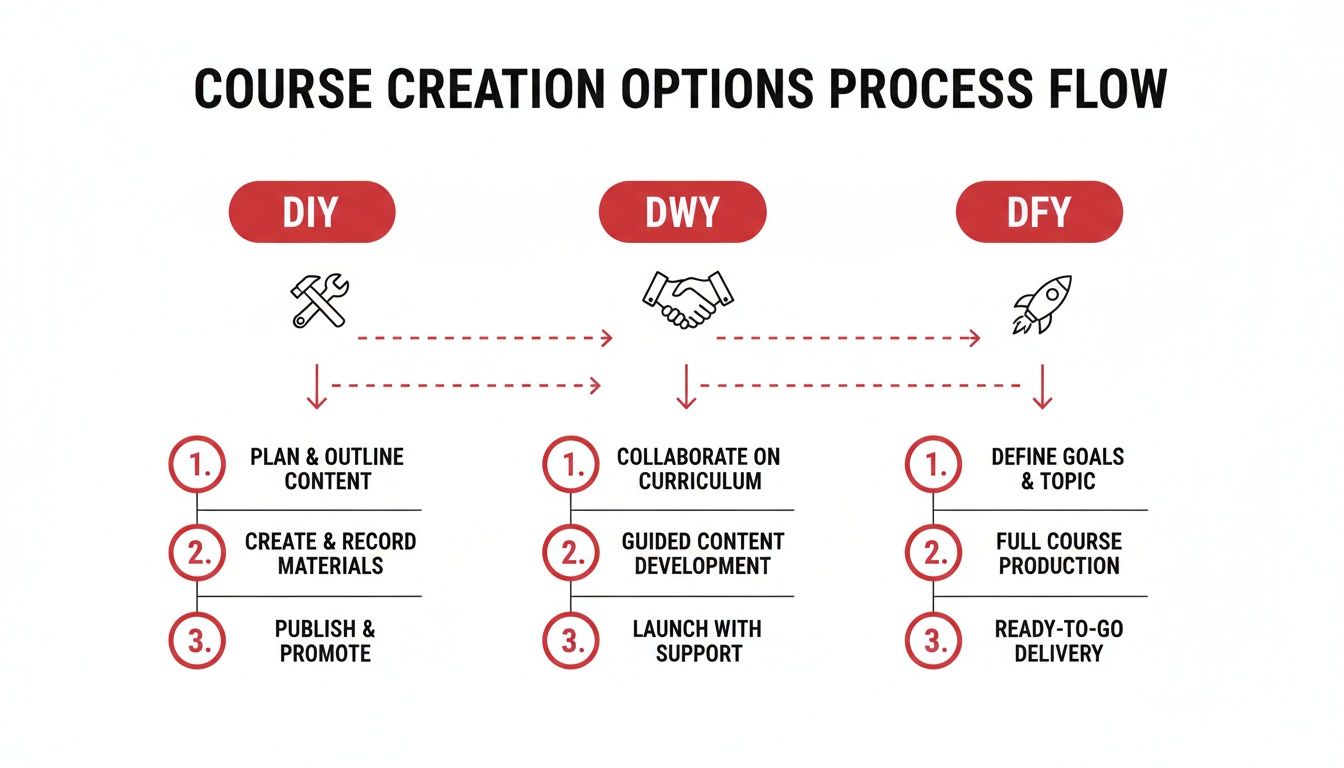
As you can see, the DFY process streamlines everything into three core stages, minimizing your hands-on time while delivering a professional-grade product.
Phase 4: Final Review and Launch Prep
Right before the course goes live, you get a final walkthrough. You’ll go through the entire course from a student's perspective—watching the videos, testing the downloads, and making sure everything feels right. This is your chance to give final feedback and request any last-minute tweaks.
Once you give the green light, the DFY team preps everything for launch day. That could mean setting up the sales page, connecting your email marketing software, and double-checking that all the tech is ready for your first wave of students. From kickoff to launch, you stay in your zone of genius while they handle the execution.
How to Hire the Right DFY Course Creation Partner
Choosing a partner for your done-for-you course creation is a high-stakes decision. This isn’t just about finding a service provider; it’s about trusting someone with your intellectual property and brand reputation.
The right partner becomes a seamless extension of your business. But the wrong one? They can cause costly delays and deliver a product that completely misses the mark.
To pick a winner, you need a solid vetting process. Look past the slick sales pages and demand tangible proof of their expertise and methods. A great DFY partner doesn't just build courses—they build successful educational assets that get results for you and your students.
Scrutinize Their Portfolio and Past Work
First thing's first: take a deep dive into their past projects. Don't just look for polish; look for relevance. A team that specializes in corporate compliance training probably isn't the best fit for a vibrant, community-focused coaching program.
As you review their portfolio, ask yourself these questions:
Industry Alignment: Do they have experience in your niche or a related field? Understanding your audience's language and pain points is a massive advantage.
Style and Tone: Does their production style—video editing, graphic design, and overall vibe—match your brand's aesthetic? Look for versatility and a high standard of quality across different projects.
Student Experience: If you can, check out their courses from a student's perspective. Is the navigation intuitive? Are the lessons engaging and easy to digest?
A strong portfolio shows more than just what they can build; it shows how they think about creating effective learning experiences. For more on what makes an external partnership click, the core ideas in these successful outsourcing strategies are super helpful, as the same principles of vetting and collaboration apply here.
Verify Their Track Record and Reputation
Case studies and testimonials are your next source of truth. Vague praise like "they were great to work with" is nice, but it tells you nothing. You need concrete results and specific details that speak to their process and impact.
A top-tier DFY partner should have case studies showing clear ROI, like increased student completion rates, higher sales conversions, or glowing learner feedback. This is the data that proves they deliver business results, not just a folder of video files.
When you get on a call with a potential partner, don't be shy about asking for references. A ten-minute chat with a past client can reveal more than hours of scrolling through their website. You can also lean on our broader resources on hiring and outsourcing to build a solid framework for bringing on any external talent.
Ask the Right Questions Before Signing
Once a provider passes the portfolio and reputation check, it’s time for a discovery call. This is your chance to get crystal clear on every detail of how you'll work together. A transparent, professional agency will welcome your questions.
Here are the essential questions you need answers to:
What is your exact process from kickoff to launch? Get them to walk you through every single step and clarify where your input is needed.
How do you handle communication and project updates? Look for a structured system, like a dedicated project manager or a shared dashboard—not just random emails.
What does your revision and feedback process look like? Pin down how many rounds of revisions are included at each stage to avoid surprise costs later.
Who owns the final intellectual property and raw assets? Make sure you get full ownership of all course materials once the project is complete. No exceptions.
What kind of post-launch support do you offer? Find out if they stick around to help with technical snags or marketing once the course is live.
A good partner will also be thinking about your monetization strategy. Top creators are 3x more likely to sell bundled courses and 67% use free mini-courses as lead magnets. Ask if they can help you structure your content to support these advanced strategies. Finding a partner with that kind of strategic foresight is a game-changer for a successful launch.
Understanding the Investment and Timeline
So, what’s this actually going to cost, and how long will it take? Before you can make a smart business decision, you need a realistic look at the numbers and the calendar. This isn't an overnight process, and the price tag isn't a one-size-fits-all number.
Think of it like commissioning a custom piece of furniture—the final cost depends on the complexity of the design, the quality of the materials, and the level of craftsmanship involved. A simple bookshelf won't cost the same as an ornate, hand-carved wardrobe.
Investing in a DFY course is a strategic move, especially when you look at where the market is headed. The global e-learning market is absolutely exploding—it's projected to leap from $101 billion in 2019 to $167.5 billion by 2026.
That 66% growth is a huge green light. Outsourcing your course creation is a smart play to grab your piece of a booming industry. You can discover more insights about these course statistics on Whop.com to see the full picture.
Key Factors That Influence Your Investment
The price of a DFY service is a direct reflection of the work involved. A few key variables will shape the final quote you receive, and understanding them helps you budget effectively and pick a package that actually fits your goals.
Here’s what really drives the cost:
Course Length and Complexity: A straightforward, 5-module mini-course is naturally going to cost less than a massive, 20-module certification program loaded with advanced interactive elements.
Video Production Quality: This is a big one. Basic screen recordings and simple talking-head videos are on the affordable end. On-location shoots with multiple camera angles and slick motion graphics will sit at the premium end of the spectrum.
Interactive Elements: The more engagement tools you want—like custom quizzes, interactive workbooks, and community-building features—the more time and specialized skill are needed to build them out.
Scope of Deliverables: Is the agency just building the course? Or does the package also cover writing your sales page, setting up email marketing sequences, and providing tech support after you launch? A bigger scope means a bigger investment.
Your investment in a done-for-you course isn't just a fee; it's a purchase of speed, expertise, and quality. You're paying to bypass the steep learning curve and launch a premium product that reflects the high standards of your brand.
Typical Project Timelines and What to Expect
While getting to market faster is a huge perk of the DFY model, a high-quality course still takes time to get right. Rushing the process almost always leads to a subpar product that leaves students disappointed. A professional agency will stick to a structured timeline to make sure every stage—from strategy to the final review—is handled with care.
A standard project can be broken down into a few key phases:
Strategy and Onboarding (1-2 weeks): This is where it all starts. Expect deep-dive calls, audience research, and outlining the curriculum to build a rock-solid foundation.
Content Creation and Production (3-6 weeks): Here's where the magic happens. This is usually the longest phase, covering everything from scriptwriting and filming to video editing and designing all your course materials.
Technical Build and Review (1-2 weeks): With the content ready, the team builds out the course on your chosen platform, integrates all the necessary tools, and gets it ready for you to give the final sign-off.
All in, a professionally produced course typically takes 6 to 10 weeks from the kickoff call to launch day. This timeline ensures there’s enough breathing room for collaboration, feedback, and quality control, so you end up with a polished final product you’re genuinely proud to put your name on.
Common Questions About DFY Course Creation
Deciding to hire a done for you course creation service is a big move for your business. It's totally normal to have a few questions before you hand over the keys. You need to know you're making a smart call that lines up with your goals and delivers a course you’ll be proud to put your name on.
Let's walk through some of the most common things experts worry about before they commit. Getting these answers should give you the clarity you need to move forward with confidence.
How Much of My Time Is Actually Required?
This is usually the first question on everyone's mind. The short answer? Way less than you'd think, but your input is still the most important ingredient. A DFY service is built to take the workload off your plate, not to cut you out of the process. Your main job is to be the subject matter expert.
Think of it like being the director of a movie. You aren't holding the camera or editing the footage, but you're the one with the vision, providing the creative direction and giving that final thumbs-up.
Your time is mostly needed in a few key moments:
Initial Strategy Sessions: Plan on a couple of in-depth meetings right at the start to get everyone on the same page about your goals, audience, and the core curriculum.
Content "Brain Dumps": This is where you'll share your knowledge. It usually happens through a series of interviews, recorded calls, or by handing over existing materials you've already created.
Review and Approval: The agency will send you outlines, scripts, and final videos at different stages. You'll need to review these to make sure everything sounds like you and matches your vision.
After that, the agency takes over the heavy lifting, which frees you up to keep running your business.
Do These Services Help With Marketing The Course?
This is a critical point to get straight from the beginning because the answer really depends on the agency. Most DFY course creation services are laser-focused on one thing: building an amazing educational product. That means the curriculum, videos, workbooks, and all the tech setup. Their genius is in instructional design and production, not necessarily sales and marketing.
However, some higher-end providers might offer marketing help as an add-on or have trusted partners they can connect you with. You absolutely have to ask this question directly when you're interviewing potential agencies.
Key Takeaway: Never assume marketing is part of the deal. Make sure your contract has a crystal-clear list of deliverables so you know exactly where the agency's job ends. Building the course and launching it are two completely different projects.
What If I Am Not Satisfied With The Final Product?
Any reputable DFY agency will have a process designed to make sure this never happens. The entire project is built on collaboration and clear approval points along the way, so there shouldn't be any huge surprises at the finish line. A few things protect your satisfaction.
First, a solid contract will spell out the scope of work, all the deliverables, and how many rounds of revisions are included for each step (like scriptwriting or video edits). This document is your safety net.
Second, the process is designed to be step-by-step. You’ll approve the course outline before any scripts get written, and you’ll approve those scripts before any videos are filmed. This constant feedback loop keeps the project aligned with your vision. If something feels off, you have plenty of chances to give feedback and ask for changes long before you see the final product.